THE ADVENTURE COLLECTIVE® · Independent discovery and booking for outdoor travel

Cross the High Atlas, explore kasbah-lined valleys and spend a starry night in Erg Chebbi on this private 4-day tour from Marrakech. Expect long scenic drives, short gorge walks and a camel-led desert camp experience.
Cross the High Atlas, explore kasbah-lined valleys and spend a starry night in Erg Chebbi on this private 4-day tour from Marrakech. Expect long scenic drives, short gorge walks and a camel-led desert camp experience.
The road leaves Marrakech before sunrise, climbing the High Atlas where the pass of Tizi n’Tichka pins the sky at 2,260 meters. Wind-sculpted villages slide past the window, ochre kasbahs leaning into the valley, and by nightfall the dunes of Erg Chebbi near Merzouga glow like warm embers under a wide Saharan sky.
Verified experiences and guided adventures in the surrounding area.
Operated by Marrakech Outdoor · Merzouga, Drâa-Tafilalet
The road leaves Marrakech before sunrise, climbing the High Atlas where the pass of Tizi n’Tichka pins the sky at 2,260 meters. Wind-sculpted villages slide past the window, ochre kasbahs leaning into the valley, and by nightfall the dunes of Erg Chebbi near Merzouga glow like warm embers under a wide Saharan sky.
This four-day private loop threads together Morocco’s layered history: Ait Ben Haddou’s earthen towers recalling caravan routes and film sets; the rose-scented terraces of Kalaat M’Gouna; the canyoned walls of Todra and Dades cut through ancient riverbeds. Geologically the Atlas is young and folded, giving way eastward to alluvial plains that feed the Draa palm groves before the landscape thins into sand.
Culturally the trip moves from busy medina commerce to quieter oases where Berber hospitality centers meals and music. Guides translate more than language — they map local water use, souk rhythms and the seasonal migrations that shaped these valleys.
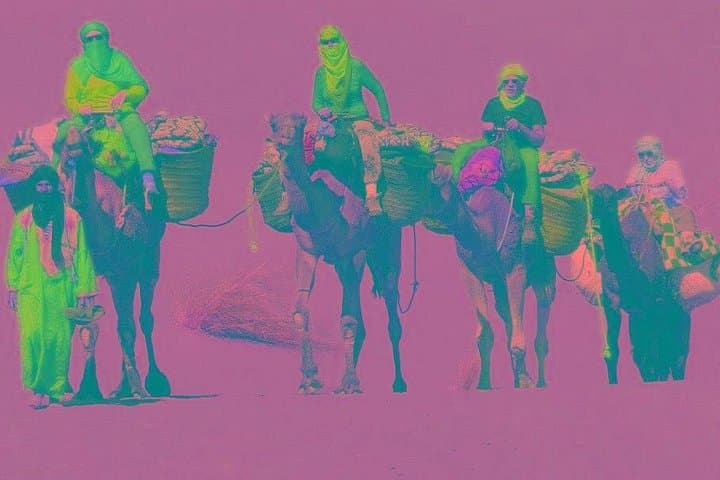
Practical guidance: expect long drives (several 3–5 hour legs), short guided walks in gorges, and a camel trek of roughly 1–2 hours to a desert camp. Temperatures swing: hot days in the desert, cold nights at elevation. Pack layered clothing, a sun hat, sturdy shoes for rocky gorges, and a small daypack for water and camera gear. Respect local norms, conserve water, and allow daylight for the best photography — dusk and dawn are when dunes and kasbahs reveal their sharpest character.
moderate.
3–4 days.
Moderate: suitable for travelers comfortable with several hours in the vehicle daily, short walks up to 2 hours, and basic camel riding.
No — the tour involves mostly driving with short, guided walks in gorges; basic mobility is sufficient.
Camps range from traditional nomadic-style tents to more comfortable private tents with mattresses; confirm level when booking.
Most travelers can ride camels for 1–2 hours; notify the operator of mobility issues and follow guides’ mounting and dismounting instructions.
Spring (March–May) and fall (September–November) offer milder daytime temperatures and comfortable nights; summer can be very hot and winter cold at altitude.
The route follows historic caravan corridors; kasbahs like Ait Ben Haddou were fortified stops along trans-Saharan trade routes and later became film locations.
The desert and oasis ecosystems are fragile—use local guides, minimize water use, avoid disturbing dunes and flora, and support locally run camps to keep tourism sustainable.
Marrakech Outdoor operates guided outdoor trips and adventures with an emphasis on safety, stewardship, and memorable experiences.
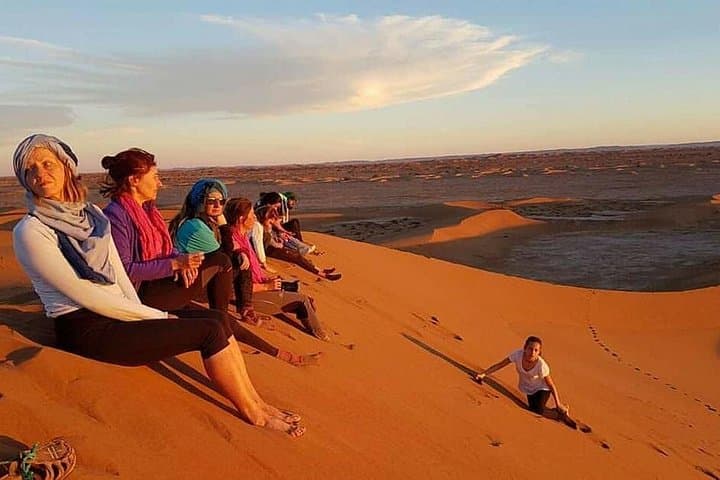


The road leaves Marrakech before sunrise, climbing the High Atlas where the pass of Tizi n’Tichka pins the sky at 2,260 meters. Wind-sculpted villages slide past the window, ochre kasbahs leaning into the valley, and by nightfall the dunes of Erg Chebbi near Merzouga glow like warm embers under a wide Saharan sky.
The road leaves Marrakech before sunrise, climbing the High Atlas where the pass of Tizi n’Tichka pins the sky at 2,260 meters. Wind-sculpted villages slide past the window, ochre kasbahs leaning into the valley, and by nightfall the dunes of Erg Chebbi near Merzouga glow like warm embers under a wide Saharan sky.
This four-day private loop threads together Morocco’s layered history: Ait Ben Haddou’s earthen towers recalling caravan routes and film sets; the rose-scented terraces of Kalaat M’Gouna; the canyoned walls of Todra and Dades cut through ancient riverbeds. Geologically the Atlas is young and folded, giving way eastward to alluvial plains that feed the Draa palm groves before the landscape thins into sand.
Culturally the trip moves from busy medina commerce to quieter oases where Berber hospitality centers meals and music. Guides translate more than language — they map local water use, souk rhythms and the seasonal migrations that shaped these valleys.
Practical guidance: expect long drives (several 3–5 hour legs), short guided walks in gorges, and a camel trek of roughly 1–2 hours to a desert camp. Temperatures swing: hot days in the desert, cold nights at elevation. Pack layered clothing, a sun hat, sturdy shoes for rocky gorges, and a small daypack for water and camera gear. Respect local norms, conserve water, and allow daylight for the best photography — dusk and dawn are when dunes and kasbahs reveal their sharpest character.