
4-Day Poon Hill Trek: Sunrise Views of Annapurna from Ghorepani
A compact, four-day trek from Pokhara to Poon Hill and Ghandruk that packs sunrise views of the Annapurna range, rhododendron forests and traditional Gurung villages into one accessible mountain loop. Ideal for hikers with moderate fitness who want big Himalayan panoramas in a short itinerary.
An Adventure In Pokhara.
A compact, four-day trek from Pokhara to Poon Hill and Ghandruk that packs sunrise views of the Annapurna range, rhododendron forests and traditional Gurung villages into one accessible mountain loop. Ideal for hikers with moderate fitness who want big Himalayan panoramas in a short itinerary.
Read the full experience
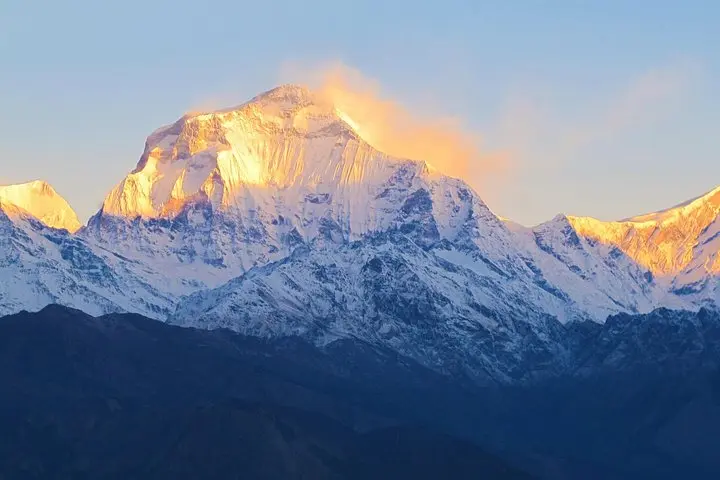
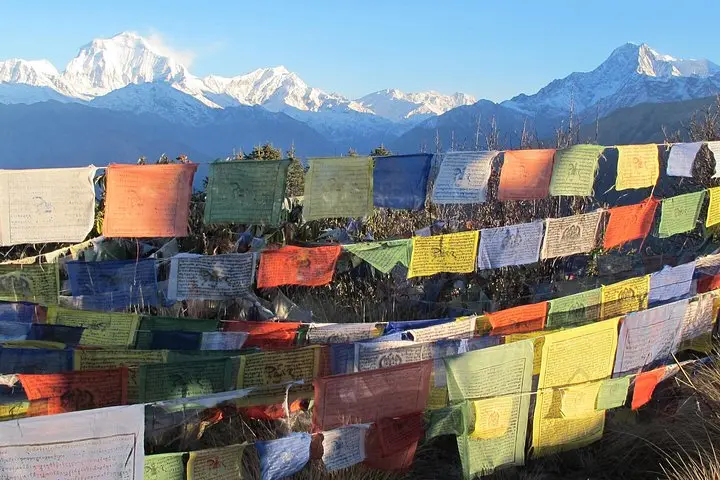
Dawn arrives cold and sharp above the treeline; you push past the wooden rail and the horizon opens—pink light spilling across Dhaulagiri, Annapurna I and Machhapuchhre. Poon Hill rewards the early riser with a panoramic sunrise that makes the climb worthwhile: a ridge of white summits punctured by prayer flags and the steady breath of trekkers and porters.
Dawn arrives cold and sharp above the treeline; you push past the wooden rail and the horizon opens—pink light spilling across Dhaulagiri, Annapurna I and Machhapuchhre. Poon Hill rewards the early riser with a panoramic sunrise that makes the climb worthwhile: a ridge of white summits punctured by prayer flags and the steady breath of trekkers and porters.
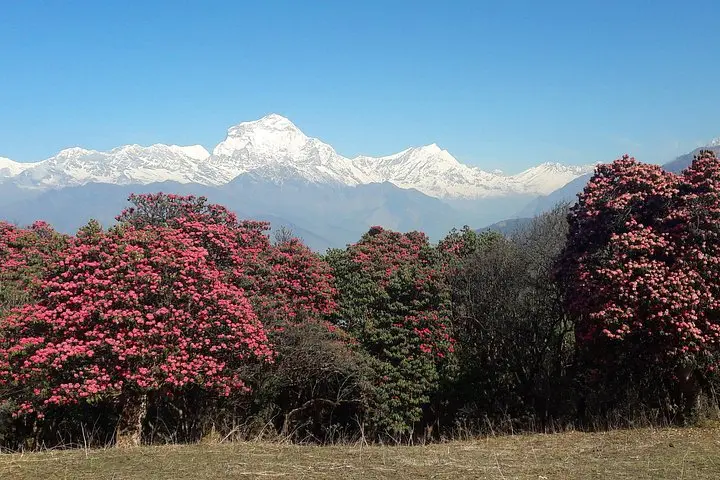
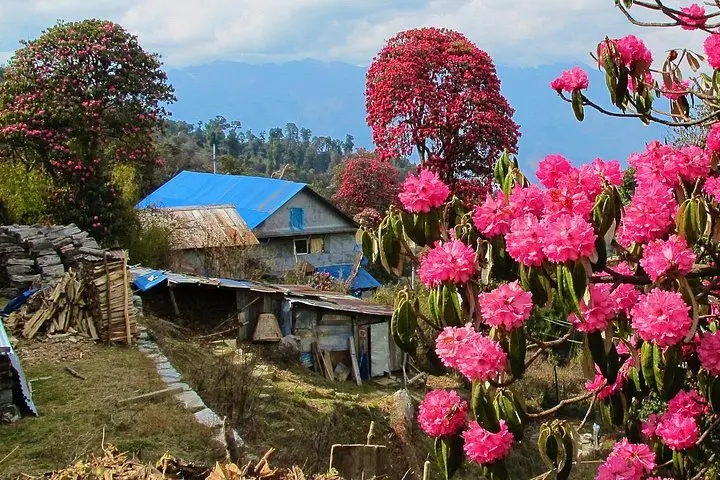
This four-day loop through the Ghorepani–Ghandruk corridor stitches together Gurung villages, terraced rice fields and rhododendron groves. Geologically the route skirts the lesser Himalaya, where folded schist and quartzite give way to steep stone steps—Ulleri’s 3,000-plus stairs are a local test of grit. Culturally the trail moves through communities that keep Gurung music, traditional hospitality and simple lodge life alive; Ghandruk’s narrow lanes and small museum give a sense of village history and mountain farming rhythms.
Expect a mix of steady climbs and long descents: daily distances vary from roughly 8–17 km with elevation gain concentrated on the first two days and the Poon Hill ascent at 3,210 m. Trails are mostly stone and dirt, often slick after rain. Wildlife is subtle: chirping warblers, partridge and, with luck, Himalayan pheasant.
Practical notes: hydrate and pace the Ulleri climb, carry layers for cold mornings at Poon Hill and a reliable headlamp for pre-dawn starts. Lodges offer simple meals and a warm bed in non‑luxury settings; tip local guides and support local guesthouses to keep the route sustainable. With moderate fitness, good boots and respect for altitude, this short Annapurna trek delivers big mountain moments in four packed days.
Frequently asked questions
Yes—trekkers require an Annapurna Conservation Area Project (ACAP) permit and a TIMS card; guides usually arrange these before or at the trailhead.
They are steep and long—over 3,000 stone steps; manageable with pacing and poles but demanding on quads and lungs.
Basic teahouse lodges with shared or private rooms depending on package level; meals are home-style Dal Bhat and limited Western options.
Fall (Sept–Nov) and spring (Mar–Apr) offer the best balance of clear skies and mild temperatures; spring adds rhododendron blooms.
About This Experience
Breathe Nepal Trekking operates guided outdoor trips and adventures with an emphasis on safety, stewardship, and memorable experiences.
Adventure tips
Recommended gear
- Sturdy hiking boots: Support and traction for long stone steps and muddy sections.
- Warm insulated jacket: Pre-dawn and high-elevation mornings can be frigid—bring a down or synthetic layer.
- Headlamp with spare batteries: Essential for pre-sunrise walks to Poon Hill and early starts.
- Trekking poles: Help with balance on stone steps and reduce impact on knees during descents.
Photos of the experience
Related adventures & guides
Read the full experience
Dawn arrives cold and sharp above the treeline; you push past the wooden rail and the horizon opens—pink light spilling across Dhaulagiri, Annapurna I and Machhapuchhre. Poon Hill rewards the early riser with a panoramic sunrise that makes the climb worthwhile: a ridge of white summits punctured by prayer flags and the steady breath of trekkers and porters.
Dawn arrives cold and sharp above the treeline; you push past the wooden rail and the horizon opens—pink light spilling across Dhaulagiri, Annapurna I and Machhapuchhre. Poon Hill rewards the early riser with a panoramic sunrise that makes the climb worthwhile: a ridge of white summits punctured by prayer flags and the steady breath of trekkers and porters.
This four-day loop through the Ghorepani–Ghandruk corridor stitches together Gurung villages, terraced rice fields and rhododendron groves. Geologically the route skirts the lesser Himalaya, where folded schist and quartzite give way to steep stone steps—Ulleri’s 3,000-plus stairs are a local test of grit. Culturally the trail moves through communities that keep Gurung music, traditional hospitality and simple lodge life alive; Ghandruk’s narrow lanes and small museum give a sense of village history and mountain farming rhythms.
Expect a mix of steady climbs and long descents: daily distances vary from roughly 8–17 km with elevation gain concentrated on the first two days and the Poon Hill ascent at 3,210 m. Trails are mostly stone and dirt, often slick after rain. Wildlife is subtle: chirping warblers, partridge and, with luck, Himalayan pheasant.
Practical notes: hydrate and pace the Ulleri climb, carry layers for cold mornings at Poon Hill and a reliable headlamp for pre-dawn starts. Lodges offer simple meals and a warm bed in non‑luxury settings; tip local guides and support local guesthouses to keep the route sustainable. With moderate fitness, good boots and respect for altitude, this short Annapurna trek delivers big mountain moments in four packed days.
Make a day of it nearby.
Verified experiences and guided adventures in the surrounding area.