THE ADVENTURE COLLECTIVE® · Independent discovery and booking for outdoor travel

A concentrated 4-day trek from Pokhara to Poon Hill and Mohorai Hill that delivers sunrise panoramas of the Annapurna range, rhododendron forests, and authentic Gurung villages. Ideal for hikers with steady fitness seeking big views on a short itinerary.
A concentrated 4-day trek from Pokhara to Poon Hill and Mohorai Hill that delivers sunrise panoramas of the Annapurna range, rhododendron forests, and authentic Gurung villages. Ideal for hikers with steady fitness seeking big views on a short itinerary.
Dawn arrives cool and sharp above the terraced slopes as you push toward Poon Hill, the sky brightening in stages until Annapurna’s serrated ridgeline ignites. The trail climbs through forests that breathe cedar and rhododendron, opens onto wide agricultural ledges, and funnels toward the small summit platforms where trekkers gather to watch the sun roll over jagged four-thousanders.
Verified experiences and guided adventures in the surrounding area.
Operated by AM Travels and Tours · Pokhara, Gandaki Province
Dawn arrives cool and sharp above the terraced slopes as you push toward Poon Hill, the sky brightening in stages until Annapurna’s serrated ridgeline ignites. The trail climbs through forests that breathe cedar and rhododendron, opens onto wide agricultural ledges, and funnels toward the small summit platforms where trekkers gather to watch the sun roll over jagged four-thousanders.
This short circuit blends natural history and local culture. Geologically the Annapurna massif is young and steep—sedimentary rock folded and thrust up by the collision of the Indian and Eurasian plates—so trails rise quickly and offer dramatic elevation change in compact distance. The route runs through Gurung villages like Ghandruk and Ulleri, communities with a long history of trans-Himalayan trade and a living culture of stone houses, prayer flags, and seasonal farming.
Expect single-track slopes, long stone staircases, and cool alpine mornings. Wildlife is quiet but present; pheasants and langurs can appear at the trail edge. Teahouses provide basic rooms and hot meals; guides handle permits and route choices.
Practical guidance: aim for steady, even pacing on stone steps, carry layers for a sharp temperature swing at altitude, and drink frequently to reduce acclimatization risk as you crest near 3,200 m. Start pre-dawn for the Poon Hill sunrise and allow time afterward to descend and warm up.
This four-day itinerary is compact, scenic, and widely accessible to hikers with regular fitness who want a concentrated taste of Annapurna sunrises, mountain views, and Gurung hospitality.
moderate.
3–4 days.
Suitable for hikers with regular aerobic fitness; expect 3–6 hours of walking per day with sustained stair climbs and short steep sections
Yes—trekkers require an Annapurna Conservation Area Project (ACAP) permit and a TIMS card; guides commonly handle this for you.
Daily stages are moderate: several hours of uphill and downhill on stone steps and single-track trails, suitable for hikers who walk regularly.
During peak seasons (spring and fall) booking ahead is recommended; in shoulder seasons many trekkers arrange lodges through guides on arrival.
The route reaches about 3,210 m—most trekkers tolerate this if they ascend gradually, stay hydrated, and rest; monitor symptoms and descend if they worsen.
Ghorepani and surrounding villages are traditional Gurung communities with a history of trade and seasonal herding; local culture remains visible in homes and festivals.
This area sits inside the Annapurna Conservation Area; stick to marked trails, minimize plastic, and use local guides and teahouses to support community-based conservation.
AM Travels and Tours operates guided outdoor trips and adventures with an emphasis on safety, stewardship, and memorable experiences.
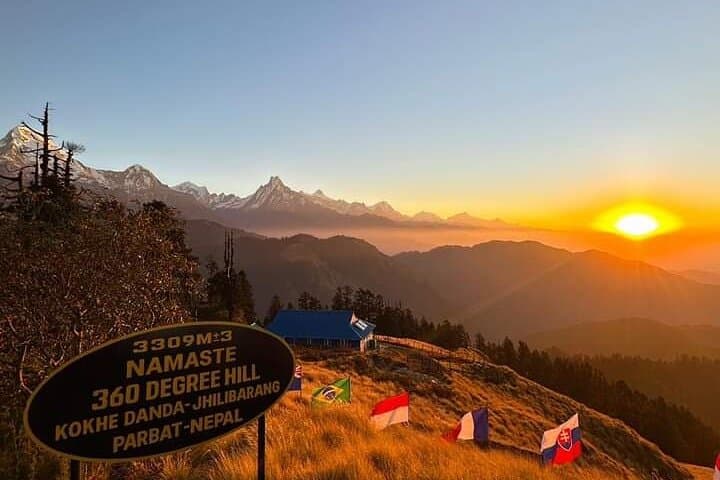
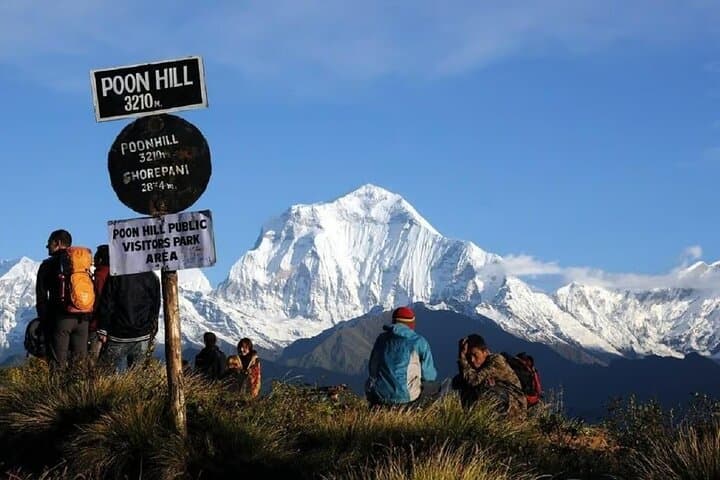
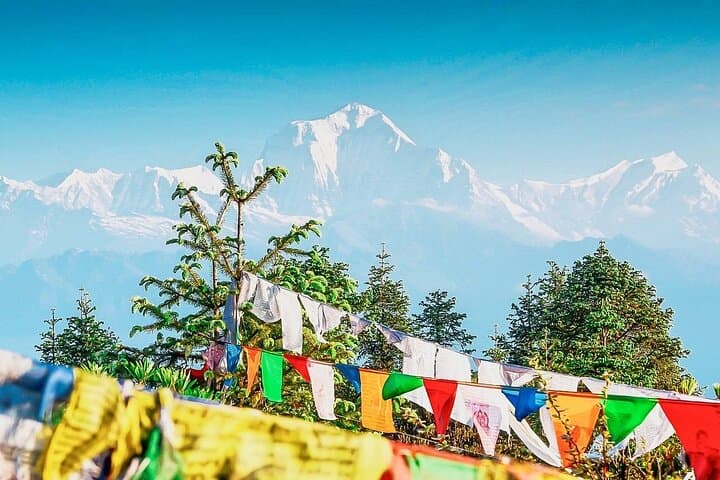
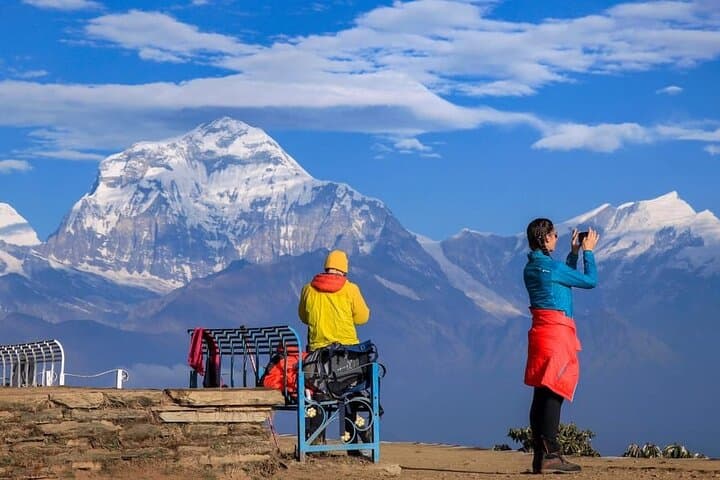
Dawn arrives cool and sharp above the terraced slopes as you push toward Poon Hill, the sky brightening in stages until Annapurna’s serrated ridgeline ignites. The trail climbs through forests that breathe cedar and rhododendron, opens onto wide agricultural ledges, and funnels toward the small summit platforms where trekkers gather to watch the sun roll over jagged four-thousanders.
Dawn arrives cool and sharp above the terraced slopes as you push toward Poon Hill, the sky brightening in stages until Annapurna’s serrated ridgeline ignites. The trail climbs through forests that breathe cedar and rhododendron, opens onto wide agricultural ledges, and funnels toward the small summit platforms where trekkers gather to watch the sun roll over jagged four-thousanders.
This short circuit blends natural history and local culture. Geologically the Annapurna massif is young and steep—sedimentary rock folded and thrust up by the collision of the Indian and Eurasian plates—so trails rise quickly and offer dramatic elevation change in compact distance. The route runs through Gurung villages like Ghandruk and Ulleri, communities with a long history of trans-Himalayan trade and a living culture of stone houses, prayer flags, and seasonal farming.
Expect single-track slopes, long stone staircases, and cool alpine mornings. Wildlife is quiet but present; pheasants and langurs can appear at the trail edge. Teahouses provide basic rooms and hot meals; guides handle permits and route choices.
Practical guidance: aim for steady, even pacing on stone steps, carry layers for a sharp temperature swing at altitude, and drink frequently to reduce acclimatization risk as you crest near 3,200 m. Start pre-dawn for the Poon Hill sunrise and allow time afterward to descend and warm up.
This four-day itinerary is compact, scenic, and widely accessible to hikers with regular fitness who want a concentrated taste of Annapurna sunrises, mountain views, and Gurung hospitality.