THE ADVENTURE COLLECTIVE® · Independent discovery and booking for outdoor travel

Cover four of Turkey’s most cinematic corners in one trip: the white travertines of Pamukkale, the marble streets of Ephesus, and Cappadocia’s balloon-strewn valleys. This four-day package pairs geology and history with hands-on local experiences and adventure options.
Cover four of Turkey’s most cinematic corners in one trip: the white travertines of Pamukkale, the marble streets of Ephesus, and Cappadocia’s balloon-strewn valleys. This four-day package pairs geology and history with hands-on local experiences and adventure options.
You step out of the minivan before sunrise and the white terraces of Pamukkale are already awake—steam rising from calcium-rich springs, spilling along ledges like slow-falling watercolors. The travertines glare under the first light, almost theatrical, and your guide points toward Hierapolis where a Roman theater holds the echo of centuries. Over four days this trip folds Turkey’s geological and human histories into one moving itinerary: marble runnels and Roman marble, a living thermal spring next to ruins where emperors once walked.
Verified experiences and guided adventures in the surrounding area.
Operated by Turkey Experiences · Pamukkale, Denizli Province
You step out of the minivan before sunrise and the white terraces of Pamukkale are already awake—steam rising from calcium-rich springs, spilling along ledges like slow-falling watercolors. The travertines glare under the first light, almost theatrical, and your guide points toward Hierapolis where a Roman theater holds the echo of centuries. Over four days this trip folds Turkey’s geological and human histories into one moving itinerary: marble runnels and Roman marble, a living thermal spring next to ruins where emperors once walked.
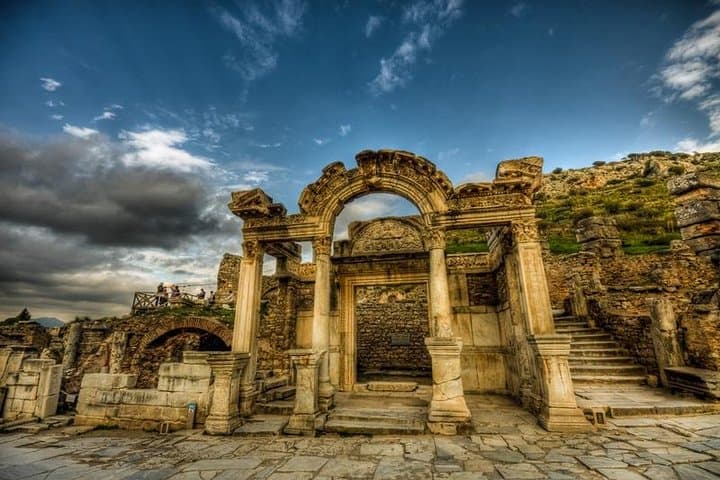
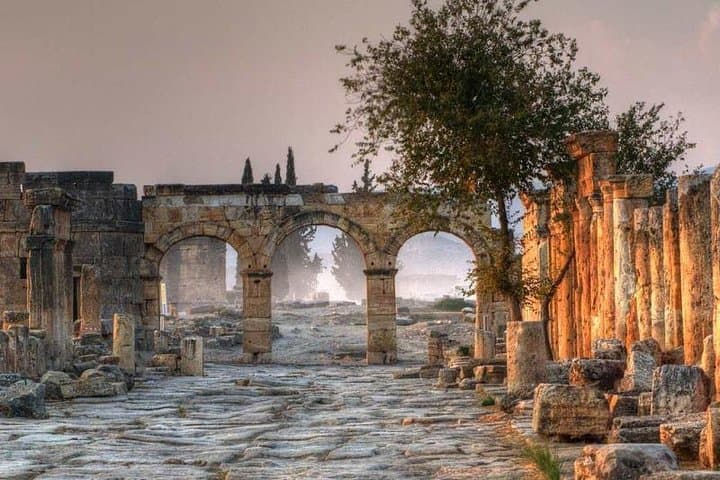
Pamukkale’s terraces are not decoration but geology in motion—travertine forced outward by mineral-rich waters that have hardened into pools and ridges over millennia. Hierapolis, perched above the white slope, began as a Hellenistic spa town and later became a Roman center; its necropolis is one of the largest in Anatolia. From there the itinerary slides west to Ephesus, once a bustling Mediterranean port where the Library of Celsus and the grand theater still dramatize an empire’s scale.
Then the landscape flips. You fly to Cappadocia and enter a lunar region of eroded tuff: fairy chimneys, pigeon houses carved into cliffs, and cave churches painted with Byzantine frescoes. If you opt for the balloon, you’ll rise 700–1,000 meters, the valleys opening like maps below you. The included ATV run carves a quicker, dusted line through valleys that otherwise take hours to read on foot.
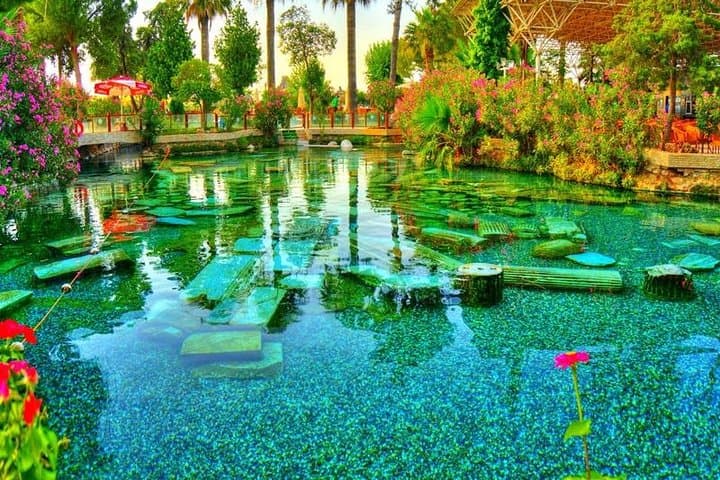
Local culture threads the trip—pottery in Avanos shaped from the Kızılırmak’s red silt, carpets in small cooperatives, and the slow, ceremonial business of lunch in family-run restaurants. Guides licensed by Turkey’s Ministry of Culture and Tourism add depth: stories of St. John in Ephesus, Cleopatra’s alleged bath at the Antique Pool, and the way hot water has dictated settlement patterns here for thousands of years.
Practical edge: expect lots of walking on uneven ground—cobblestones in Ephesus, stepped terraces at Pamukkale, and rocky trails in Cappadocia. The hot air balloon departs at sunrise (plan for a 4–5 a.m. pickup); if you add it to a silver package, book it early—slots sell fast. Leave shoes at the travertines’ edge and bring a swimsuit if you want the paid Cleopatra pool dip. Internal flights are included in the package, but carry a light daypack with layering, sun protection, and a refillable water bottle—temperatures swing widely between sites and between dawn balloon rides and midday ruins.
This itinerary compresses a lot of Turkey into a short window: travel by plane, by van, by foot, and sometimes by air. If you come prepared—good shoes, patient curiosity, and a camera—you’ll leave with landscapes and stories that keep shifting long after you land back in Istanbul.
moderate.
4 days.
Moderate fitness—comfortable walking for 2–4 hours on most days with some uneven terrain and short stair sections
Balloon flights are included only with the Gold and Diamond options; Silver allows booking the balloon as an add-on at a discounted rate if available.
Yes—domestic flights from Istanbul to Denizli and from Izmir to Cappadocia, plus the return flight to Istanbul, are included as listed in the itinerary.
Expect moderate walking: 2–4 hours of site touring daily with some short uphill sections and uneven ground in archaeological sites.
You can wade on the travertine terraces in designated areas barefoot; full swims in the Antique (Cleopatra) Pool require an extra fee at a managed facility.
The package includes three lunches and three breakfasts as outlined; other meals and some refreshments are not included.
The tour is semi-private with a maximum of 10 guests; hotel pickup in Istanbul is included—confirm your pickup point when booking.
Hierapolis grew as a Hellenistic and Roman spa town; Ephesus was a major Roman port and early Christian center, home to the Library of Celsus and the Grand Theater.
Pamukkale and Göreme are UNESCO-listed; stick to marked paths, avoid lotions/sunscreens directly in thermal outflows, and follow local rules to protect delicate travertines and cave paintings.
Turkey Experiences operates guided outdoor trips and adventures with an emphasis on safety, stewardship, and memorable experiences.
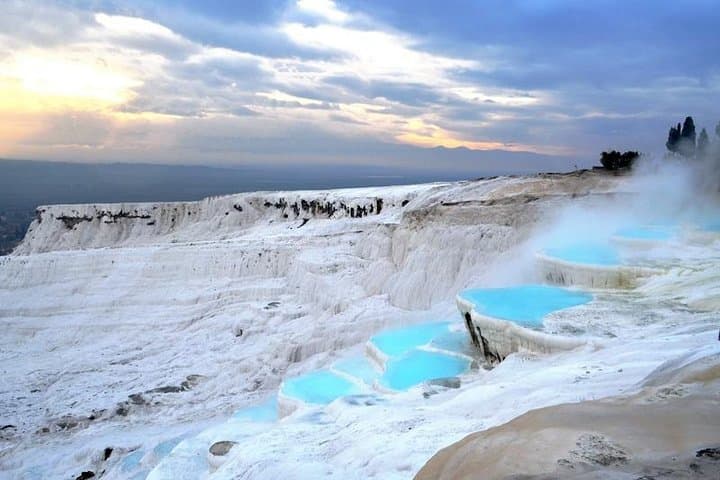
You step out of the minivan before sunrise and the white terraces of Pamukkale are already awake—steam rising from calcium-rich springs, spilling along ledges like slow-falling watercolors. The travertines glare under the first light, almost theatrical, and your guide points toward Hierapolis where a Roman theater holds the echo of centuries. Over four days this trip folds Turkey’s geological and human histories into one moving itinerary: marble runnels and Roman marble, a living thermal spring next to ruins where emperors once walked.
You step out of the minivan before sunrise and the white terraces of Pamukkale are already awake—steam rising from calcium-rich springs, spilling along ledges like slow-falling watercolors. The travertines glare under the first light, almost theatrical, and your guide points toward Hierapolis where a Roman theater holds the echo of centuries. Over four days this trip folds Turkey’s geological and human histories into one moving itinerary: marble runnels and Roman marble, a living thermal spring next to ruins where emperors once walked.
Pamukkale’s terraces are not decoration but geology in motion—travertine forced outward by mineral-rich waters that have hardened into pools and ridges over millennia. Hierapolis, perched above the white slope, began as a Hellenistic spa town and later became a Roman center; its necropolis is one of the largest in Anatolia. From there the itinerary slides west to Ephesus, once a bustling Mediterranean port where the Library of Celsus and the grand theater still dramatize an empire’s scale.
Then the landscape flips. You fly to Cappadocia and enter a lunar region of eroded tuff: fairy chimneys, pigeon houses carved into cliffs, and cave churches painted with Byzantine frescoes. If you opt for the balloon, you’ll rise 700–1,000 meters, the valleys opening like maps below you. The included ATV run carves a quicker, dusted line through valleys that otherwise take hours to read on foot.
Local culture threads the trip—pottery in Avanos shaped from the Kızılırmak’s red silt, carpets in small cooperatives, and the slow, ceremonial business of lunch in family-run restaurants. Guides licensed by Turkey’s Ministry of Culture and Tourism add depth: stories of St. John in Ephesus, Cleopatra’s alleged bath at the Antique Pool, and the way hot water has dictated settlement patterns here for thousands of years.
Practical edge: expect lots of walking on uneven ground—cobblestones in Ephesus, stepped terraces at Pamukkale, and rocky trails in Cappadocia. The hot air balloon departs at sunrise (plan for a 4–5 a.m. pickup); if you add it to a silver package, book it early—slots sell fast. Leave shoes at the travertines’ edge and bring a swimsuit if you want the paid Cleopatra pool dip. Internal flights are included in the package, but carry a light daypack with layering, sun protection, and a refillable water bottle—temperatures swing widely between sites and between dawn balloon rides and midday ruins.
This itinerary compresses a lot of Turkey into a short window: travel by plane, by van, by foot, and sometimes by air. If you come prepared—good shoes, patient curiosity, and a camera—you’ll leave with landscapes and stories that keep shifting long after you land back in Istanbul.