THE ADVENTURE COLLECTIVE® · Independent discovery and booking for outdoor travel

A focused 4-day private loop from Marrakech to Ouarzazate that pairs High Atlas passes with UNESCO-listed kasbahs and the unexpected green of Fint Oasis. Expect long scenic drives, short cultural walks, and a close look at Morocco’s southern architecture and film-country landscapes.
A focused 4-day private loop from Marrakech to Ouarzazate that pairs High Atlas passes with UNESCO-listed kasbahs and the unexpected green of Fint Oasis. Expect long scenic drives, short cultural walks, and a close look at Morocco’s southern architecture and film-country landscapes.
You leave Marrakech at first light, the red city shrinking in the rearview as the road climbs into the High Atlas. Switchbacks carve through copper cliffs and scrub; at 2,265 m the Tizi n’Tichka pass opens a cold, thin-air counterpoint to the heat below. The drive itself is part of the journey—each bend offers a new frame: terraced fields, scattered ksour, and the shingles of kasbahs clinging to hilltops.
Verified experiences and guided adventures in the surrounding area.
Operated by Holiday Services · Ouarzazate, Drâa-Tafilalet
You leave Marrakech at first light, the red city shrinking in the rearview as the road climbs into the High Atlas. Switchbacks carve through copper cliffs and scrub; at 2,265 m the Tizi n’Tichka pass opens a cold, thin-air counterpoint to the heat below. The drive itself is part of the journey—each bend offers a new frame: terraced fields, scattered ksour, and the shingles of kasbahs clinging to hilltops.
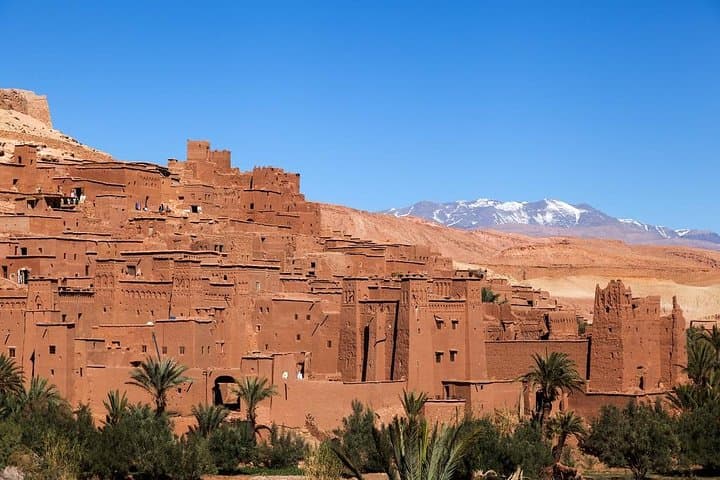
History and culture arrive in stone: Kasbah Telouet’s faded imperial rooms recall the power of Pacha el-Glaoui, while Aït Ben Haddou’s mud-brick silhouette explains why filmmakers keep coming. Ouarzazate, the region’s commercial hub, balances a working desert city with film studios that have doubled for ancient worlds.
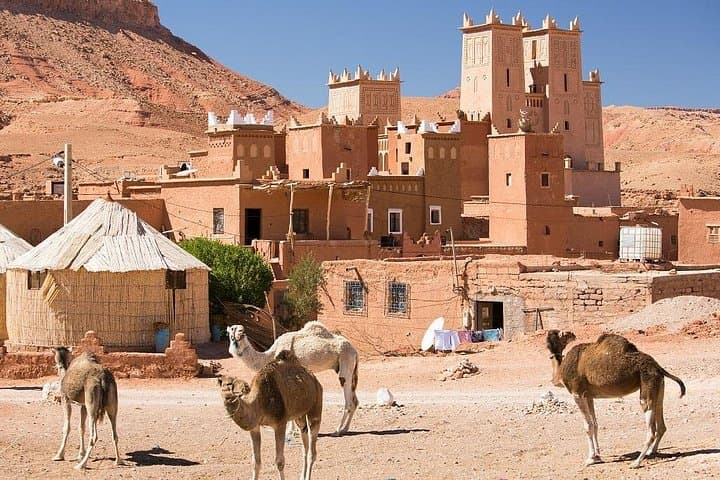
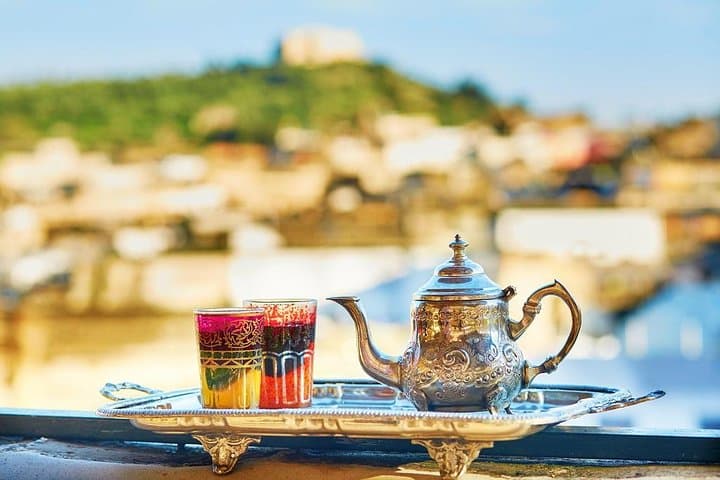
Geology is visible underfoot—red-brown silt, layered sandstone and alluvial fans spilling into palm-ringed oases like Fint. Berber villages offer direct encounters: a mint tea invite or a quick market walk that translates cultural continuity into daily life.
Practical guidance: plan for long drives—Marrakech to Ouarzazate is about 200–220 km and 4–5 hours with stops. Expect paved roads but mountainous driving with tight turns; bring layered clothing for temperature swings, sunscreen, and a refillable water bottle. Allow time for short walks at kasbahs and the oasis but know this is a driving-led trip more than a trek. Aim for spring or fall for mild weather and clearer mountain views. Pack patience and a good camera—the light on the kasbah walls changes fast and rewards those who stop to look.
easy.
4 days.
No special fitness required beyond the ability to climb short stone stairways and walk uneven ground for 10–30 minutes at stops.
Expect roughly 4–5 hours of driving one-way via the Tizi n’Tichka pass with stops; the itinerary spaces time for visits and lunch.
The tour notes visit and entrance fees to listed museums and monuments are included in the package details; confirm which specific sites are covered at booking.
Yes—physically the tour is rated easy with short walks, but inquire about mobility needs since some kasbahs have stairs and uneven ground.
The driver-guide service operates in English, Spanish, French and German according to the listing; confirm language preference at booking.
The region’s kasbahs were power centers for the Glaoui family; Aït Ben Haddou is a UNESCO World Heritage site and a long-standing film location.
Water is a scarce resource here—use refillable bottles and avoid wasting water; support local communities by buying crafts directly from vendors to help sustain village economies.
Holiday Services operates guided outdoor trips and adventures with an emphasis on safety, stewardship, and memorable experiences.
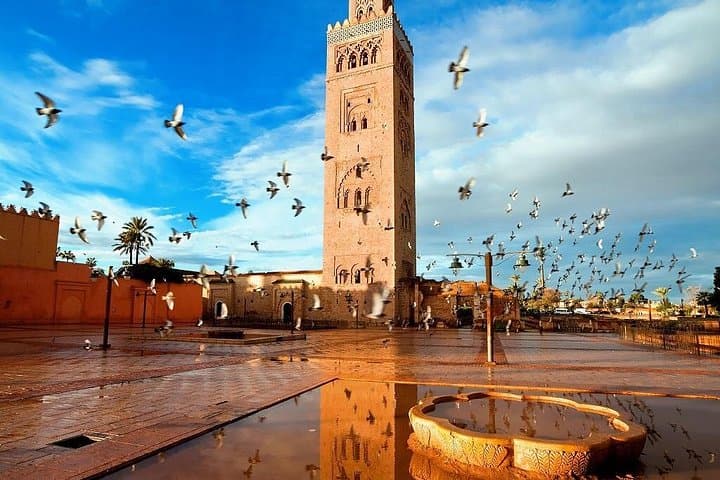
You leave Marrakech at first light, the red city shrinking in the rearview as the road climbs into the High Atlas. Switchbacks carve through copper cliffs and scrub; at 2,265 m the Tizi n’Tichka pass opens a cold, thin-air counterpoint to the heat below. The drive itself is part of the journey—each bend offers a new frame: terraced fields, scattered ksour, and the shingles of kasbahs clinging to hilltops.
You leave Marrakech at first light, the red city shrinking in the rearview as the road climbs into the High Atlas. Switchbacks carve through copper cliffs and scrub; at 2,265 m the Tizi n’Tichka pass opens a cold, thin-air counterpoint to the heat below. The drive itself is part of the journey—each bend offers a new frame: terraced fields, scattered ksour, and the shingles of kasbahs clinging to hilltops.
History and culture arrive in stone: Kasbah Telouet’s faded imperial rooms recall the power of Pacha el-Glaoui, while Aït Ben Haddou’s mud-brick silhouette explains why filmmakers keep coming. Ouarzazate, the region’s commercial hub, balances a working desert city with film studios that have doubled for ancient worlds.
Geology is visible underfoot—red-brown silt, layered sandstone and alluvial fans spilling into palm-ringed oases like Fint. Berber villages offer direct encounters: a mint tea invite or a quick market walk that translates cultural continuity into daily life.
Practical guidance: plan for long drives—Marrakech to Ouarzazate is about 200–220 km and 4–5 hours with stops. Expect paved roads but mountainous driving with tight turns; bring layered clothing for temperature swings, sunscreen, and a refillable water bottle. Allow time for short walks at kasbahs and the oasis but know this is a driving-led trip more than a trek. Aim for spring or fall for mild weather and clearer mountain views. Pack patience and a good camera—the light on the kasbah walls changes fast and rewards those who stop to look.