THE ADVENTURE COLLECTIVE® · Independent discovery and booking for outdoor travel

Four days of coastal navigation, tidepool exploration and beach camping along Olympic National Park’s north shore. Learn tide-table strategy, headland scrambles and seaside backcountry skills while crossing dramatic cliffs and sea stacks.
Four days of coastal navigation, tidepool exploration and beach camping along Olympic National Park’s north shore. Learn tide-table strategy, headland scrambles and seaside backcountry skills while crossing dramatic cliffs and sea stacks.
At first light the ocean does not look calm so much as patient — the swell rolls in with a measured rhythm and the sea-spray smells of iron and kelp. On the first morning you meet at the Rialto Beach backpackers parking area, shoulder straps already whispering with last-minute adjustments, and a guide folds a tide chart onto the hood of a truck. From there the trip moves inland for a shuttle to Ozette and then out again: boardwalk through a coastal temperate forest, then stone and sand and the raw architecture of the Pacific.
Verified experiences and guided adventures in the surrounding area.
Operated by Lasting Adventures · Forks, Washington
At first light the ocean does not look calm so much as patient — the swell rolls in with a measured rhythm and the sea-spray smells of iron and kelp. On the first morning you meet at the Rialto Beach backpackers parking area, shoulder straps already whispering with last-minute adjustments, and a guide folds a tide chart onto the hood of a truck. From there the trip moves inland for a shuttle to Ozette and then out again: boardwalk through a coastal temperate forest, then stone and sand and the raw architecture of the Pacific.
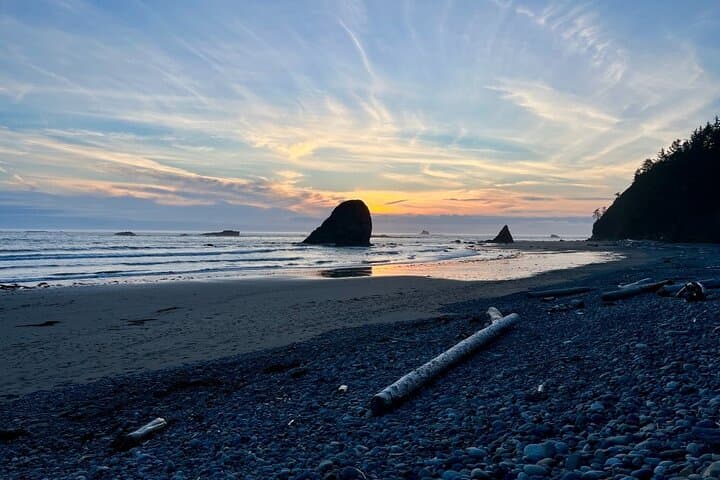
This is not a walk along a sunny shoreline; it’s coastal mountaineering with sand underfoot. Geologically the north coast of Olympic National Park is a collision zone — sculpted bedrock, exposed sedimentary layers, and sea stacks carved by millions of waves. Cultural history runs parallel: this coastline has been used for millennia by the Makah and Quileute people, whose place names and seasonal fishing practices are woven into the landscape. You’ll pass sites where maritime history and shipwreck lore mix with Indigenous knowledge of tides and foraging.
The itinerary balances short day hikes and long stretches on the beach: about 3–7 miles per day, with minimal vertical gain (most days hover around ±150 feet) but frequent rocky obstacles, boulder fields and headlands to negotiate. Guides teach tide-table reading and safe timing for headland crossings — skills that change a casual hike into a confident coastal expedition.
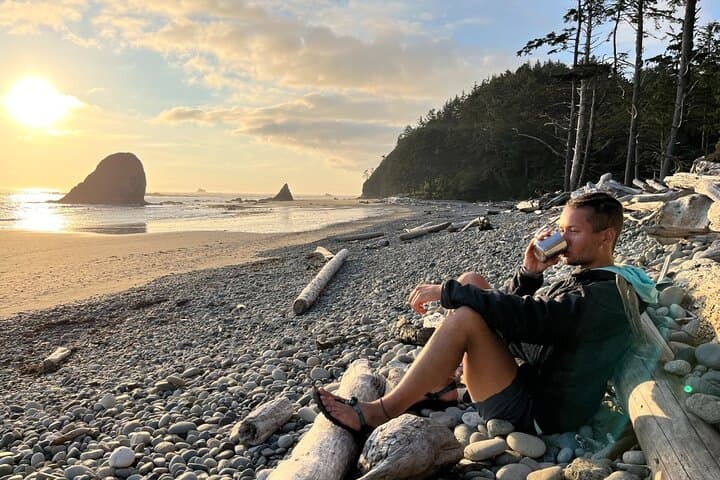
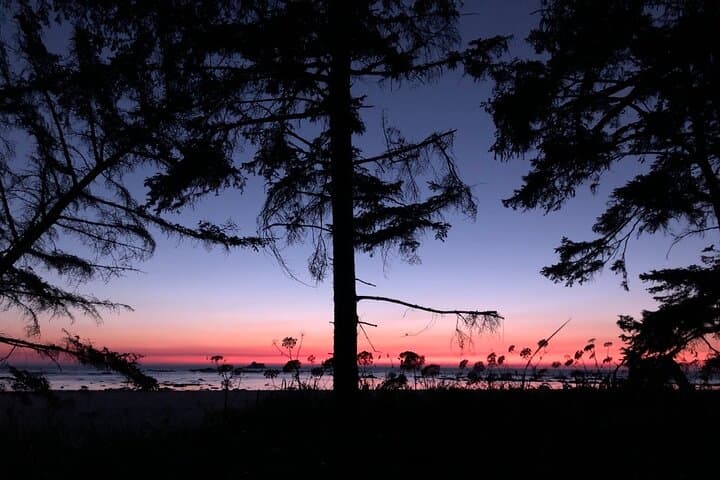
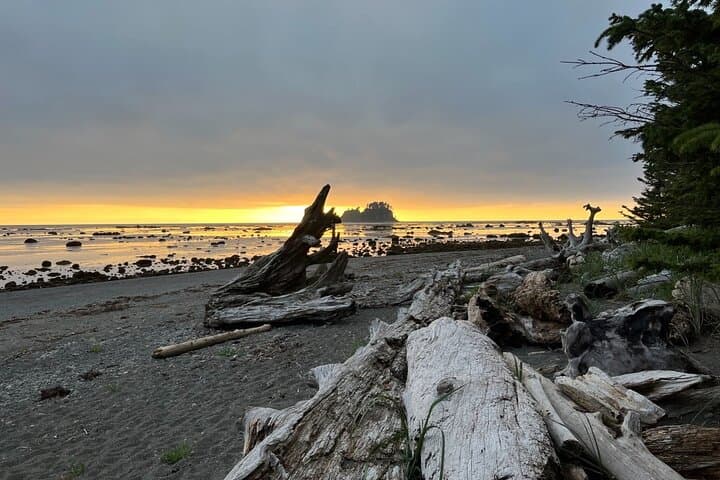
Expect dense, mist-sifted forest on approach, slick kelp-strewn rock, luminous tidepools at low tide, and wind-shaped driftwood camps. Nights are in two flavors: sheltered forest sites at Sand Point or beachside camps under stars and the persistent lunar glow over the surf. Meals are hearty and cooked by guides; gear includes tents, pads, and sleeping bags provided, but you’ll need a small daypack for personal items.
Practicalities: trips run in summer and early fall when tides and storms are most predictable, and groups are small (max five). Bring waterproof boots with sticky soles, neoprene socks or gaiters for wet scrambles, and a reliable headlamp. Check National Park wilderness-permit rules and watch the forecast — tour operators will cancel if tides or weather make sections unsafe. Hydration is critical; carry at least 2–3 liters and a filter if you expect to refill from freshwater sources inland.
By the final day you’ll thread the Hole-in-the-Wall arch and arrive at Rialto Beach with a clearer sense of timing and seamanship — the ocean will still be patient, but you’ll be better prepared to move with it.
moderate.
4 days.
Moderate fitness: comfortable hiking 3–8 miles a day with a loaded pack and scrambling over rocky terrain.
Yes — Olympic National Park has backcountry permit requirements. The operator handles group logistics but confirm permit rules and personal gear requirements beforehand.
Headlands involve scrambling over wet rock and navigating tide-restricted windows; they're not high-elevation climbs but require sure-footedness and comfort with exposure.
Expect intertidal life like sea stars and anemones, plus shorebirds and possibly harbor seals or migrating gray whales offshore during season.
Camps are primitive — expect backcountry toilet systems or catholes; guides manage human waste per park regulations.
You may bring personal gear, but the trip includes tents, sleeping bags and pads unless you prefer your own; check with the operator on sizes and compatibility.
Tours can be canceled for unsafe tides or storms; cancellation policies apply but operators typically offer full refunds if conditions force cancellation.
The north coast is part of lands stewarded by coastal tribes such as the Makah and Quileute; place names and seasonal shore use reflect long-standing Indigenous maritime practices.
Practice Leave No Trace: avoid collecting shells or animals, use established fire rules, and pack out all waste to protect fragile intertidal ecosystems.
Lasting Adventures operates guided outdoor trips and adventures with an emphasis on safety, stewardship, and memorable experiences.
At first light the ocean does not look calm so much as patient — the swell rolls in with a measured rhythm and the sea-spray smells of iron and kelp. On the first morning you meet at the Rialto Beach backpackers parking area, shoulder straps already whispering with last-minute adjustments, and a guide folds a tide chart onto the hood of a truck. From there the trip moves inland for a shuttle to Ozette and then out again: boardwalk through a coastal temperate forest, then stone and sand and the raw architecture of the Pacific.
At first light the ocean does not look calm so much as patient — the swell rolls in with a measured rhythm and the sea-spray smells of iron and kelp. On the first morning you meet at the Rialto Beach backpackers parking area, shoulder straps already whispering with last-minute adjustments, and a guide folds a tide chart onto the hood of a truck. From there the trip moves inland for a shuttle to Ozette and then out again: boardwalk through a coastal temperate forest, then stone and sand and the raw architecture of the Pacific.
This is not a walk along a sunny shoreline; it’s coastal mountaineering with sand underfoot. Geologically the north coast of Olympic National Park is a collision zone — sculpted bedrock, exposed sedimentary layers, and sea stacks carved by millions of waves. Cultural history runs parallel: this coastline has been used for millennia by the Makah and Quileute people, whose place names and seasonal fishing practices are woven into the landscape. You’ll pass sites where maritime history and shipwreck lore mix with Indigenous knowledge of tides and foraging.
The itinerary balances short day hikes and long stretches on the beach: about 3–7 miles per day, with minimal vertical gain (most days hover around ±150 feet) but frequent rocky obstacles, boulder fields and headlands to negotiate. Guides teach tide-table reading and safe timing for headland crossings — skills that change a casual hike into a confident coastal expedition.
Expect dense, mist-sifted forest on approach, slick kelp-strewn rock, luminous tidepools at low tide, and wind-shaped driftwood camps. Nights are in two flavors: sheltered forest sites at Sand Point or beachside camps under stars and the persistent lunar glow over the surf. Meals are hearty and cooked by guides; gear includes tents, pads, and sleeping bags provided, but you’ll need a small daypack for personal items.
Practicalities: trips run in summer and early fall when tides and storms are most predictable, and groups are small (max five). Bring waterproof boots with sticky soles, neoprene socks or gaiters for wet scrambles, and a reliable headlamp. Check National Park wilderness-permit rules and watch the forecast — tour operators will cancel if tides or weather make sections unsafe. Hydration is critical; carry at least 2–3 liters and a filter if you expect to refill from freshwater sources inland.
By the final day you’ll thread the Hole-in-the-Wall arch and arrive at Rialto Beach with a clearer sense of timing and seamanship — the ocean will still be patient, but you’ll be better prepared to move with it.