THE ADVENTURE COLLECTIVE® · Independent discovery and booking for outdoor travel

Cross the Mongolian steppe by train, spend three nights in a ger with a nomadic family, learn dairy crafts and ride local horses to river valleys and Sukhanii Hutul. This four-day exchange mixes hands-on work with wide, elemental landscape.
Cross the Mongolian steppe by train, spend three nights in a ger with a nomadic family, learn dairy crafts and ride local horses to river valleys and Sukhanii Hutul. This four-day exchange mixes hands-on work with wide, elemental landscape.
In the low, pale light of the Mongolian steppe, the ger’s felt walls breathe with the rhythm of a nomadic family’s day: morning milkings, horses returning on scent, and the distant train slicing the landscape into a human measure. Travelers arrive by day train from Ulaanbaatar and step off into a broad plain where wind and river basins shape everything—Sukhanii Hutul’s small ridges and the Selenge-Orkhon watershed define the view.
Verified experiences and guided adventures in the surrounding area.
Operated by Badartugs · Zuunburen (near Shaamar), Selenge Province
In the low, pale light of the Mongolian steppe, the ger’s felt walls breathe with the rhythm of a nomadic family’s day: morning milkings, horses returning on scent, and the distant train slicing the landscape into a human measure. Travelers arrive by day train from Ulaanbaatar and step off into a broad plain where wind and river basins shape everything—Sukhanii Hutul’s small ridges and the Selenge-Orkhon watershed define the view.
This region sits on the northern edge of Mongolia’s rolling steppe, where loess soils and river terraces trace ancient drainage routes. The lifestyle here has roots in centuries of Mongolian pastoralism: seasonal migration, dairy craft, and horse culture remain practical adaptations rather than stagecraft. Visitors help milk cows, learn to make aaruul and fermented dairy, ride local horses to winter camps, and eat over open coals beside rivers that push the landscape outward.
Practical guidance: pack layers and a warm hat—ger nights are cold even in summer—and bring sturdy ankle-support footwear for uneven ground and horseback mounting. Drinking water is provided but carry a refill bottle; bathrooms are basic and showers uncommon. Expect moderate physical activity: short horse rides, walking on unmarked pasture, and participation in hands-on chores. Timing a trip in late spring through early fall eases travel (train schedules and muddy spring thaw can complicate logistics).
This four-day homestay is as much about simple routines as scenery: it’s a field lesson in nomadic resilience, best approached with curiosity, physical readiness, and respect for private family life.
moderate.
4 days.
Participants should have a moderate level of fitness—able to walk on uneven ground, mount horses, and help with light farm tasks.
The experience begins with a train ride of several hours north from Ulaanbaatar to Shaamar soum followed by a short car transfer to the ger near Zuunburen.
Activities include short horseback rides and hands-on chores like milking and stirring dairy—no advanced fitness required, but riders should be comfortable on a horse and able to walk over uneven ground.
Gers have basic bedding and seating; bathrooms are outside and showers are generally not available—water for washing is provided.
Families with older children who can follow safety instructions and handle basic discomfort may enjoy it; infants and those needing full medical support are not recommended.
This area has been shaped by Mongolian pastoralism for centuries; seasonal migration and dairy production remain core survival strategies tied to river basins and grazing patterns.
Grazing pressure and water use are managed locally—travelers should minimize waste, avoid introducing foreign food or seeds, and follow host guidance to protect pasture health.
Badartugs operates guided outdoor trips and adventures with an emphasis on safety, stewardship, and memorable experiences.
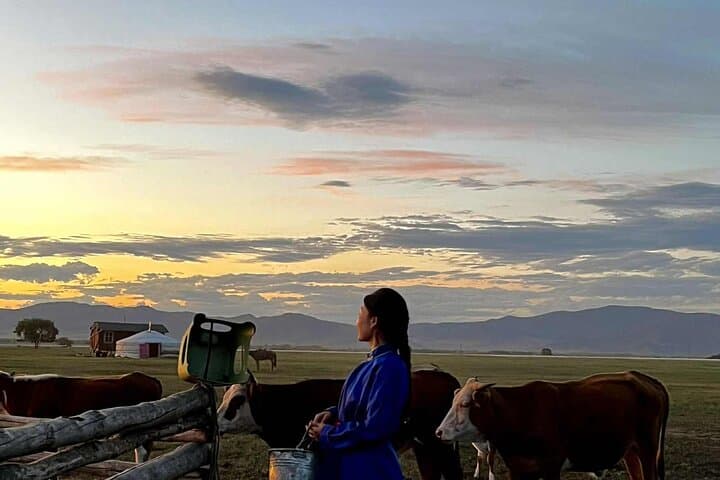


In the low, pale light of the Mongolian steppe, the ger’s felt walls breathe with the rhythm of a nomadic family’s day: morning milkings, horses returning on scent, and the distant train slicing the landscape into a human measure. Travelers arrive by day train from Ulaanbaatar and step off into a broad plain where wind and river basins shape everything—Sukhanii Hutul’s small ridges and the Selenge-Orkhon watershed define the view.
In the low, pale light of the Mongolian steppe, the ger’s felt walls breathe with the rhythm of a nomadic family’s day: morning milkings, horses returning on scent, and the distant train slicing the landscape into a human measure. Travelers arrive by day train from Ulaanbaatar and step off into a broad plain where wind and river basins shape everything—Sukhanii Hutul’s small ridges and the Selenge-Orkhon watershed define the view.
This region sits on the northern edge of Mongolia’s rolling steppe, where loess soils and river terraces trace ancient drainage routes. The lifestyle here has roots in centuries of Mongolian pastoralism: seasonal migration, dairy craft, and horse culture remain practical adaptations rather than stagecraft. Visitors help milk cows, learn to make aaruul and fermented dairy, ride local horses to winter camps, and eat over open coals beside rivers that push the landscape outward.
Practical guidance: pack layers and a warm hat—ger nights are cold even in summer—and bring sturdy ankle-support footwear for uneven ground and horseback mounting. Drinking water is provided but carry a refill bottle; bathrooms are basic and showers uncommon. Expect moderate physical activity: short horse rides, walking on unmarked pasture, and participation in hands-on chores. Timing a trip in late spring through early fall eases travel (train schedules and muddy spring thaw can complicate logistics).
This four-day homestay is as much about simple routines as scenery: it’s a field lesson in nomadic resilience, best approached with curiosity, physical readiness, and respect for private family life.