THE ADVENTURE COLLECTIVE® · Independent discovery and booking for outdoor travel

Traverse the High Atlas, explore dramatic gorges and sleep on the dunes of Erg Chebbi on this four-day cultural and landscape circuit from Marrakech. Expect kasbahs, camel treks, and sunrise views that reward the early wake-up.
Traverse the High Atlas, explore dramatic gorges and sleep on the dunes of Erg Chebbi on this four-day cultural and landscape circuit from Marrakech. Expect kasbahs, camel treks, and sunrise views that reward the early wake-up.
You step out of the air-conditioned minivan as the High Atlas exhales—cold stone, wind-sculpted terraces, and a road that pins villages to the hillside. The first day climbs Tizi n’Tichka, a ribbon of switchbacks that opens into ochre kasbahs and the ochre light of Ouarzazate, the region that doubled for desert epics. By day two the landscape narrows into the Dades and Todra gorges: cliffs rise like pages flipped skyward, and walkers can thread a short canyon hike under 300m red walls.
Verified experiences and guided adventures in the surrounding area.
Operated by JD Morocco Tours, Sarl · Marrakech, Marrakesh-Safi
You step out of the air-conditioned minivan as the High Atlas exhales—cold stone, wind-sculpted terraces, and a road that pins villages to the hillside. The first day climbs Tizi n’Tichka, a ribbon of switchbacks that opens into ochre kasbahs and the ochre light of Ouarzazate, the region that doubled for desert epics. By day two the landscape narrows into the Dades and Todra gorges: cliffs rise like pages flipped skyward, and walkers can thread a short canyon hike under 300m red walls.
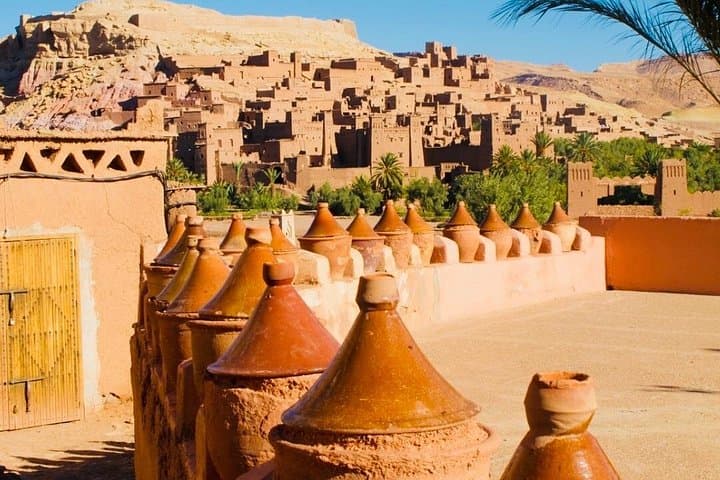
The route follows centuries-old caravan tracks. Ait Ben Haddou, UNESCO-listed, recalls the mudbrick architecture that sheltered trans-Saharan traders and later film crews. Geologically, the journey moves from folded Atlas limestone to the wind-sifted Erg Chebbi dunes—sand that shifts nightly and stores the heat of the day.
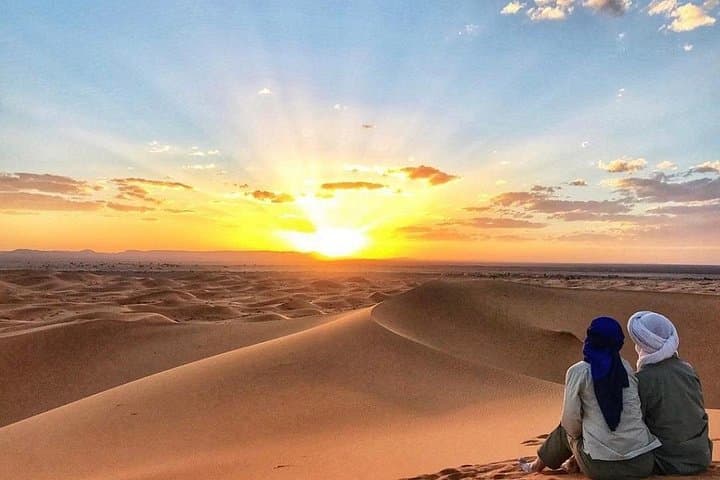
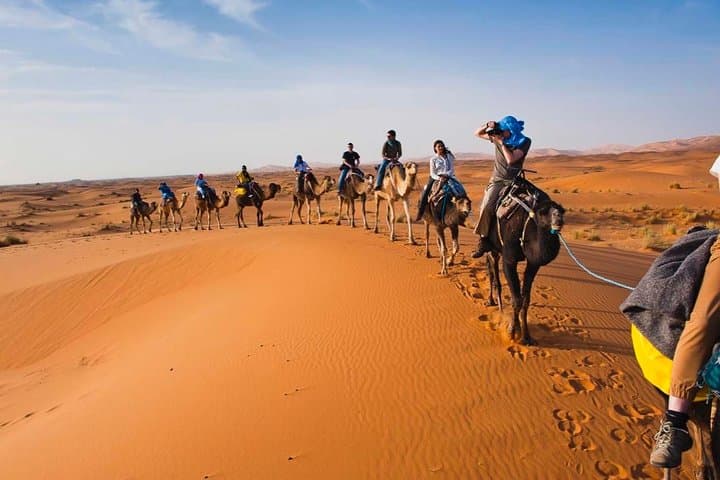
Culturally you’ll meet Berber communities and the Gnawa music of Merzouga villages; sleepouts in the desert mimic nomad practices while staying in half-board riads and a tented camp. Expect a guided camel saddle at sunset and an early, cool sunrise over the dunes.
Practical guidance: pack layered clothing for big diurnal temperature swings, a sun hat and a small daypack for walks in Todra, and simple shoes for the dunes (sand gets everywhere). Hydrate frequently—the Sahara is dry, not necessarily hot in the shoulder seasons. Allow the driver-guide to time the long road stretches; much of the experience is scenic transit punctuated by short hikes, cultural stops, and a single overnight camping experience under canvas.
moderate.
4 days.
Basic to moderate fitness for short hikes, walking in canyon floors, and mounting/dismounting camels; no sustained technical fitness required.
The camel trek to the camp is gentle—about 1–2 hours at a slow pace—suitable for most travelers; camps are basic but comfortable with mattresses and blankets provided.
Meals listed as half-board include breakfasts and dinners; accommodations are typically 3-star riads and a desert camp for the overnight in Merzouga.
Yes—many operators offer upgrades to different hotels, private tours, or shortened versions if you have less time.
Summers are hot in low valleys and dunes; spring and fall are warm days and cool nights; winters can be cold in the High Atlas with possible frost at higher passes.
The route follows old caravan corridors; Ait Ben Haddou and the kasbahs are mudbrick witnesses to centuries of trans-Saharan trade and local aristocratic power.
Water is scarce—use refillable containers and limit single-use plastics; stick to established tracks in the dunes and respect local camp rules to reduce impact.
JD Morocco Tours, Sarl operates guided outdoor trips and adventures with an emphasis on safety, stewardship, and memorable experiences.
You step out of the air-conditioned minivan as the High Atlas exhales—cold stone, wind-sculpted terraces, and a road that pins villages to the hillside. The first day climbs Tizi n’Tichka, a ribbon of switchbacks that opens into ochre kasbahs and the ochre light of Ouarzazate, the region that doubled for desert epics. By day two the landscape narrows into the Dades and Todra gorges: cliffs rise like pages flipped skyward, and walkers can thread a short canyon hike under 300m red walls.
You step out of the air-conditioned minivan as the High Atlas exhales—cold stone, wind-sculpted terraces, and a road that pins villages to the hillside. The first day climbs Tizi n’Tichka, a ribbon of switchbacks that opens into ochre kasbahs and the ochre light of Ouarzazate, the region that doubled for desert epics. By day two the landscape narrows into the Dades and Todra gorges: cliffs rise like pages flipped skyward, and walkers can thread a short canyon hike under 300m red walls.
The route follows centuries-old caravan tracks. Ait Ben Haddou, UNESCO-listed, recalls the mudbrick architecture that sheltered trans-Saharan traders and later film crews. Geologically, the journey moves from folded Atlas limestone to the wind-sifted Erg Chebbi dunes—sand that shifts nightly and stores the heat of the day.
Culturally you’ll meet Berber communities and the Gnawa music of Merzouga villages; sleepouts in the desert mimic nomad practices while staying in half-board riads and a tented camp. Expect a guided camel saddle at sunset and an early, cool sunrise over the dunes.
Practical guidance: pack layered clothing for big diurnal temperature swings, a sun hat and a small daypack for walks in Todra, and simple shoes for the dunes (sand gets everywhere). Hydrate frequently—the Sahara is dry, not necessarily hot in the shoulder seasons. Allow the driver-guide to time the long road stretches; much of the experience is scenic transit punctuated by short hikes, cultural stops, and a single overnight camping experience under canvas.