THE ADVENTURE COLLECTIVE® · Independent discovery and booking for outdoor travel

Sail four days along the Nile from Luxor to Aswan, visiting Karnak, the Valley of the Kings, Edfu, Kom Ombo and an early-morning trip to Abu Simbel. This cruise pairs relaxed river travel with concentrated temple visits and local cultural encounters.
Sail four days along the Nile from Luxor to Aswan, visiting Karnak, the Valley of the Kings, Edfu, Kom Ombo and an early-morning trip to Abu Simbel. This cruise pairs relaxed river travel with concentrated temple visits and local cultural encounters.
The Nile slides by like a slow conversation—palm-lined banks, fishermen casting nets, and the limestone cliffs of Upper Egypt drifting past the sundeck. On day one you climb aboard a five-star cruise in Luxor, lunch on deck, then walk beneath towering columns at Karnak as the late-day light sharpens hieroglyphs into readable stories.
Verified experiences and guided adventures in the surrounding area.
Operated by Egypt Package Tours · Luxor, Luxor Governorate
The Nile slides by like a slow conversation—palm-lined banks, fishermen casting nets, and the limestone cliffs of Upper Egypt drifting past the sundeck. On day one you climb aboard a five-star cruise in Luxor, lunch on deck, then walk beneath towering columns at Karnak as the late-day light sharpens hieroglyphs into readable stories.
This route follows the corridor of ancient Egyptian power: the Theban Necropolis on the west bank, mortuary temples carved into valley faces, and river towns that grew around temple economies. Geologically, you move from fertile Nile floodplain to the shock of desert rock; culturally, you trace 3,000 years of pharaonic ritual, Greco-Roman additions, and modern Nubian life in Aswan.
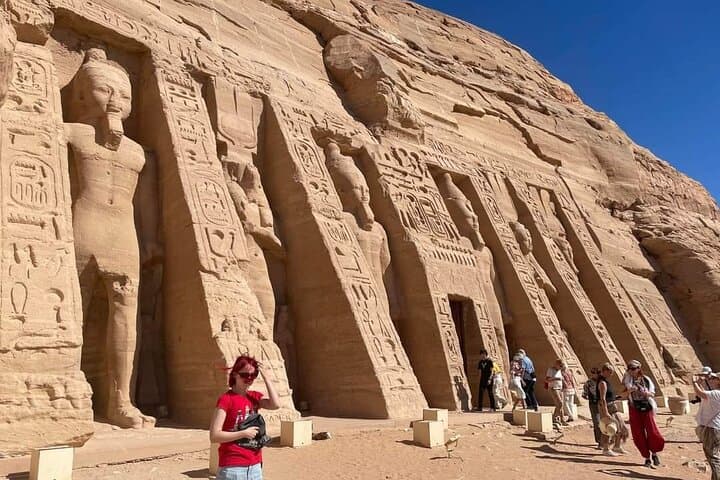
Practical rhythm: mornings are for guided temple visits and tomb interiors (bring a light headlamp where allowed); afternoons are for sailing, tea on the sundeck, and short ashore stops at Edfu and Kom Ombo. A dawn minibus takes you 285 km south to Abu Simbel—an early start but the payoff is the colossal Ramesses II façade bathed in morning sun.
Expect comfortable cabins, full-board dining (drinks extra), and variable sailing schedules—locks and Nile currents can shuffle the itinerary. Bring sun protection, modest clothing for sacred sites, and comfortable shoes for uneven temple stone. Plan extra time in Luxor or Aswan to absorb markets, museums, and Nubian villages before or after the cruise.
easy.
3–4 days.
Suitable for travelers who can walk short distances on uneven stone and step on/off boats; no strenuous hiking required
No—most entrance fees and optional tomb tickets are paid on-site by travelers unless explicitly stated; carry local currency.
The Abu Simbel day trip is included as a shared-group excursion, but logistical changes or cancellations (e.g., weather) may alter plans or provide a partial refund.
Yes—transfers to airports and hotels are included; notify the operator of preferred drop-off or early check-in requirements.
The cruise and transfers list wheelchair-accessible options, but temple sites often have steps and uneven terrain—check specific accessibility needs with the operator.
This corridor of the Nile was the political and religious heart of pharaonic Egypt—temples here were monuments to gods and the afterlife constructed over millennia.
High visitor numbers stress fragile tomb paintings and temple surfaces; follow site rules, avoid flash photography in tombs, and support local guides and conservation fees when offered.
Egypt Package Tours operates guided outdoor trips and adventures with an emphasis on safety, stewardship, and memorable experiences.



The Nile slides by like a slow conversation—palm-lined banks, fishermen casting nets, and the limestone cliffs of Upper Egypt drifting past the sundeck. On day one you climb aboard a five-star cruise in Luxor, lunch on deck, then walk beneath towering columns at Karnak as the late-day light sharpens hieroglyphs into readable stories.
The Nile slides by like a slow conversation—palm-lined banks, fishermen casting nets, and the limestone cliffs of Upper Egypt drifting past the sundeck. On day one you climb aboard a five-star cruise in Luxor, lunch on deck, then walk beneath towering columns at Karnak as the late-day light sharpens hieroglyphs into readable stories.
This route follows the corridor of ancient Egyptian power: the Theban Necropolis on the west bank, mortuary temples carved into valley faces, and river towns that grew around temple economies. Geologically, you move from fertile Nile floodplain to the shock of desert rock; culturally, you trace 3,000 years of pharaonic ritual, Greco-Roman additions, and modern Nubian life in Aswan.
Practical rhythm: mornings are for guided temple visits and tomb interiors (bring a light headlamp where allowed); afternoons are for sailing, tea on the sundeck, and short ashore stops at Edfu and Kom Ombo. A dawn minibus takes you 285 km south to Abu Simbel—an early start but the payoff is the colossal Ramesses II façade bathed in morning sun.
Expect comfortable cabins, full-board dining (drinks extra), and variable sailing schedules—locks and Nile currents can shuffle the itinerary. Bring sun protection, modest clothing for sacred sites, and comfortable shoes for uneven temple stone. Plan extra time in Luxor or Aswan to absorb markets, museums, and Nubian villages before or after the cruise.