THE ADVENTURE COLLECTIVE® · Independent discovery and booking for outdoor travel

Summit the High Atlas and walk through remote Berber villages on a four-day trek from Marrakech. Expect steep ascents, rustic guesthouses, and commanding summit views—prepare for altitude and changing mountain weather.
Summit the High Atlas and walk through remote Berber villages on a four-day trek from Marrakech. Expect steep ascents, rustic guesthouses, and commanding summit views—prepare for altitude and changing mountain weather.
A cold dawn breaks over the High Atlas as you climb from the shadowed ravines near Imlil; prayer calls drift from village terraces and the path pulses with the clack of mule hooves. On day one the trail tightens into rocky switchbacks, then opens onto a bowl of scree where the summit—North Africa’s high point—looms above like a raw fortress.
Verified experiences and guided adventures in the surrounding area.
Operated by Berber Roots & Peaks with Hassan · Imlil, Marrakech-Safi
A cold dawn breaks over the High Atlas as you climb from the shadowed ravines near Imlil; prayer calls drift from village terraces and the path pulses with the clack of mule hooves. On day one the trail tightens into rocky switchbacks, then opens onto a bowl of scree where the summit—North Africa’s high point—looms above like a raw fortress.
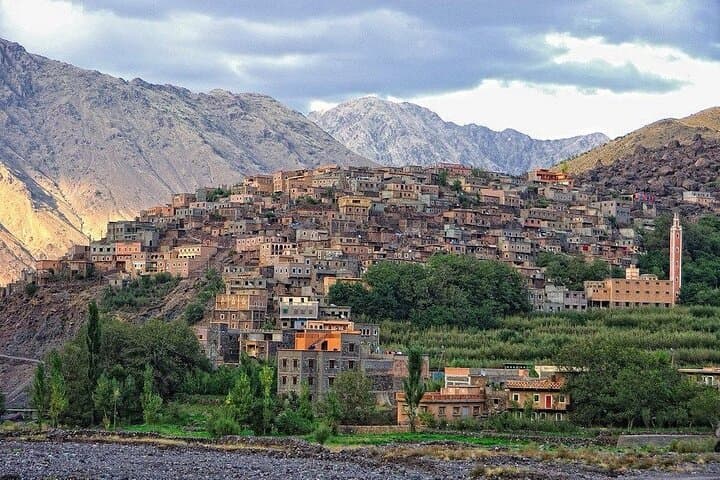
The route threads centuries-old Berber hamlets, their flat roofs and stone paths reflecting traditional mountain life. Geologically, the High Atlas is young and uplifted—granite and schist carved by winter snow and spring torrents—so expect loose rock, steep cols, and sudden panoramic exposures. Culturally, your nights are spent in simple gîtes and family-run guesthouses where tagine and mint tea are practical hospitality and a lesson in local rhythm.
Practical guidance is straightforward: this is high-elevation trekking, not technical climbing, but it’s physically demanding. Plan for sustained uphill days, above 3,000 m on summit day, variable weather, and short daylight in shoulder seasons. Hydrate early, use sun protection, and pace for altitude—many groups use a mule to carry luggage and keep packs light. A guide familiar with village trails shortens navigation and unlocks local stories and off-trail viewpoints that most visitors miss.
Expect early starts, rustic sleeping arrangements, and big, clean views from the summit ridge. Leave no trace, honor village customs (ask before photographing people), and build margin into your schedule—weather or fatigue can reshape plans fast, and that’s part of the mountain’s compact curriculum.
challenging.
4 days.
Good aerobic fitness with experience on multi-day hikes; ability to manage sustained uphill days and carry a light daypack.
No—this itinerary is non-technical trekking; crampons or ropes are not required in normal summer conditions, though winter ascents will need winter equipment and skills.
Jebel Toubkal summit reaches 4,167 m (13,671 ft). The climb is physically demanding with long uphill stretches and loose rock—expect a 6–8 hour summit push from the high camp.
Most groups start near Imlil after transfers from Marrakech and return there or Marrakech at the end; Imlil is the common base village for acclimatization and logistics.
Yes—accommodations are family-run guesthouses (gîtes) or mountain huts with simple facilities; expect shared rooms, shared bathrooms, and hearty local meals.
The High Atlas has been inhabited by Amazigh (Berber) communities for millennia; village routes served as trade and pastoral corridors long before modern trekking became common.
The High Atlas is ecologically sensitive—stick to trails, pack out waste, and use local mule services to reduce erosion and village strain.
Berber Roots & Peaks with Hassan operates guided outdoor trips and adventures with an emphasis on safety, stewardship, and memorable experiences.


A cold dawn breaks over the High Atlas as you climb from the shadowed ravines near Imlil; prayer calls drift from village terraces and the path pulses with the clack of mule hooves. On day one the trail tightens into rocky switchbacks, then opens onto a bowl of scree where the summit—North Africa’s high point—looms above like a raw fortress.
A cold dawn breaks over the High Atlas as you climb from the shadowed ravines near Imlil; prayer calls drift from village terraces and the path pulses with the clack of mule hooves. On day one the trail tightens into rocky switchbacks, then opens onto a bowl of scree where the summit—North Africa’s high point—looms above like a raw fortress.
The route threads centuries-old Berber hamlets, their flat roofs and stone paths reflecting traditional mountain life. Geologically, the High Atlas is young and uplifted—granite and schist carved by winter snow and spring torrents—so expect loose rock, steep cols, and sudden panoramic exposures. Culturally, your nights are spent in simple gîtes and family-run guesthouses where tagine and mint tea are practical hospitality and a lesson in local rhythm.
Practical guidance is straightforward: this is high-elevation trekking, not technical climbing, but it’s physically demanding. Plan for sustained uphill days, above 3,000 m on summit day, variable weather, and short daylight in shoulder seasons. Hydrate early, use sun protection, and pace for altitude—many groups use a mule to carry luggage and keep packs light. A guide familiar with village trails shortens navigation and unlocks local stories and off-trail viewpoints that most visitors miss.
Expect early starts, rustic sleeping arrangements, and big, clean views from the summit ridge. Leave no trace, honor village customs (ask before photographing people), and build margin into your schedule—weather or fatigue can reshape plans fast, and that’s part of the mountain’s compact curriculum.