THE ADVENTURE COLLECTIVE® · Independent discovery and booking for outdoor travel

Ascend Mount Meru over four days from Arusha, sleeping in alpine huts and summiting Socialist Peak (4,562 m). This guided trek includes park fees, meals, transfers and an armed ranger for safety—ideal for fit hikers seeking a technical summit day without technical climbing.
Ascend Mount Meru over four days from Arusha, sleeping in alpine huts and summiting Socialist Peak (4,562 m). This guided trek includes park fees, meals, transfers and an armed ranger for safety—ideal for fit hikers seeking a technical summit day without technical climbing.
The trail begins before dawn outside Arusha, where a transfer threads past acacia plains toward Momella Gate and the mountain rises like a weathered wall ahead. Early sections move through gallery forest and yellow-barked fig trees; monkeys chatter above as giraffes and buffalo graze below. By night two you’re on the saddle, close enough to pick out the ash cone and the crater rim that will dominate the final push.
Verified experiences and guided adventures in the surrounding area.
Operated by RIOBA SAFARIS · Arusha, Arusha Region
The trail begins before dawn outside Arusha, where a transfer threads past acacia plains toward Momella Gate and the mountain rises like a weathered wall ahead. Early sections move through gallery forest and yellow-barked fig trees; monkeys chatter above as giraffes and buffalo graze below. By night two you’re on the saddle, close enough to pick out the ash cone and the crater rim that will dominate the final push.
Mount Meru is a young stratovolcano in the shadow of Kilimanjaro, its crater and ash cone shaped by explosive eruptions and glacial trimming. The route follows established park trails and has long been a corridor for local Maasai and Meru communities; park rangers—armed for safety in wild country—escort trekkers and maintain the huts that serve as overnight refuges.
Expect steadily thinning air: camps sit at 2,500 m and 3,550 m before a stern summit night to Socialist Peak at 4,562 m. Terrain shifts from packed forest floor to scree and rock; the summit day is a steep 10–12 hour outing with long descents. Wildlife sightings—colobus monkeys, reedbucks, klipspringer—appear throughout, but the mountain often feels solitary once above tree line.
Practical guidance: acclimatize on day two’s short Little Meru walk, carry layered insulation for pre-dawn starts, and use trekking poles for scree. The tour includes transfers, park fees, meals, huts, purified water and experienced guides; bring personal medication for altitude and expect basic hut accommodation. Timing climbs during the dry months (June–October, January–February) improves footing and summit windows.
challenging.
4 days (summit day 10–12 hours).
Good cardiovascular fitness with experience on sustained uphill and long-day hikes; ability to carry a daypack for full days.
No technical climbing skills are required—this is a strenuous trekking route—but previous high-altitude trekking experience is strongly recommended.
Yes; the listed tour includes park entrance fees, meals, purified water, hut accommodation and transfers from Arusha as described.
Summit day is the longest and hardest: expect 10–12 hours with steep sections, loose scree and significant altitude gain—pace conservatively.
Treks operate with experienced guides and an armed park ranger; emergency oxygen is carried and vehicles meet trekkers at Momella Gate for descent.
Mount Meru sits within Arusha National Park and has long been used by local Meru and Maasai people; its volcanic cone is younger than nearby Kilimanjaro.
Arusha National Park manages trail access and limits group sizes to reduce erosion and human-wildlife conflict; stick to trails and pack out waste.
RIOBA SAFARIS operates guided outdoor trips and adventures with an emphasis on safety, stewardship, and memorable experiences.
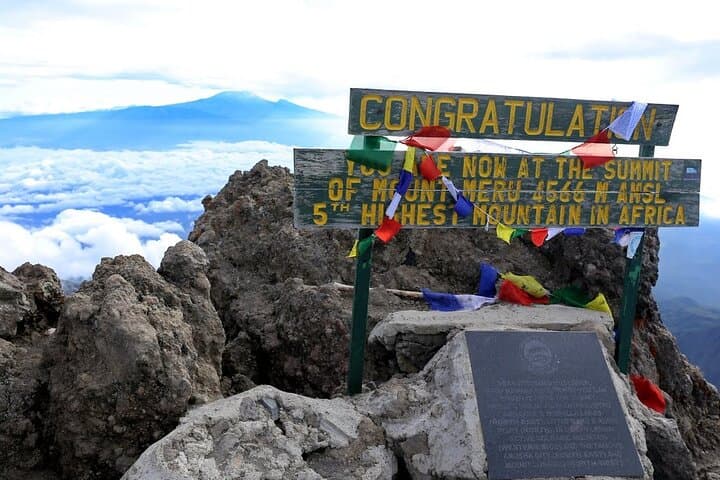
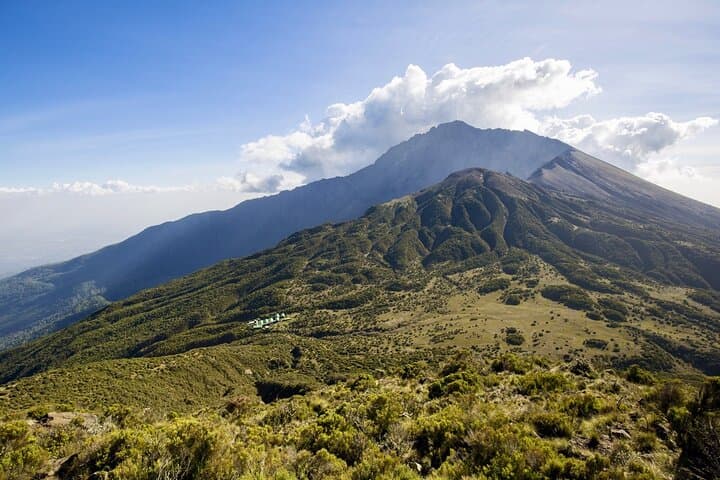
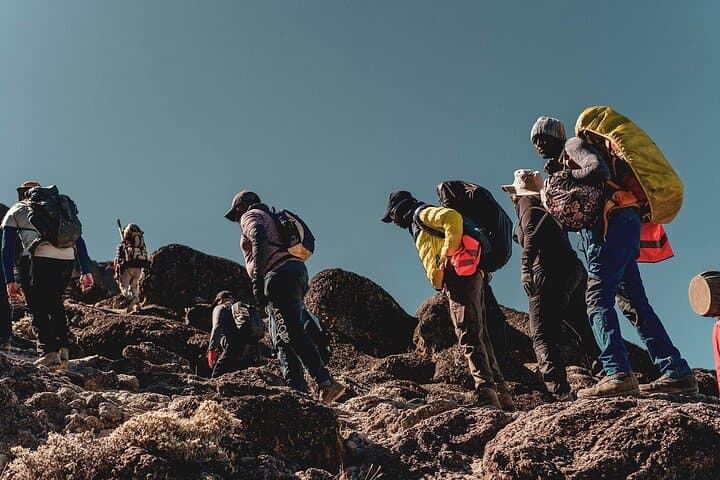
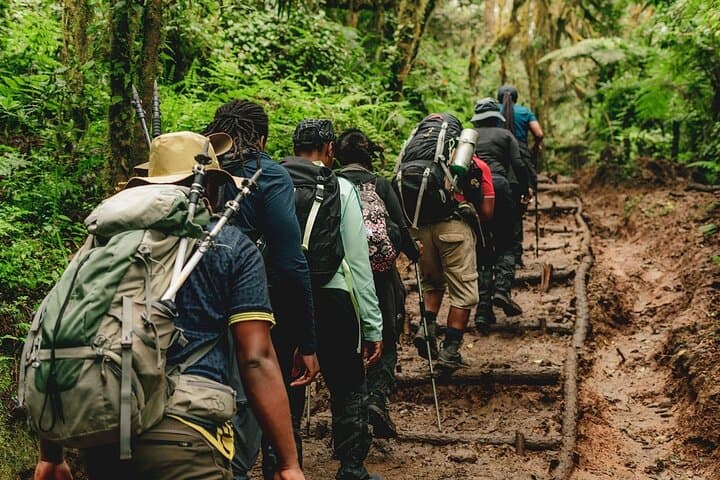
The trail begins before dawn outside Arusha, where a transfer threads past acacia plains toward Momella Gate and the mountain rises like a weathered wall ahead. Early sections move through gallery forest and yellow-barked fig trees; monkeys chatter above as giraffes and buffalo graze below. By night two you’re on the saddle, close enough to pick out the ash cone and the crater rim that will dominate the final push.
The trail begins before dawn outside Arusha, where a transfer threads past acacia plains toward Momella Gate and the mountain rises like a weathered wall ahead. Early sections move through gallery forest and yellow-barked fig trees; monkeys chatter above as giraffes and buffalo graze below. By night two you’re on the saddle, close enough to pick out the ash cone and the crater rim that will dominate the final push.
Mount Meru is a young stratovolcano in the shadow of Kilimanjaro, its crater and ash cone shaped by explosive eruptions and glacial trimming. The route follows established park trails and has long been a corridor for local Maasai and Meru communities; park rangers—armed for safety in wild country—escort trekkers and maintain the huts that serve as overnight refuges.
Expect steadily thinning air: camps sit at 2,500 m and 3,550 m before a stern summit night to Socialist Peak at 4,562 m. Terrain shifts from packed forest floor to scree and rock; the summit day is a steep 10–12 hour outing with long descents. Wildlife sightings—colobus monkeys, reedbucks, klipspringer—appear throughout, but the mountain often feels solitary once above tree line.
Practical guidance: acclimatize on day two’s short Little Meru walk, carry layered insulation for pre-dawn starts, and use trekking poles for scree. The tour includes transfers, park fees, meals, huts, purified water and experienced guides; bring personal medication for altitude and expect basic hut accommodation. Timing climbs during the dry months (June–October, January–February) improves footing and summit windows.