THE ADVENTURE COLLECTIVE® · Independent discovery and booking for outdoor travel

A four-day circuit up Mount Meru takes you from acacia grasslands to alpine ash underfoot, finishing with a predawn summit at Socialist Peak. Expect changing vegetation, close wildlife encounters, and a challenging but non-technical ascent that rewards you with expansive crater and Kilimanjaro views.
A four-day circuit up Mount Meru takes you from acacia grasslands to alpine ash underfoot, finishing with a predawn summit at Socialist Peak. Expect changing vegetation, close wildlife encounters, and a challenging but non-technical ascent that rewards you with expansive crater and Kilimanjaro views.
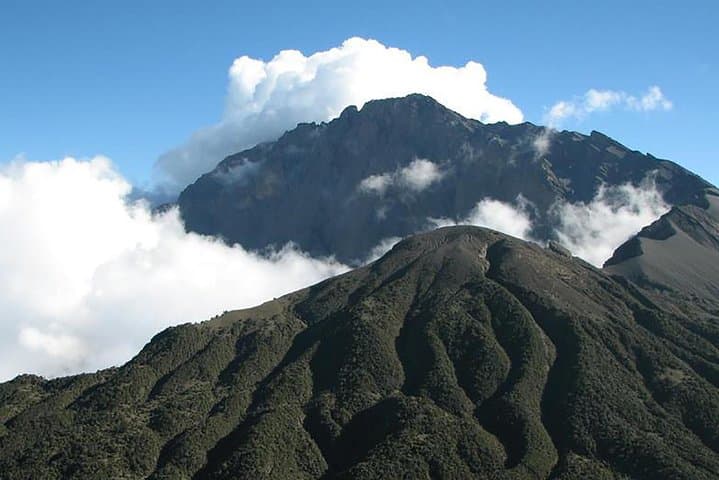
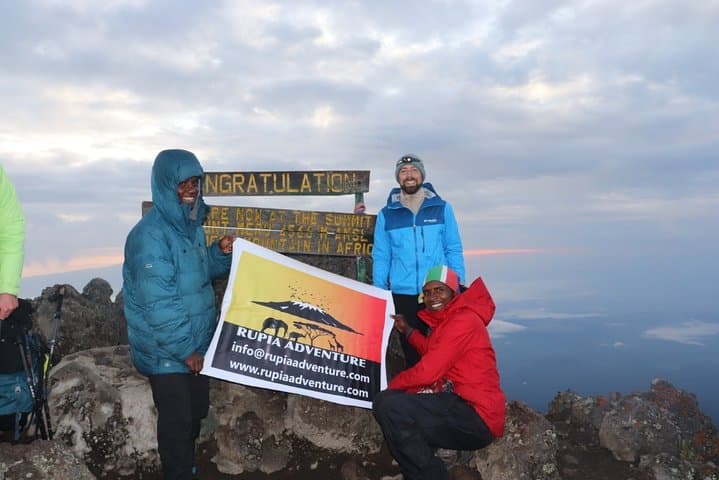
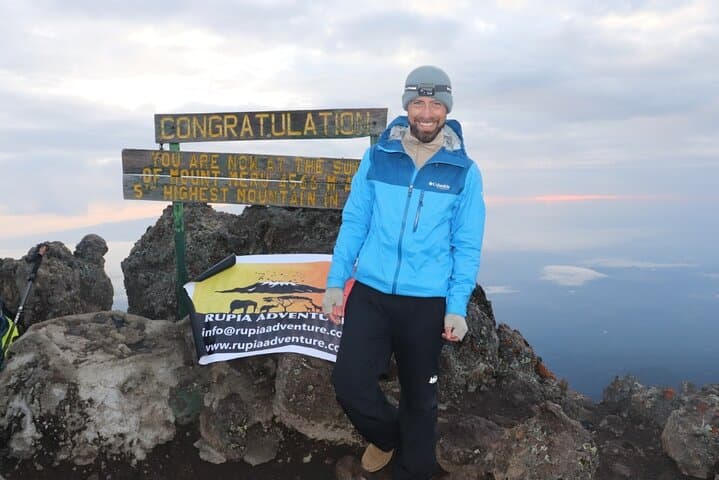
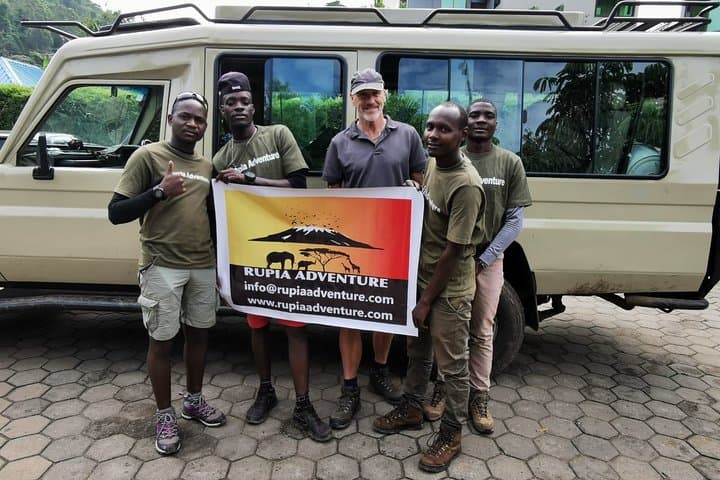
Dawn pushes a cold blue through the rainforest as your crew loads the last of the gear into a rumbling Land Cruiser. By the time the trail opens to grassland you can already pick out giraffes nibbling acacia and distant buffalo silhouettes against a brightening sky. The climb from Momella Gate (1,500 m) to Socialist Peak (4,562 m) is concentrated, honest work—four days of changing ecosystems, volcanic rubble underfoot, and a summit sunrise that spills across the bowl of Mt Meru and, on clear days, the flat shoulder of Kilimanjaro about 80 km away.
Verified experiences and guided adventures in the surrounding area.
Operated by Rupia Adventure · Arusha, Arusha Region
Dawn pushes a cold blue through the rainforest as your crew loads the last of the gear into a rumbling Land Cruiser. By the time the trail opens to grassland you can already pick out giraffes nibbling acacia and distant buffalo silhouettes against a brightening sky. The climb from Momella Gate (1,500 m) to Socialist Peak (4,562 m) is concentrated, honest work—four days of changing ecosystems, volcanic rubble underfoot, and a summit sunrise that spills across the bowl of Mt Meru and, on clear days, the flat shoulder of Kilimanjaro about 80 km away.
Geologically Mount Meru is a young, violent landscape. Roughly 250,000 years ago a colossal eruption stripped the eastern flank, leaving a dramatic crater, steep walls and a central ash cone that you skirt on the final ascent. Vegetation shifts as you climb: dry acacia plains give way to dense mountain rainforest, then heather moorland and exposed alpine scree near the crater rim. Wildlife follows that gradient—baboons and colobus in the canopy, giraffes and antelopes on the lower plains, and the occasional elephant or buffalo that require you to trek with an armed park ranger for safety.
Cultural context is woven into the route. You start in Arusha, a city shaped by Maasai trade routes and colonial-era routes to the highlands; local mountain crews—guides, cooks and porters—bring both mountain knowledge and hospitality to the trail. Huts at Miriakamba and Saddle are basic but warm, and meals are hearty: stews, ugali, and strong Tanzanian tea to fortify you for the nights when you’ll sleep early and rise in the small hours for the summit push.
Practically, expect four days of steady hiking with a total elevation gain of roughly 3,000 m from gate to peak and back. Day 1: Momella Gate to Miriakamba Hut (approx. 1,000 m gain, 3–4 hours). Day 2: Miriakamba to Saddle Hut (about 1,050 m, 4–6 hours) with an optional afternoon acclimatization hike to Little Meru. Day 3: Midnight departure, 4–5 hour ascent to Socialist Peak across volcanic ash and loose rock, then a long descent back to Miriakamba. Day 4: Return to Momella Gate and transfer to Arusha. No technical climbing gear is required, but crampons are occasionally useful on icy mornings in the dry season.
Hydration, layered clothing, and a reliable headlamp are non-negotiable. Altitude is the real test—move deliberately on the summit night, eat, sip fluids and heed your guide. Park fees, food and hut accommodation are normally included; confirm ranger and rescue provisions with your operator. Leave early from Arusha to avoid afternoon clouds, keep your pack weight conservative for porter teams, and bring a camera for the dramatic crater rim light—this is a mountain that makes you work for the view, and rewards you in full.
challenging.
4 days (daily hiking 3–8 hours).
Good aerobic fitness and prior day-hike experience recommended; ability to walk on loose scree for several hours is important.
No technical climbing skills are required; the route involves steep hiking and occasional scrambling on volcanic rock but not ropework.
Acclimatization helps—the itinerary includes an optional Little Meru hike to aid adjustment, and pacing during the ascent is essential to reduce altitude effects.
You can expect giraffes, buffalo, elephants, baboons and black-and-white colobus monkeys, particularly in lower and mid-elevations.
Most operators include park fees, hut accommodation and meals as part of the package—confirm specifics before booking.
The summit push is 4–5 hours over loose ash and rock starting around midnight; expect cold, slow progress and plan for frequent short breaks.
Yes—Arusha National Park requires an armed ranger for certain routes to manage wildlife safety; your operator will provide one.
Mount Meru’s current form resulted from a major volcanic eruption roughly 250,000 years ago that removed its eastern flank and produced the central ash cone you circle on the summit route.
Arusha National Park enforces ranger escorts and visitor limits to protect wildlife corridors; minimize impact by sticking to trails and packing out waste.
Rupia Adventure operates guided outdoor trips and adventures with an emphasis on safety, stewardship, and memorable experiences.
Dawn pushes a cold blue through the rainforest as your crew loads the last of the gear into a rumbling Land Cruiser. By the time the trail opens to grassland you can already pick out giraffes nibbling acacia and distant buffalo silhouettes against a brightening sky. The climb from Momella Gate (1,500 m) to Socialist Peak (4,562 m) is concentrated, honest work—four days of changing ecosystems, volcanic rubble underfoot, and a summit sunrise that spills across the bowl of Mt Meru and, on clear days, the flat shoulder of Kilimanjaro about 80 km away.
Dawn pushes a cold blue through the rainforest as your crew loads the last of the gear into a rumbling Land Cruiser. By the time the trail opens to grassland you can already pick out giraffes nibbling acacia and distant buffalo silhouettes against a brightening sky. The climb from Momella Gate (1,500 m) to Socialist Peak (4,562 m) is concentrated, honest work—four days of changing ecosystems, volcanic rubble underfoot, and a summit sunrise that spills across the bowl of Mt Meru and, on clear days, the flat shoulder of Kilimanjaro about 80 km away.
Geologically Mount Meru is a young, violent landscape. Roughly 250,000 years ago a colossal eruption stripped the eastern flank, leaving a dramatic crater, steep walls and a central ash cone that you skirt on the final ascent. Vegetation shifts as you climb: dry acacia plains give way to dense mountain rainforest, then heather moorland and exposed alpine scree near the crater rim. Wildlife follows that gradient—baboons and colobus in the canopy, giraffes and antelopes on the lower plains, and the occasional elephant or buffalo that require you to trek with an armed park ranger for safety.
Cultural context is woven into the route. You start in Arusha, a city shaped by Maasai trade routes and colonial-era routes to the highlands; local mountain crews—guides, cooks and porters—bring both mountain knowledge and hospitality to the trail. Huts at Miriakamba and Saddle are basic but warm, and meals are hearty: stews, ugali, and strong Tanzanian tea to fortify you for the nights when you’ll sleep early and rise in the small hours for the summit push.
Practically, expect four days of steady hiking with a total elevation gain of roughly 3,000 m from gate to peak and back. Day 1: Momella Gate to Miriakamba Hut (approx. 1,000 m gain, 3–4 hours). Day 2: Miriakamba to Saddle Hut (about 1,050 m, 4–6 hours) with an optional afternoon acclimatization hike to Little Meru. Day 3: Midnight departure, 4–5 hour ascent to Socialist Peak across volcanic ash and loose rock, then a long descent back to Miriakamba. Day 4: Return to Momella Gate and transfer to Arusha. No technical climbing gear is required, but crampons are occasionally useful on icy mornings in the dry season.
Hydration, layered clothing, and a reliable headlamp are non-negotiable. Altitude is the real test—move deliberately on the summit night, eat, sip fluids and heed your guide. Park fees, food and hut accommodation are normally included; confirm ranger and rescue provisions with your operator. Leave early from Arusha to avoid afternoon clouds, keep your pack weight conservative for porter teams, and bring a camera for the dramatic crater rim light—this is a mountain that makes you work for the view, and rewards you in full.