THE ADVENTURE COLLECTIVE® · Independent discovery and booking for outdoor travel

A compact 4-day ascent of Mount Kenya via the Naro Moru route, ending at Point Lenana (≈4,985 m). Expect peat bogs, moorland panoramas, pre-dawn summit pushes, and multi-day camping in camps and huts.
A compact 4-day ascent of Mount Kenya via the Naro Moru route, ending at Point Lenana (≈4,985 m). Expect peat bogs, moorland panoramas, pre-dawn summit pushes, and multi-day camping in camps and huts.
Dawn on the Naro Moru trail begins cold and raw: wind pushes down from jagged ridgelines, and the path threads through heather and bog before opening into the wide Teleki Valley. This four-day itinerary uses the Naro Moru route to reach Point Lenana (approx. 4,985 m), the non-technical summit most trekkers attempt. Expect forested climbs, a notorious vertical bog, high moorland, and the stark, glacially-carved valleys beneath the Lewis and Lewis/Tyndall ice remnants.
Verified experiences and guided adventures in the surrounding area.
Operated by Gracepatt Safaris · Nanyuki, Laikipia County
Dawn on the Naro Moru trail begins cold and raw: wind pushes down from jagged ridgelines, and the path threads through heather and bog before opening into the wide Teleki Valley. This four-day itinerary uses the Naro Moru route to reach Point Lenana (approx. 4,985 m), the non-technical summit most trekkers attempt. Expect forested climbs, a notorious vertical bog, high moorland, and the stark, glacially-carved valleys beneath the Lewis and Lewis/Tyndall ice remnants.
Geologically Mount Kenya is an eroded volcanic plug; its glaciers and cirques tell of repeated ice ages and ongoing melt. Culturally the mountain is central to the Kikuyu people—Ngai, the mountain god, is traditionally associated with the peaks—so trails often pass through community lands and grazing areas. Historically the Sirimon and Naro Moru corridors were developed by early rangers and guide networks to permit safer access to the high camps.
Practical guidance: day 1 climbs ~9 km with ~860 m ascent to Old Moses/Judmier; day 2 is ~14 km and ~900 m to Shipton Camp; day 3 is the long summit day (~21 km including pre-dawn push to Lenana) and a return to Old Moses; day 4 is a 9 km descent to Sirimon. Trekking at altitude makes pace slow—plan 3–10 hours daily and start summit pushes around 3:00 a.m. for sunrise at Lenana.
Bring layered insulation, waterproofs, sturdy boots, and a reliable headlamp. Hydrate, eat frequently, and allow for an extra acclimatization night at Naromoru River Lodge if you're not used to 3,000–5,000 m profiles. Local guides manage route safety and treated water; follow their lead to minimize environmental impact and respect cultural sites.
challenging.
4 days.
Good cardiovascular fitness with previous multi-day hiking experience; able to carry a daypack at altitude and tolerate sustained uphill sections.
No—Point Lenana is a non-technical trek; crampons and ice axes are not normally required for the Naro Moru route outside of uncommon icy conditions.
The vertical bog is muddy and steep; it cannot be bypassed on the classic Naro Moru line—good footwear, gaiters, and poles make it manageable.
Park rules and logistics typically mean hiring a registered guide and crew; guides handle permits, safety, and route-finding at altitude.
Drier months (January–March and July–October) offer more stable weather, though conditions can change quickly at high elevation.
Mount Kenya has long been sacred to local communities and was a focus of colonial-era exploration; its peaks were some of the earliest mapped features of East African highlands.
Mount Kenya National Park enforces limits on camps and requires porters/guides to reduce erosion; stick to established tracks and pack out waste to protect fragile alpine habitats.
Gracepatt Safaris operates guided outdoor trips and adventures with an emphasis on safety, stewardship, and memorable experiences.
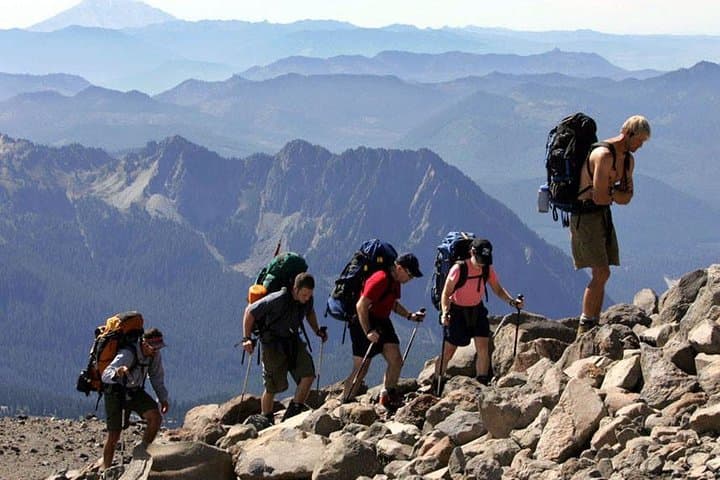
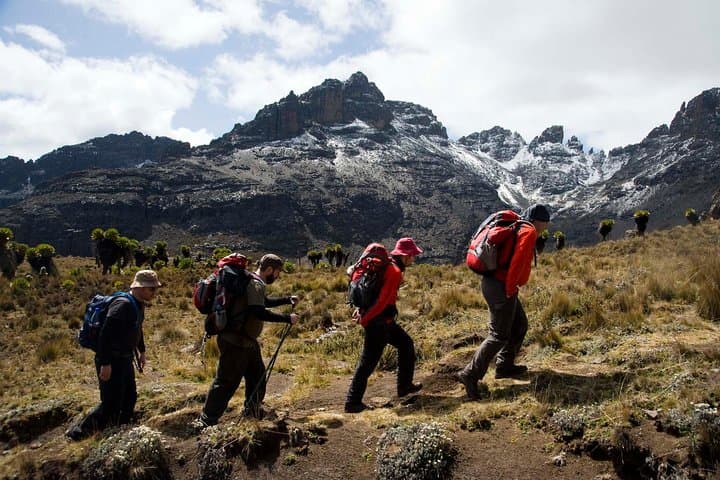
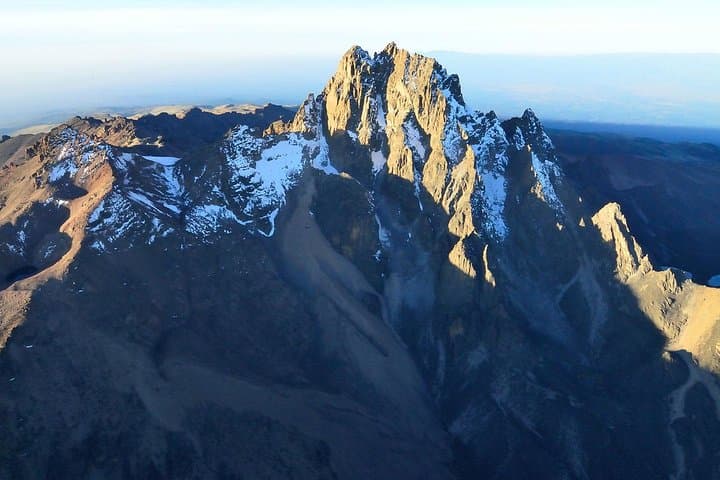
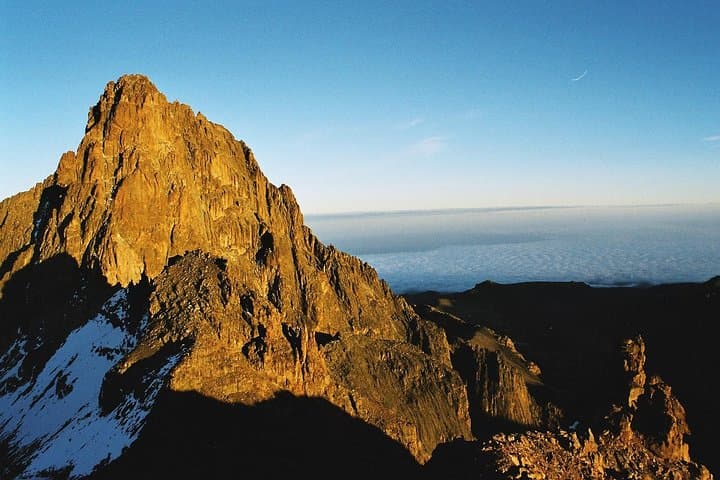
Dawn on the Naro Moru trail begins cold and raw: wind pushes down from jagged ridgelines, and the path threads through heather and bog before opening into the wide Teleki Valley. This four-day itinerary uses the Naro Moru route to reach Point Lenana (approx. 4,985 m), the non-technical summit most trekkers attempt. Expect forested climbs, a notorious vertical bog, high moorland, and the stark, glacially-carved valleys beneath the Lewis and Lewis/Tyndall ice remnants.
Dawn on the Naro Moru trail begins cold and raw: wind pushes down from jagged ridgelines, and the path threads through heather and bog before opening into the wide Teleki Valley. This four-day itinerary uses the Naro Moru route to reach Point Lenana (approx. 4,985 m), the non-technical summit most trekkers attempt. Expect forested climbs, a notorious vertical bog, high moorland, and the stark, glacially-carved valleys beneath the Lewis and Lewis/Tyndall ice remnants.
Geologically Mount Kenya is an eroded volcanic plug; its glaciers and cirques tell of repeated ice ages and ongoing melt. Culturally the mountain is central to the Kikuyu people—Ngai, the mountain god, is traditionally associated with the peaks—so trails often pass through community lands and grazing areas. Historically the Sirimon and Naro Moru corridors were developed by early rangers and guide networks to permit safer access to the high camps.
Practical guidance: day 1 climbs ~9 km with ~860 m ascent to Old Moses/Judmier; day 2 is ~14 km and ~900 m to Shipton Camp; day 3 is the long summit day (~21 km including pre-dawn push to Lenana) and a return to Old Moses; day 4 is a 9 km descent to Sirimon. Trekking at altitude makes pace slow—plan 3–10 hours daily and start summit pushes around 3:00 a.m. for sunrise at Lenana.
Bring layered insulation, waterproofs, sturdy boots, and a reliable headlamp. Hydrate, eat frequently, and allow for an extra acclimatization night at Naromoru River Lodge if you're not used to 3,000–5,000 m profiles. Local guides manage route safety and treated water; follow their lead to minimize environmental impact and respect cultural sites.