THE ADVENTURE COLLECTIVE® · Independent discovery and booking for outdoor travel

A compact, guided four-day circuit that combines vehicle transfers with two purposeful days walking across dunes from M’Hamid to Erg Zahar. Expect camel caravans, desert camps, and cultural stops including the Drâa palm groves and a local marabout.
A compact, guided four-day circuit that combines vehicle transfers with two purposeful days walking across dunes from M’Hamid to Erg Zahar. Expect camel caravans, desert camps, and cultural stops including the Drâa palm groves and a local marabout.
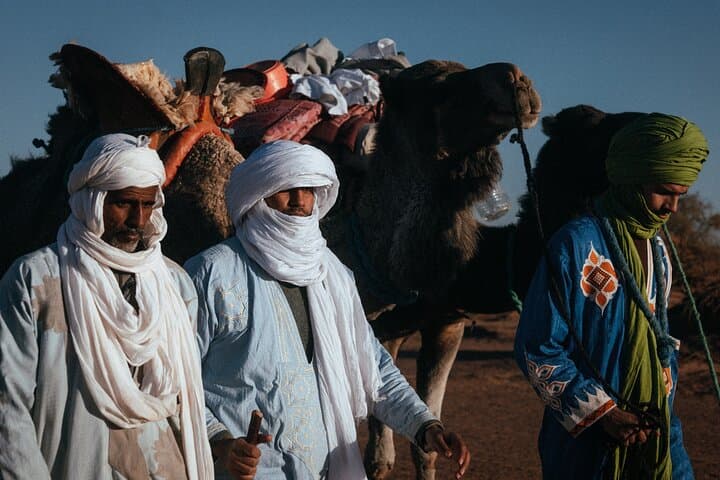
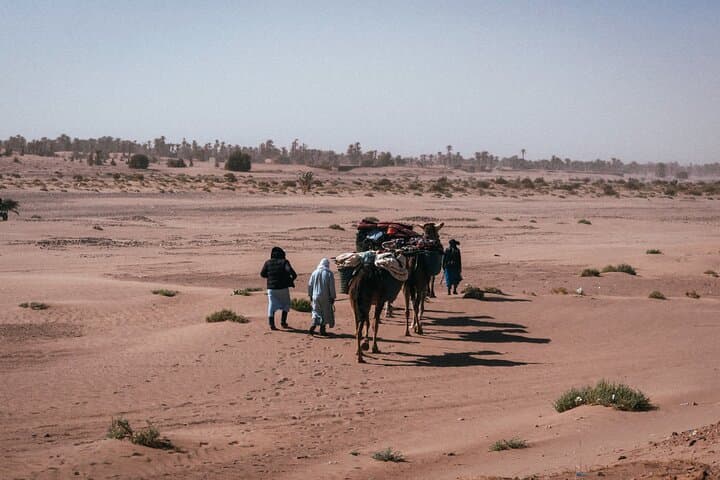
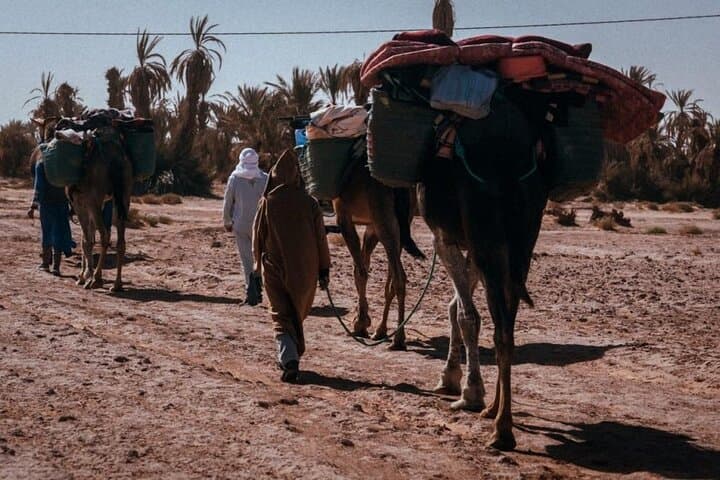
You stand at the lip of the sand, wind combing the surface into ridges that catch the late light; a caravan of camels shifts and the team readies packs. This four-day circuit begins with a vehicle transfer from Marrakech or Ouarzazate into the Drâa Valley and the desert village of M’Hamid, then turns two days into walking—through palmeraie shade, across salt flats, and up the steep faces of the dunes to camp beneath open sky.
Verified experiences and guided adventures in the surrounding area.
Operated by Trek Desert Maroc · M'Hamid El Ghizlane, Drâa-Tafilalet
You stand at the lip of the sand, wind combing the surface into ridges that catch the late light; a caravan of camels shifts and the team readies packs. This four-day circuit begins with a vehicle transfer from Marrakech or Ouarzazate into the Drâa Valley and the desert village of M’Hamid, then turns two days into walking—through palmeraie shade, across salt flats, and up the steep faces of the dunes to camp beneath open sky.
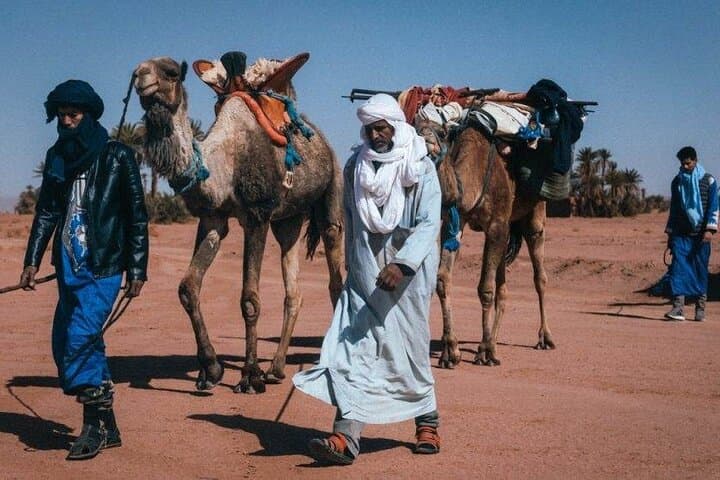
The route threads local history: caravan roads once shipped dates and salt along the Drâa, and nearby Ait Ben Haddou—an ancient ksar and UNESCO site—reminds you how settlements grew around scarce water. Geologically, the Sahara here is a living landscape of wind-built dunes (ergs) and dry hammada; Erg Zahar’s “howling” dunes echo when wind funnels through loose sand. Culturally, the trek is guided by nomadic Berber teams and a camel caravan that still moves at a human pace, and you’ll pass a marabout (Sidi Naji) whose oral traditions anchor local memory.
Practically, expect roughly two walking days of about 4–6 hours (the itinerary lists ~300 minutes on foot), mostly flat but with steep dune climbs and soft sand that slows pace. Temperatures vary—mornings are cool, midday hot—so layered clothing, sun protection, 3–4 liters of water per day, and sturdy footwear with gaiters are essential. Nights are in simple bivouacs or under the stars; bring a warm sleeping layer. Plan travel logistics around transit times to/from M’Hamid and reserve extra time in Marrakech for acclimation and last-minute supplies.
moderate.
4 days (2 walking days, ~4–6 hours each).
Moderate fitness: able to walk 4–6 hours on soft sand with short steep climbs
Yes—this short trek is designed for people new to the Sahara, but it requires moderate fitness and comfort walking on soft sand for several hours.
Nights are spent in simple bivouacs—tents provided—or, weather permitting, under the stars; expect basic bedding and communal dining with the team.
Spring and fall offer milder daytime temperatures and cooler nights; summer can be extremely hot mid-day while winter nights may be very cold.
A camel caravan accompanies the group primarily for baggage and logistics; riding may be offered selectively but depends on the operator and group plan.
This region sits on former caravan routes linking sub-Saharan trade to Moroccan towns; Ait Ben Haddou nearby is a reminder of fortified ksour and trans-Saharan commerce.
The Sahara’s crust is fragile—stick to established paths where possible, pack out all waste, and minimize water use to respect local scarcity.
Trek Desert Maroc operates guided outdoor trips and adventures with an emphasis on safety, stewardship, and memorable experiences.
You stand at the lip of the sand, wind combing the surface into ridges that catch the late light; a caravan of camels shifts and the team readies packs. This four-day circuit begins with a vehicle transfer from Marrakech or Ouarzazate into the Drâa Valley and the desert village of M’Hamid, then turns two days into walking—through palmeraie shade, across salt flats, and up the steep faces of the dunes to camp beneath open sky.
You stand at the lip of the sand, wind combing the surface into ridges that catch the late light; a caravan of camels shifts and the team readies packs. This four-day circuit begins with a vehicle transfer from Marrakech or Ouarzazate into the Drâa Valley and the desert village of M’Hamid, then turns two days into walking—through palmeraie shade, across salt flats, and up the steep faces of the dunes to camp beneath open sky.
The route threads local history: caravan roads once shipped dates and salt along the Drâa, and nearby Ait Ben Haddou—an ancient ksar and UNESCO site—reminds you how settlements grew around scarce water. Geologically, the Sahara here is a living landscape of wind-built dunes (ergs) and dry hammada; Erg Zahar’s “howling” dunes echo when wind funnels through loose sand. Culturally, the trek is guided by nomadic Berber teams and a camel caravan that still moves at a human pace, and you’ll pass a marabout (Sidi Naji) whose oral traditions anchor local memory.
Practically, expect roughly two walking days of about 4–6 hours (the itinerary lists ~300 minutes on foot), mostly flat but with steep dune climbs and soft sand that slows pace. Temperatures vary—mornings are cool, midday hot—so layered clothing, sun protection, 3–4 liters of water per day, and sturdy footwear with gaiters are essential. Nights are in simple bivouacs or under the stars; bring a warm sleeping layer. Plan travel logistics around transit times to/from M’Hamid and reserve extra time in Marrakech for acclimation and last-minute supplies.