THE ADVENTURE COLLECTIVE® · Independent discovery and booking for outdoor travel

Cross the High Atlas into gorges, ride camels into Erg Chebbi and sleep under a desert sky on this four-day small-group loop from Marrakech. Expect long drives, vivid sunsets, and a mix of hotel and camp nights.
Cross the High Atlas into gorges, ride camels into Erg Chebbi and sleep under a desert sky on this four-day small-group loop from Marrakech. Expect long drives, vivid sunsets, and a mix of hotel and camp nights.
You step out of the minivan where asphalt ends and the wind begins, the Atlas folding away behind you as the road tilts into high passes and ancient villages.
Verified experiences and guided adventures in the surrounding area.
Operated by Marrakech tour services · Merzouga, Errachidia Province
You step out of the minivan where asphalt ends and the wind begins, the Atlas folding away behind you as the road tilts into high passes and ancient villages.
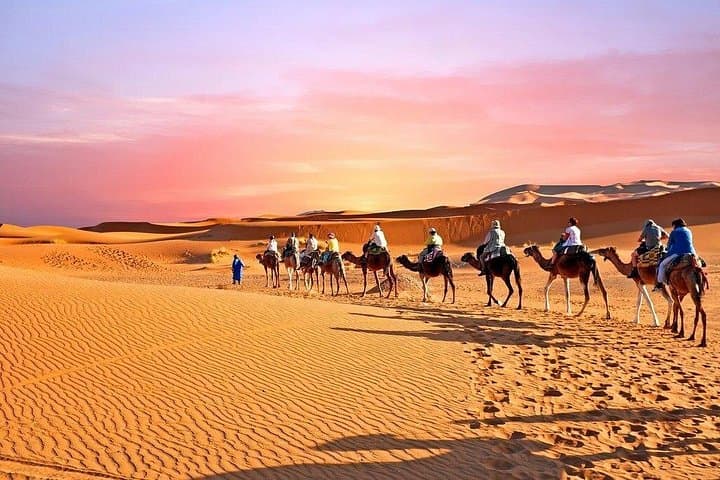
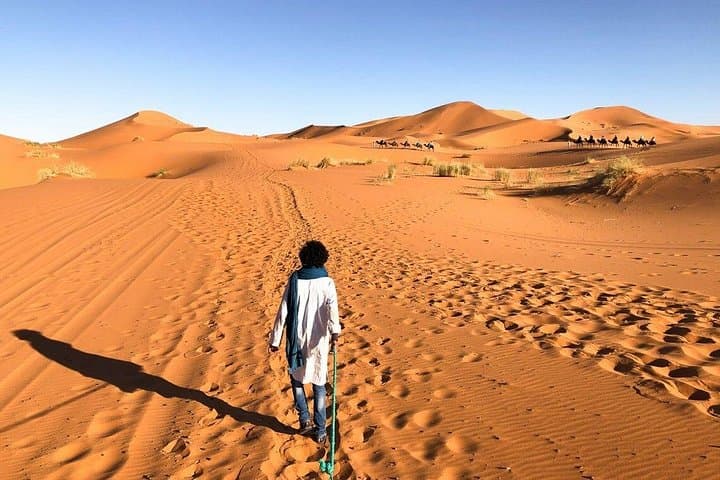
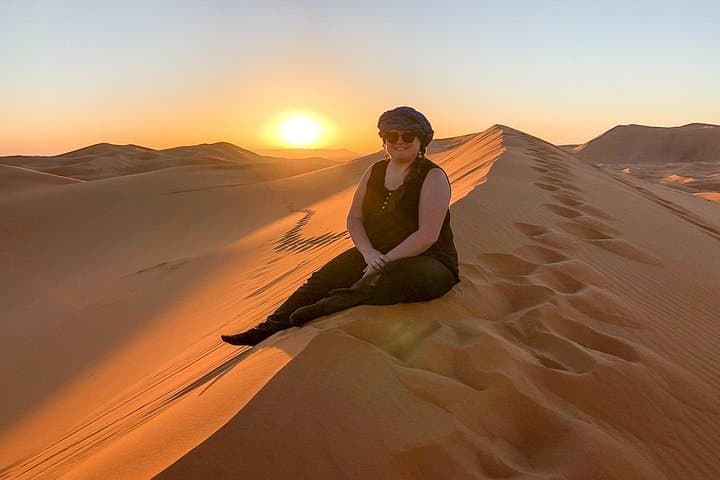
On this four-day circuit from Marrakech you cross the Tizi n'Tichka pass, visit the earthen kasbahs of Ait Ben Haddou, and descend into the sculpted gorges of Dades and Todra before the dunes of Merzouga come into focus. Erg Chebbi’s ochre ridges rise like a moving wall; the sand shifts underfoot and dares you toward the lip of a dune at sunset.
Geology here is immediate: the dunes are wind-built deposits of Sahara sand, sitting atop older river and alluvial beds that fed prehistoric human routes. Culturally, the route follows Berber settlement patterns and old caravan tracks; Ait Ben Haddou is a UNESCO example of mud-brick defense architecture, while nomad camps outside Merzouga still keep hospitality and music at their center.
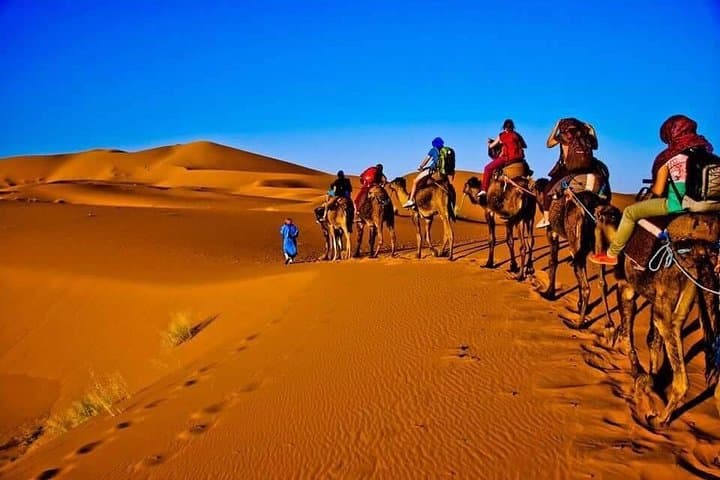
Practical guidance: expect long driving segments—plan for multiple hours between stops—so charge devices and pack snacks. Camels carry you across soft sand; bring closed-toe shoes for dune hikes and layers for large diurnal temperature swings. Sunrise and sunset are the best photo windows and are cool; midafternoon is very hot in summer.
Logistics note: accommodations alternate between simple hotels and a desert camp with communal dining and drum music; carry cash for tips and small purchases. Hydrate, respect limits of fragile desert vegetation, and allow pace to slow—the desert keeps its own calendar.
easy.
4 days.
Suitable for travelers in average fitness; involves short dune hikes and mounting camels but no technical exertion
Expect several multi-hour transfers each day—some stretches between Marrakech and the desert are 6–8 hours including stops.
Nights alternate between basic hotels/riads and a Berber-style camp with shared dinner and either basic tents or private beds depending on the operator.
Yes; camels are used to tourists and guides handle saddling and mounting—tell guides if you have mobility issues or injuries.
Spring and fall offer the most comfortable temperatures; winter mornings and nights are cold, and summer can be extremely hot midday.
The route follows centuries-old trans-Saharan tracks; fortified kasbahs and cliff-side villages reflect Berber defensive architecture and caravan-era commerce.
The Sahara’s dune systems are fragile; stick to established tracks, limit campfire impact, and avoid removing plants or cultural artifacts.
Marrakech tour services operates guided outdoor trips and adventures with an emphasis on safety, stewardship, and memorable experiences.
You step out of the minivan where asphalt ends and the wind begins, the Atlas folding away behind you as the road tilts into high passes and ancient villages.
You step out of the minivan where asphalt ends and the wind begins, the Atlas folding away behind you as the road tilts into high passes and ancient villages.
On this four-day circuit from Marrakech you cross the Tizi n'Tichka pass, visit the earthen kasbahs of Ait Ben Haddou, and descend into the sculpted gorges of Dades and Todra before the dunes of Merzouga come into focus. Erg Chebbi’s ochre ridges rise like a moving wall; the sand shifts underfoot and dares you toward the lip of a dune at sunset.
Geology here is immediate: the dunes are wind-built deposits of Sahara sand, sitting atop older river and alluvial beds that fed prehistoric human routes. Culturally, the route follows Berber settlement patterns and old caravan tracks; Ait Ben Haddou is a UNESCO example of mud-brick defense architecture, while nomad camps outside Merzouga still keep hospitality and music at their center.
Practical guidance: expect long driving segments—plan for multiple hours between stops—so charge devices and pack snacks. Camels carry you across soft sand; bring closed-toe shoes for dune hikes and layers for large diurnal temperature swings. Sunrise and sunset are the best photo windows and are cool; midafternoon is very hot in summer.
Logistics note: accommodations alternate between simple hotels and a desert camp with communal dining and drum music; carry cash for tips and small purchases. Hydrate, respect limits of fragile desert vegetation, and allow pace to slow—the desert keeps its own calendar.