THE ADVENTURE COLLECTIVE® · Independent discovery and booking for outdoor travel

Cross the High Atlas, explore Ait Ben Haddou, and sleep beneath Sahara stars on this four-day loop from Marrakech to Merzouga. Expect long drives, a sunset camel trek into Erg Chebbi, and nights split between riads and a desert camp.
Cross the High Atlas, explore Ait Ben Haddou, and sleep beneath Sahara stars on this four-day loop from Marrakech to Merzouga. Expect long drives, a sunset camel trek into Erg Chebbi, and nights split between riads and a desert camp.
You crest the High Atlas before dawn and the road opens: ochre villages, a scattering of kasbahs, then the dunes—golden ridges that seem to breathe with the wind. On day two you'll trade the minivan for the slow, rhythmic sway of a camel as the sun lowers and the desert shifts color, ending at a tented camp where the stars feel close enough to touch.
Verified experiences and guided adventures in the surrounding area.
Operated by Andiamo In Marocco - Day Tours · Merzouga, Drâa-Tafilalet
You crest the High Atlas before dawn and the road opens: ochre villages, a scattering of kasbahs, then the dunes—golden ridges that seem to breathe with the wind. On day two you'll trade the minivan for the slow, rhythmic sway of a camel as the sun lowers and the desert shifts color, ending at a tented camp where the stars feel close enough to touch.
This route links two geological worlds: the folded, snow-grazed High Atlas and the wind-sculpted Erg Chebbi, an erg formed by millennia of aeolian action. History rides along the same axis—Ait Ben Haddou, a UNESCO kasbah, speaks to trans-Saharan trade and cinematic fame, while the Tafilalet oases and Rissani market carry living threads of Berber and Saharan culture. Khamlia preserves Gnawa music traditions; Hassi Labied still uses the khettara irrigation that made desert palms possible.
Practical guidance: Expect long driving stretches (several 3–6 hour transfers) and short walks at gorges, kasbahs, and markets. Camel treks to the camp are roughly 30–60 minutes; a 4x4 transfer is available if preferred. Accommodation alternates riads (half board) and a desert camp—note differences between standard and premium tents in bathroom access. Bring layered clothing for wide diurnal swings, high-SPF sun protection, good walking shoes for rocky sections, and a refillable water bottle. If you have back issues, avoid the camel ride or ask for the 4x4 option. The experience favors travelers who want culture and landscape in equal measure—prepare for hours on the road and unforgettable desert nights.
moderate.
4 days.
Suitable for travelers who can sit through long drives, handle short hikes/walks, and tolerate a 30–60 minute camel ride; not physically demanding overall.
The typical camel ride is 30–60 minutes over sand; it’s slow-paced but can be jostling—travellers with severe back problems should choose the 4x4 option.
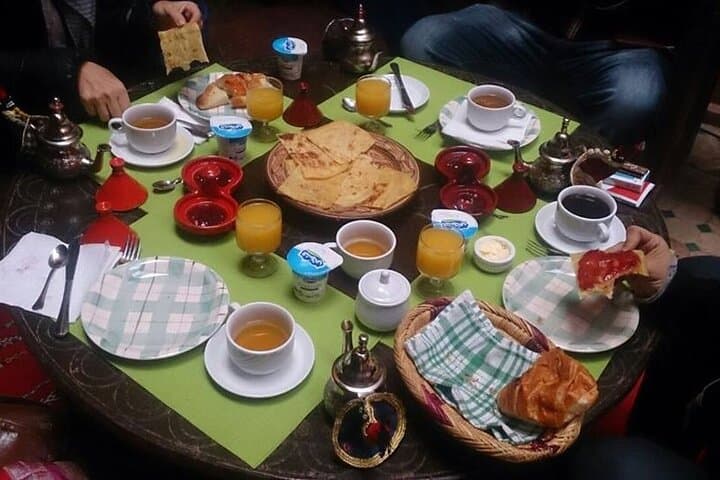
The tour includes two nights in riads (half board) and one night in a desert camp; premium camps have internal bathrooms while standard camps use external facilities.
Yes—vegetarian, vegan, and common allergies can be accommodated if noted at booking.
Infants and small children can participate and strollers are usable in some stops, but the camel ride and camp environment may be challenging for very young children.
The itinerary threads ancient caravan corridors from the Tafilalet palm groves to the fortified ksars; Ait Ben Haddou stands as a preserved example of southern Moroccan earthen architecture and film history.
The Sahara’s dune systems are fragile—stick to routes, avoid driving on dune crests, minimize plastic waste, and support local cooperatives and guides who invest in sustainable practices.
Andiamo In Marocco - Day Tours operates guided outdoor trips and adventures with an emphasis on safety, stewardship, and memorable experiences.
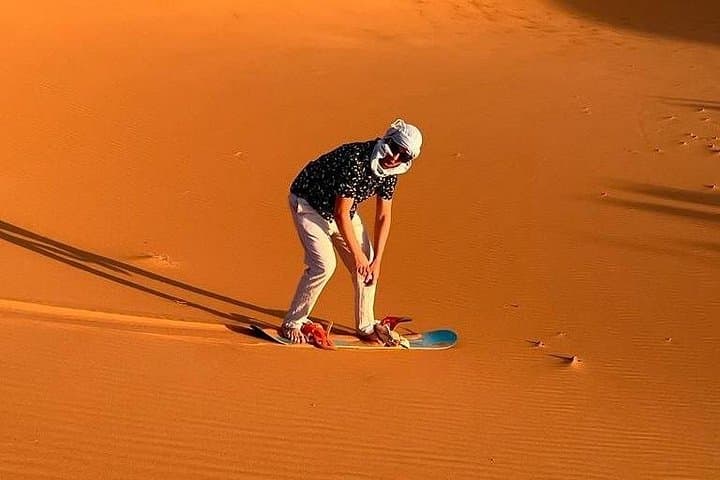
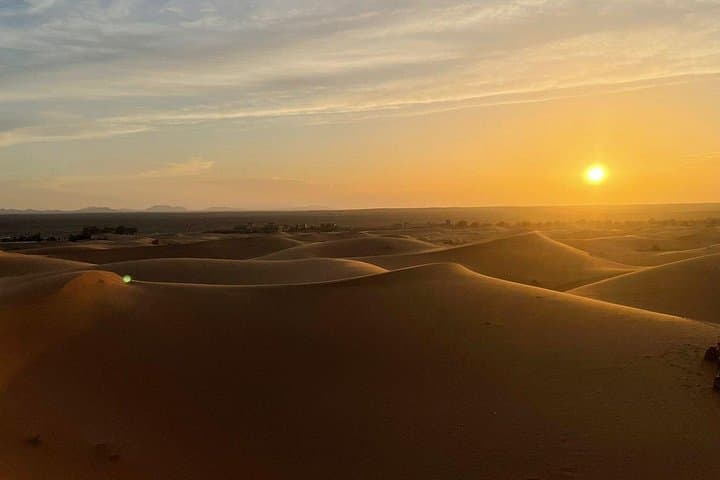
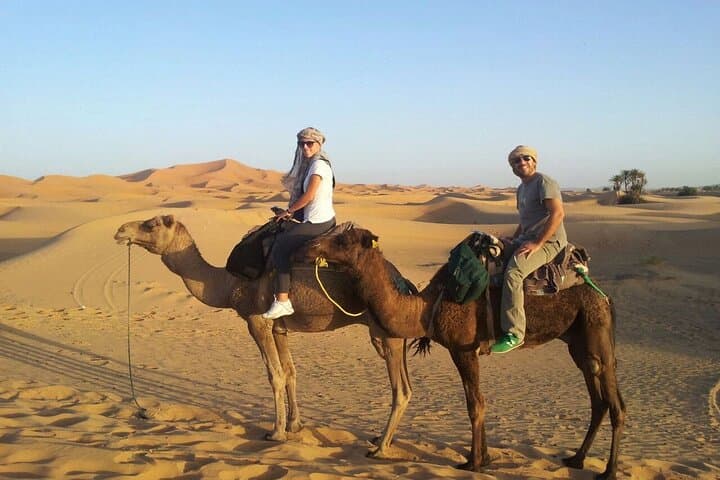
You crest the High Atlas before dawn and the road opens: ochre villages, a scattering of kasbahs, then the dunes—golden ridges that seem to breathe with the wind. On day two you'll trade the minivan for the slow, rhythmic sway of a camel as the sun lowers and the desert shifts color, ending at a tented camp where the stars feel close enough to touch.
You crest the High Atlas before dawn and the road opens: ochre villages, a scattering of kasbahs, then the dunes—golden ridges that seem to breathe with the wind. On day two you'll trade the minivan for the slow, rhythmic sway of a camel as the sun lowers and the desert shifts color, ending at a tented camp where the stars feel close enough to touch.
This route links two geological worlds: the folded, snow-grazed High Atlas and the wind-sculpted Erg Chebbi, an erg formed by millennia of aeolian action. History rides along the same axis—Ait Ben Haddou, a UNESCO kasbah, speaks to trans-Saharan trade and cinematic fame, while the Tafilalet oases and Rissani market carry living threads of Berber and Saharan culture. Khamlia preserves Gnawa music traditions; Hassi Labied still uses the khettara irrigation that made desert palms possible.
Practical guidance: Expect long driving stretches (several 3–6 hour transfers) and short walks at gorges, kasbahs, and markets. Camel treks to the camp are roughly 30–60 minutes; a 4x4 transfer is available if preferred. Accommodation alternates riads (half board) and a desert camp—note differences between standard and premium tents in bathroom access. Bring layered clothing for wide diurnal swings, high-SPF sun protection, good walking shoes for rocky sections, and a refillable water bottle. If you have back issues, avoid the camel ride or ask for the 4x4 option. The experience favors travelers who want culture and landscape in equal measure—prepare for hours on the road and unforgettable desert nights.