THE ADVENTURE COLLECTIVE® · Independent discovery and booking for outdoor travel

Cross the High Atlas and spend four days chasing desert light from the rose valleys to the Erg Chebbi dunes. This budget group tour blends canyon treks, a camel-led sunset, and a night in a nomadic-style bivouac.
Cross the High Atlas and spend four days chasing desert light from the rose valleys to the Erg Chebbi dunes. This budget group tour blends canyon treks, a camel-led sunset, and a night in a nomadic-style bivouac.
You arrive on a ribbon of tarmac that climbs the High Atlas, diesel and dust trading places with sudden snow at the Tizi n'Tichka pass (2,260 m). The first day opens with stacked kasbahs at Ait Benhaddou and the slow unspooling of the valley road; by day two the pavement gives way to the red and gold of the Dades and Todra gorges, where canyon walls tower roughly 300 m above narrow riverbeds.
Verified experiences and guided adventures in the surrounding area.
Operated by Morocco First Gate · Merzouga, Drâa-Tafilalet
You arrive on a ribbon of tarmac that climbs the High Atlas, diesel and dust trading places with sudden snow at the Tizi n'Tichka pass (2,260 m). The first day opens with stacked kasbahs at Ait Benhaddou and the slow unspooling of the valley road; by day two the pavement gives way to the red and gold of the Dades and Todra gorges, where canyon walls tower roughly 300 m above narrow riverbeds.
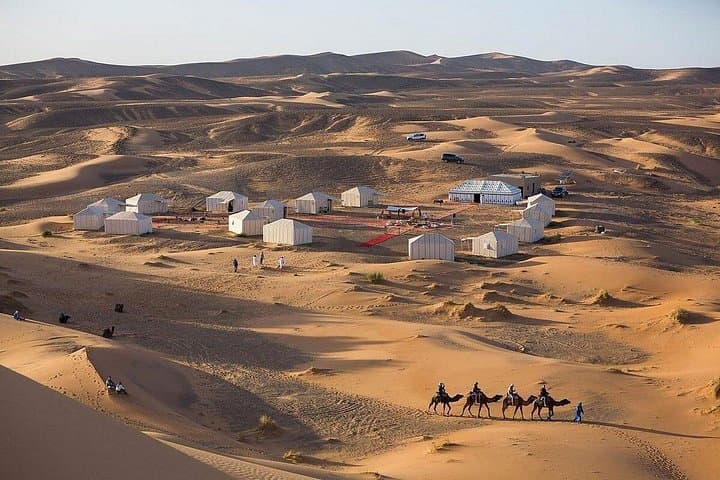
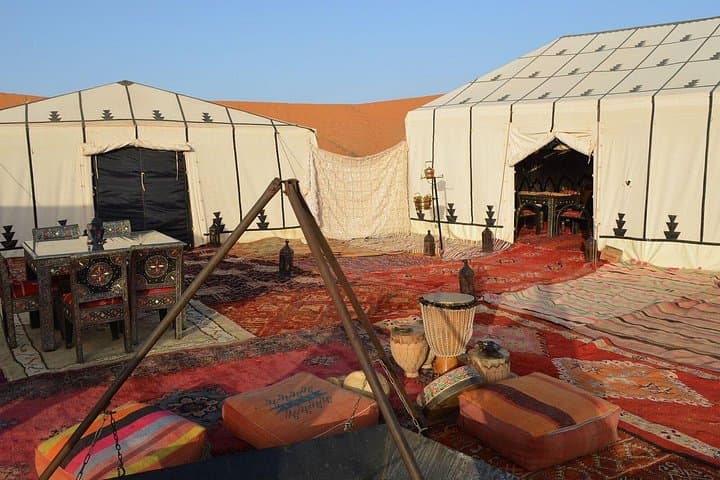
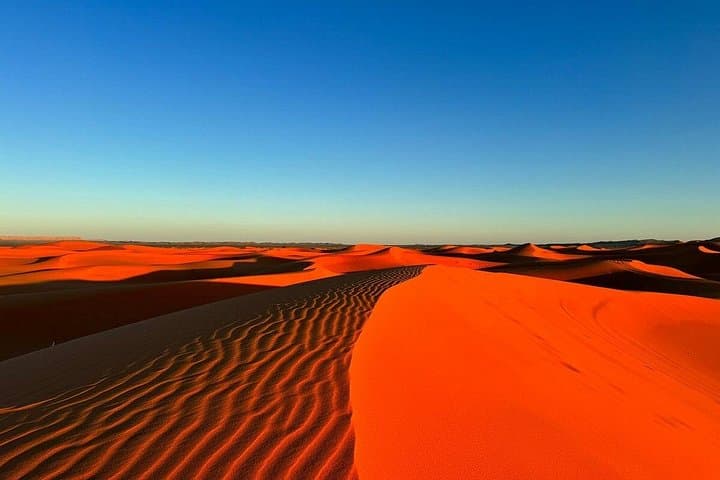
Geology here reads like a field book: folded Atlas bedrock, wind-sculpted erg fields and alluvial fans feeding the palm-lined Draa. Culture is equally visible — ksar architecture, market rhythms in Rissani and nomadic traditions around Merzouga. Erg Chebbi’s dunes rise up to roughly 150 m; the marathon of sand is punctuated by camel trains and bivouac camps where local Gnawa musicians keep time on hand drums.
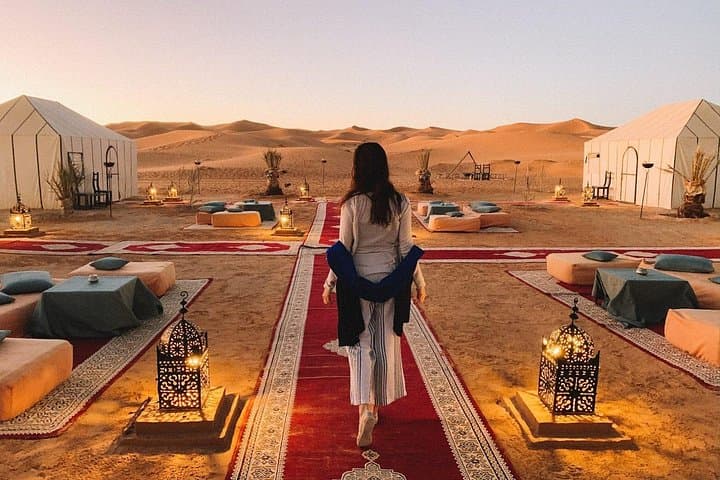
Expect a mix of driving, short canyon treks and a 1.5-hour camel ride at sunset to a traditional desert camp for one night under tents, plus sunrise climbs on the sand the next morning. Terrain shifts from paved mountain passes to rough desert tracks and steep sand slopes; elevation varies from about 500 m in the Sahara up to 2,260 m at the pass.
Practical: bring layered clothing for hot days and cold nights, closed shoes for the gorges and lighter footwear for dune walking, plus 3L water per day, sun protection and a headlamp. The tour is paced for moderate fitness; let your guide know of back, heart or pregnancy restrictions before booking. Timing sunrise and sunset hikes will reward you with the best light and cooler temperatures.
moderate.
4 days.
Moderate fitness: able to manage short hikes, sand slopes, and multi-hour van transfers.
The camel ride is gentle and lasts about 1.5 hours to the camp; dune walking involves short climbs and loose sand—moderate effort but no technical skills required.
You’ll spend one night in a standard desert bivouac with shared or private nomadic-style tents; hotels are used the other nights as listed in the itinerary.
Meals listed include 2 breakfasts and 3 dinners; bottled water is recommended to carry yourself for the daytime excursions.
Notify the operator at booking—this itinerary involves camel trekking and uneven terrain and is not recommended for those with serious mobility, spinal or cardiovascular conditions.
The route follows ancient caravan and trade corridors; Ait Benhaddou and the ksour in the Draa reflect centuries of Saharan commerce and Berber settlement.
Stick to established tracks and camps to avoid fragile dune vegetation; water is scarce—minimize waste and support local guides who follow low-impact camp practices.
Morocco First Gate operates guided outdoor trips and adventures with an emphasis on safety, stewardship, and memorable experiences.
You arrive on a ribbon of tarmac that climbs the High Atlas, diesel and dust trading places with sudden snow at the Tizi n'Tichka pass (2,260 m). The first day opens with stacked kasbahs at Ait Benhaddou and the slow unspooling of the valley road; by day two the pavement gives way to the red and gold of the Dades and Todra gorges, where canyon walls tower roughly 300 m above narrow riverbeds.
You arrive on a ribbon of tarmac that climbs the High Atlas, diesel and dust trading places with sudden snow at the Tizi n'Tichka pass (2,260 m). The first day opens with stacked kasbahs at Ait Benhaddou and the slow unspooling of the valley road; by day two the pavement gives way to the red and gold of the Dades and Todra gorges, where canyon walls tower roughly 300 m above narrow riverbeds.
Geology here reads like a field book: folded Atlas bedrock, wind-sculpted erg fields and alluvial fans feeding the palm-lined Draa. Culture is equally visible — ksar architecture, market rhythms in Rissani and nomadic traditions around Merzouga. Erg Chebbi’s dunes rise up to roughly 150 m; the marathon of sand is punctuated by camel trains and bivouac camps where local Gnawa musicians keep time on hand drums.
Expect a mix of driving, short canyon treks and a 1.5-hour camel ride at sunset to a traditional desert camp for one night under tents, plus sunrise climbs on the sand the next morning. Terrain shifts from paved mountain passes to rough desert tracks and steep sand slopes; elevation varies from about 500 m in the Sahara up to 2,260 m at the pass.
Practical: bring layered clothing for hot days and cold nights, closed shoes for the gorges and lighter footwear for dune walking, plus 3L water per day, sun protection and a headlamp. The tour is paced for moderate fitness; let your guide know of back, heart or pregnancy restrictions before booking. Timing sunrise and sunset hikes will reward you with the best light and cooler temperatures.