THE ADVENTURE COLLECTIVE® · Independent discovery and booking for outdoor travel

Leave Marrakech and follow high mountain passes, palm-filled valleys and kasbah-lined roads to Erg Chebbi. This private four-day loop pairs cinematic history with a night under the stars in a luxury desert camp.
Leave Marrakech and follow high mountain passes, palm-filled valleys and kasbah-lined roads to Erg Chebbi. This private four-day loop pairs cinematic history with a night under the stars in a luxury desert camp.
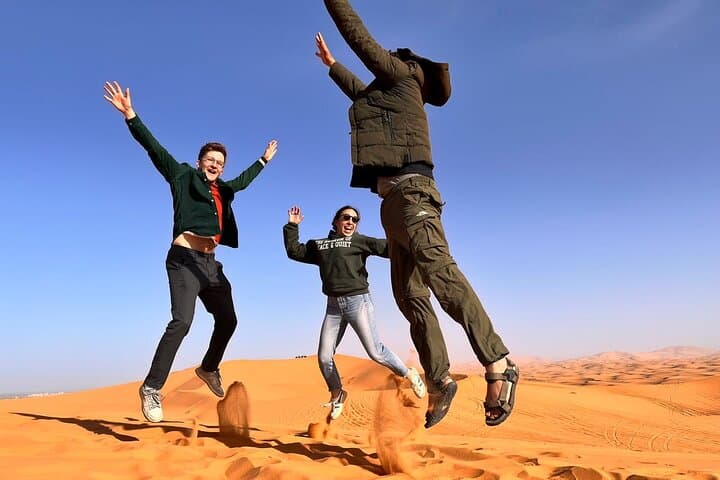
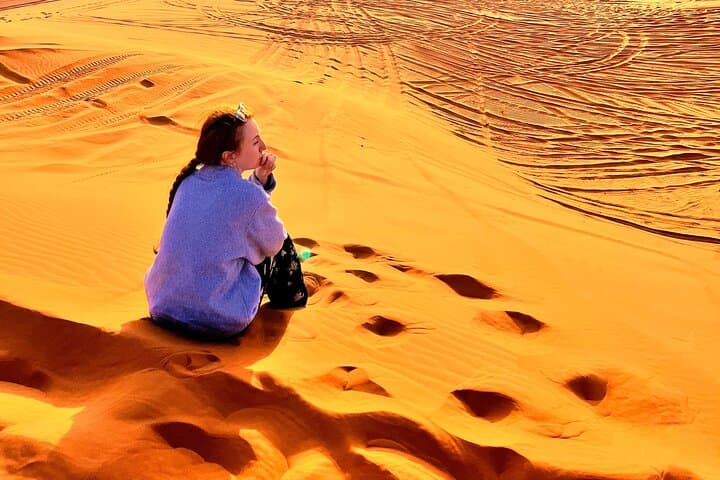
Sand rolls like an old story as you leave the red city’s bustle behind and climb Tizi n’Tichka, the High Atlas pass, toward a different rhythm: kasbahs, palm-lined rivers and finally the slow, wind-scoured dunes of Merzouga. On arrival the dunes breathe around you — a skyline that shifts every hour, daring you to climb and watch the light change.
Verified experiences and guided adventures in the surrounding area.
Operated by Itran Travel · Merzouga, Drâa-Tafilalet
Sand rolls like an old story as you leave the red city’s bustle behind and climb Tizi n’Tichka, the High Atlas pass, toward a different rhythm: kasbahs, palm-lined rivers and finally the slow, wind-scoured dunes of Merzouga. On arrival the dunes breathe around you — a skyline that shifts every hour, daring you to climb and watch the light change.
This four-day private route follows Morocco’s historic caravan arteries. Ait Ben Haddou and Ouarzazate recall trans-Saharan trade and later film crews; the Draa Valley charts the course of one of Morocco’s longest rivers and the Todra Gorges reveal a river that carved its way through limestone cliffs. Geologically, Erg Chebbi’s dunes are wind-built terraces of golden sand sourced from ancient river deposits and plains. Culturally, the itinerary passes Berber villages and souks where local markets still operate on traditional days.
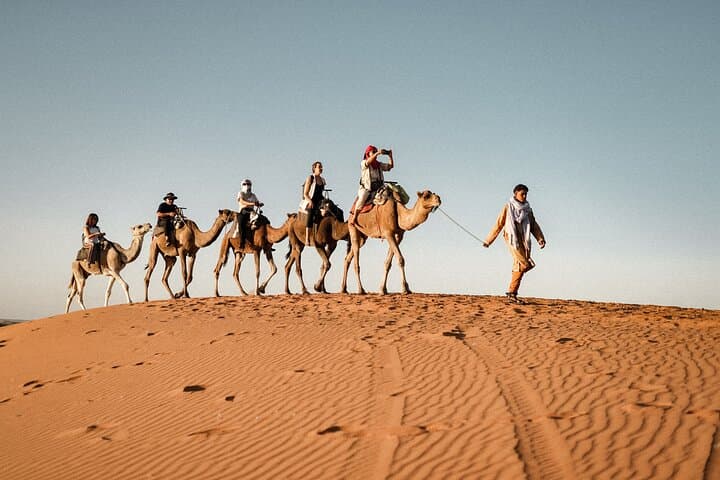
Practicalities: expect long drives between highlights, with most days including 2–4 hours of sightseeing and photo stops. The desert night is in a private “luxury” camp — beds, hot water and a canvas shelter that keeps the cold out while leaving the stars visible; camel treks cover short distances to and from camp. Travel light but prepared: sun protection, layered clothing for chilly nights, closed-toe shoes for dune walking, and cash for markets and tips. Best times to go are spring and fall for mild temperatures; summer brings intense heat and winter sharp nights. Bring a camera, patience for slow travel, and a sense of pace: this tour is about landscape and rhythm as much as destinations.
moderate.
4 days.
Suitable for travelers in reasonable health who can handle several hours of sightseeing and short camel rides; minimal hiking involved.
Camel rides are gentle and short—usually 30–60 minutes at a slow pace; however mounting and dismounting can be awkward, so inform guides if you have mobility concerns.
Tents generally include proper beds, bedding and a private or shared hot-water shower depending on the camp; meals are typically communal with Berber music in the evening.
Visa requirements depend on your nationality—check Moroccan consulate guidance before travel and carry passport identification during the tour.
Yes—most private departures include pickup/drop-off in central Marrakech; you’ll confirm a pickup point during booking.
This route follows ancient caravan and trade corridors; Ait Ben Haddou and Ouarzazate grew as defensive and trade centers linking the Sahara to coastal cities.
The desert ecosystem is fragile—stick to established tracks, limit single-use plastics, and respect local grazing areas to reduce impact.
Itran Travel operates guided outdoor trips and adventures with an emphasis on safety, stewardship, and memorable experiences.
Sand rolls like an old story as you leave the red city’s bustle behind and climb Tizi n’Tichka, the High Atlas pass, toward a different rhythm: kasbahs, palm-lined rivers and finally the slow, wind-scoured dunes of Merzouga. On arrival the dunes breathe around you — a skyline that shifts every hour, daring you to climb and watch the light change.
Sand rolls like an old story as you leave the red city’s bustle behind and climb Tizi n’Tichka, the High Atlas pass, toward a different rhythm: kasbahs, palm-lined rivers and finally the slow, wind-scoured dunes of Merzouga. On arrival the dunes breathe around you — a skyline that shifts every hour, daring you to climb and watch the light change.
This four-day private route follows Morocco’s historic caravan arteries. Ait Ben Haddou and Ouarzazate recall trans-Saharan trade and later film crews; the Draa Valley charts the course of one of Morocco’s longest rivers and the Todra Gorges reveal a river that carved its way through limestone cliffs. Geologically, Erg Chebbi’s dunes are wind-built terraces of golden sand sourced from ancient river deposits and plains. Culturally, the itinerary passes Berber villages and souks where local markets still operate on traditional days.
Practicalities: expect long drives between highlights, with most days including 2–4 hours of sightseeing and photo stops. The desert night is in a private “luxury” camp — beds, hot water and a canvas shelter that keeps the cold out while leaving the stars visible; camel treks cover short distances to and from camp. Travel light but prepared: sun protection, layered clothing for chilly nights, closed-toe shoes for dune walking, and cash for markets and tips. Best times to go are spring and fall for mild temperatures; summer brings intense heat and winter sharp nights. Bring a camera, patience for slow travel, and a sense of pace: this tour is about landscape and rhythm as much as destinations.