THE ADVENTURE COLLECTIVE® · Independent discovery and booking for outdoor travel

A compact, budget-friendly camping safari that puts you in the heart of the Masai Mara for four days of game drives, river crossings and tent-side evenings. Ideal for travellers who want big-sky wildlife viewing without luxury price tags.
A compact, budget-friendly camping safari that puts you in the heart of the Masai Mara for four days of game drives, river crossings and tent-side evenings. Ideal for travellers who want big-sky wildlife viewing without luxury price tags.
Morning light slices across grassland as your 4x4 eases over the ridge into the Masai Mara, the open plain stretching toward a horizon scored by the Mara River. The air here is thin and cool — the reserve sits around 1,500 metres above sea level — and the landscape alternates between waving savannah, riverine thickets and low rolling hills where game moves with deliberate purpose.
Verified experiences and guided adventures in the surrounding area.
Operated by Africa Tours · Narok, Narok County
Morning light slices across grassland as your 4x4 eases over the ridge into the Masai Mara, the open plain stretching toward a horizon scored by the Mara River. The air here is thin and cool — the reserve sits around 1,500 metres above sea level — and the landscape alternates between waving savannah, riverine thickets and low rolling hills where game moves with deliberate purpose.
The Mara forms the western edge of the greater Serengeti ecosystem and was formally established in the 1960s; Maasai communities have grazed the surrounding hills for generations and their presence still shapes the park’s grazing patterns. Geologically the reserve sits on the Rift Valley escarpment, where volcanic soils support long grasses that feed vast herds. Culture and wildlife intersect: your guides often interpret Maasai sightings and discuss community conservancy efforts that protect corridors for migrating herds.
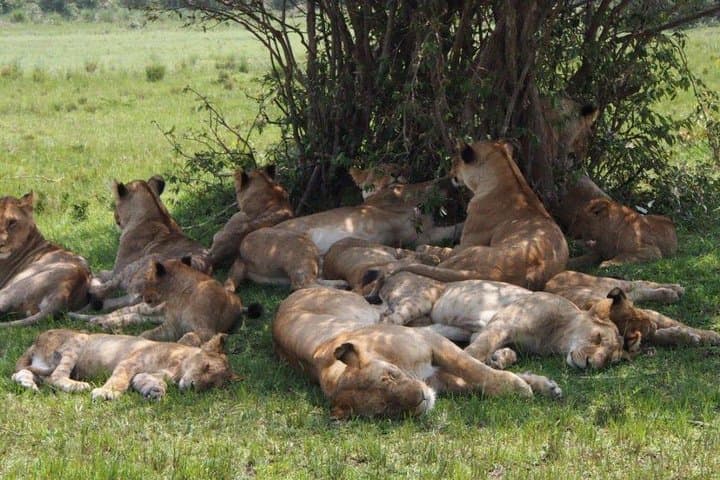
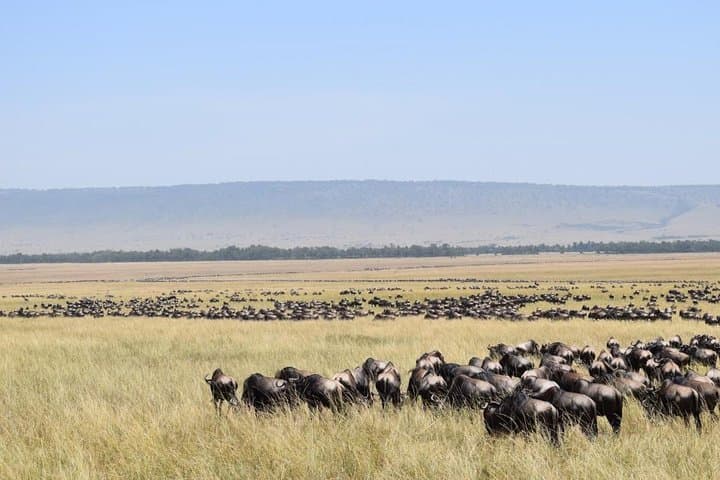
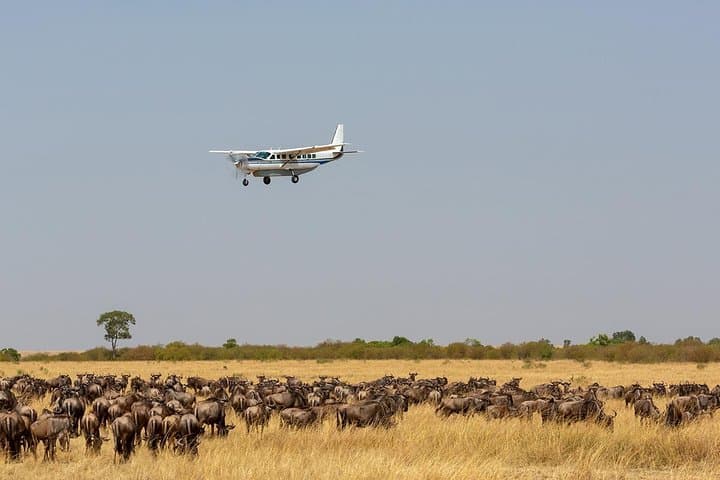
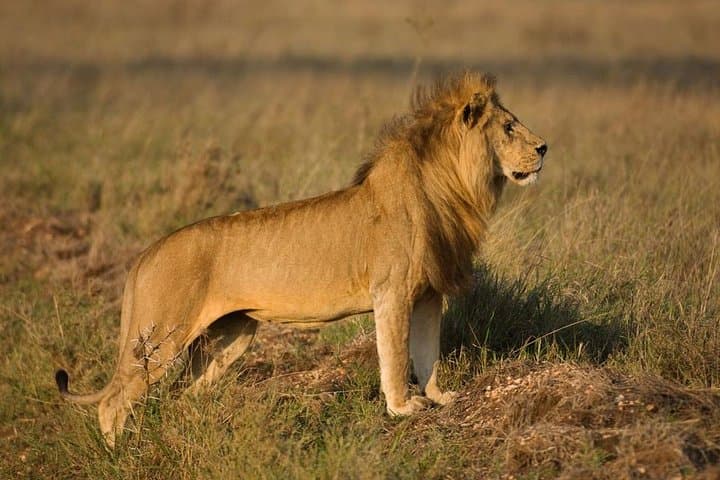
Expect daily game drives at dawn and dusk, informal walks near camp, and long stretches of patient observation — the wildebeest migration peaks July–October when river crossings electrify the landscape. Camping here is straightforward: basic tented camps with communal meals and early wake-ups for drives.
Practical: Nairobi is the usual start point; the drive is roughly 5–6 hours (about 240–280 km) depending on route. Bring layered clothing for cool mornings, a good pair of binoculars, and sunscreen. Hydrate, carry small-change cash for community souvenirs, and keep to vehicle routes — the animals move fast and the Mara rewards patience.
moderate.
4 days.
Suitable for travellers able to sit for long game drives, short walks and basic camping conditions; not technically demanding.
The main river crossings in the Mara typically occur July–October, though sightings can happen outside those months depending on rainfall and herd movements.
Expect about 5–6 hours by road (roughly 240–280 km) depending on traffic and the route over the Rift Valley.
Budget tented camps provide simple canvas tents, shared facilities or basic en-suites at some sites, and communal meals — comfortable but not luxury.
The itinerary is family-friendly, but long vehicle transfers and uneven camp terrain can be challenging for very young children or those with mobility constraints.
Named after the Maasai people and the Mara River, the reserve is part of the Serengeti ecosystem and was formalized in the mid-20th century while Maasai pastoralism has shaped the landscape for centuries.
Community conservancies and anti-poaching patrols are central to protecting migration corridors; visitors support local economies through park fees and community tourism initiatives.
Africa Tours operates guided outdoor trips and adventures with an emphasis on safety, stewardship, and memorable experiences.
Morning light slices across grassland as your 4x4 eases over the ridge into the Masai Mara, the open plain stretching toward a horizon scored by the Mara River. The air here is thin and cool — the reserve sits around 1,500 metres above sea level — and the landscape alternates between waving savannah, riverine thickets and low rolling hills where game moves with deliberate purpose.
Morning light slices across grassland as your 4x4 eases over the ridge into the Masai Mara, the open plain stretching toward a horizon scored by the Mara River. The air here is thin and cool — the reserve sits around 1,500 metres above sea level — and the landscape alternates between waving savannah, riverine thickets and low rolling hills where game moves with deliberate purpose.
The Mara forms the western edge of the greater Serengeti ecosystem and was formally established in the 1960s; Maasai communities have grazed the surrounding hills for generations and their presence still shapes the park’s grazing patterns. Geologically the reserve sits on the Rift Valley escarpment, where volcanic soils support long grasses that feed vast herds. Culture and wildlife intersect: your guides often interpret Maasai sightings and discuss community conservancy efforts that protect corridors for migrating herds.
Expect daily game drives at dawn and dusk, informal walks near camp, and long stretches of patient observation — the wildebeest migration peaks July–October when river crossings electrify the landscape. Camping here is straightforward: basic tented camps with communal meals and early wake-ups for drives.
Practical: Nairobi is the usual start point; the drive is roughly 5–6 hours (about 240–280 km) depending on route. Bring layered clothing for cool mornings, a good pair of binoculars, and sunscreen. Hydrate, carry small-change cash for community souvenirs, and keep to vehicle routes — the animals move fast and the Mara rewards patience.