THE ADVENTURE COLLECTIVE® · Independent discovery and booking for outdoor travel

Cross the High Atlas, walk narrow gorges and ride a camel into the dunes on this four-day Marrakech–Merzouga loop. Expect dramatic passes, UNESCO kasbahs and a night in a Berber camp beneath the stars.
Cross the High Atlas, walk narrow gorges and ride a camel into the dunes on this four-day Marrakech–Merzouga loop. Expect dramatic passes, UNESCO kasbahs and a night in a Berber camp beneath the stars.
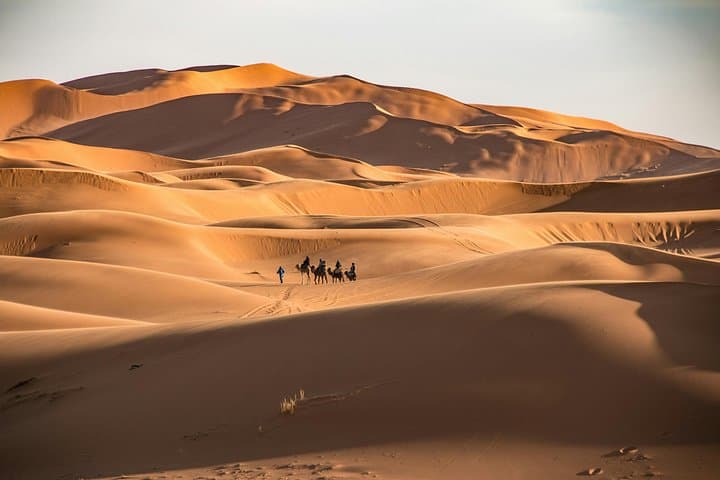
You leave Marrakech before dawn, the city’s ochre walls shrinking as the road climbs the Tizi n’Tichka pass. Wind scours the mountain ridges and the car eases through hairpin turns; below, kasbahs crouch against the sun. By evening the dunes of Erg Chebbi rise like a living landscape, dunes daring you to climb and watch the light fracture across sand.
Verified experiences and guided adventures in the surrounding area.
Operated by Atlas Trips Tours · Merzouga, Drâa-Tafilalet
You leave Marrakech before dawn, the city’s ochre walls shrinking as the road climbs the Tizi n’Tichka pass. Wind scours the mountain ridges and the car eases through hairpin turns; below, kasbahs crouch against the sun. By evening the dunes of Erg Chebbi rise like a living landscape, dunes daring you to climb and watch the light fracture across sand.
This four-day route threads Moroccan history and geology: the High Atlas is folded limestone and volcanic outcrops carved by millennia of freeze and runoff, while the pre-Saharan plains hold caravan tracks once used by salt and spice traders. Aït Ben Haddou’s earthen towers reflect a mud-brick building tradition and a cinematic chapter—Ouarzazate’s studios keep that legacy alive. Todra and Dades Gorges expose layered strata and narrow canyon walls that invite short walks and easy scrambling.
Culturally, expect Berber hospitality—tea, tagine, and drum gatherings beneath desert stars—and practical comforts in small hotels and a nomadic-style camp. Nights swing cold despite the daytime heat; the desert demands layers.
Practical guidance: plan for long driving days with multiple stops, bring sun protection and a refillable water bottle, and choose sturdy footwear for rocky gorges and shifting sand. If you’re sensitive to motion, take precautions for the mountain passes. The camel ride to the camp is short but gives access to sunrise and sunset vistas; pack a headlamp and earplugs for camp nights.
This itinerary balances driving, short hikes, cultural stops, and two nights out of the vehicle—one under the stars—making it an immersive introduction to Morocco’s southern landscapes.
easy.
4 days.
Suitable for travelers comfortable with multiple hours in a vehicle, short hikes (up to 2 hours) and a camel transfer; low-impact overall.
The itinerary includes two nights in hotels (Dades Valley and Ouarzazate) and one night in a desert camp in Merzouga; standards range from simple riads to nomadic-style tents.
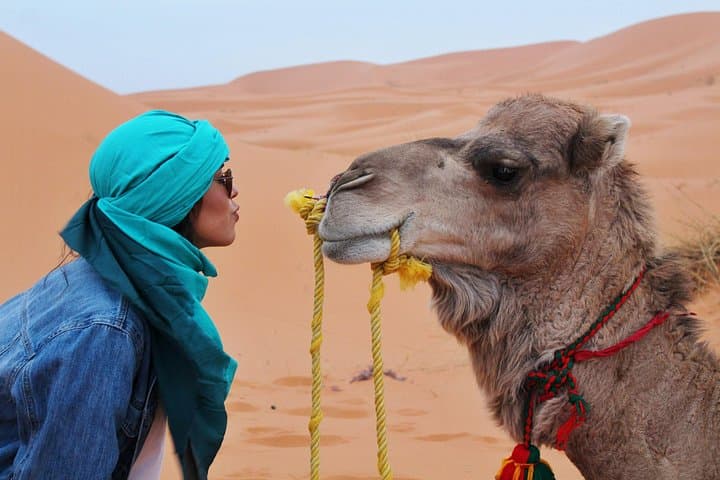
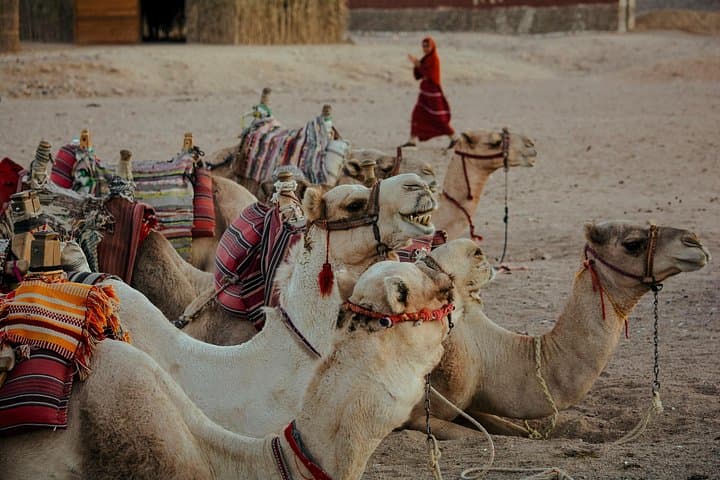
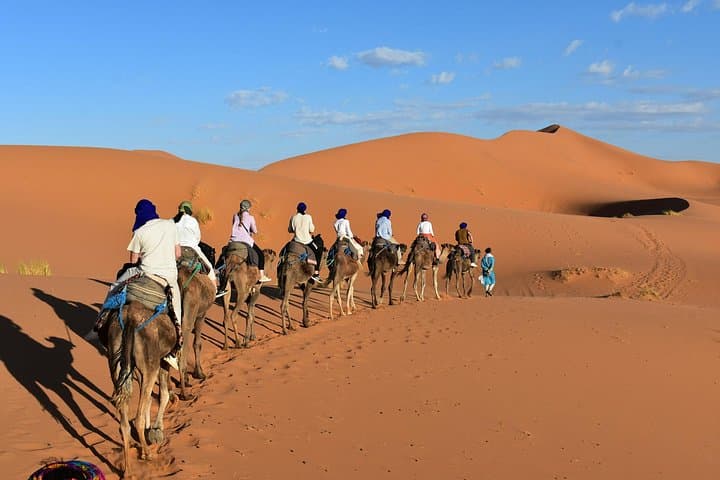
The camel excursion is gentle and lasts about 1–1.5 hours to reach the Berber camp; no prior experience is needed though mounting can be abrupt.
Expect several hours of driving most days—mountain passes and scenic stops make travel time longer, with built-in breaks and viewpoint stops.
Two dinners and two breakfasts are included per the itinerary; local tagine and tea are typical, with options for dietary requests if arranged in advance.
This route follows historical caravan corridors that linked Saharan oases to mountain markets; Aït Ben Haddou is a clay ksar that guarded these routes and later became a film set.
The Sahara’s fragile soils and limited water demand low-impact travel—stick to established tracks, avoid littering, and support local guides and camps that use water-conserving practices.
Atlas Trips Tours operates guided outdoor trips and adventures with an emphasis on safety, stewardship, and memorable experiences.
You leave Marrakech before dawn, the city’s ochre walls shrinking as the road climbs the Tizi n’Tichka pass. Wind scours the mountain ridges and the car eases through hairpin turns; below, kasbahs crouch against the sun. By evening the dunes of Erg Chebbi rise like a living landscape, dunes daring you to climb and watch the light fracture across sand.
You leave Marrakech before dawn, the city’s ochre walls shrinking as the road climbs the Tizi n’Tichka pass. Wind scours the mountain ridges and the car eases through hairpin turns; below, kasbahs crouch against the sun. By evening the dunes of Erg Chebbi rise like a living landscape, dunes daring you to climb and watch the light fracture across sand.
This four-day route threads Moroccan history and geology: the High Atlas is folded limestone and volcanic outcrops carved by millennia of freeze and runoff, while the pre-Saharan plains hold caravan tracks once used by salt and spice traders. Aït Ben Haddou’s earthen towers reflect a mud-brick building tradition and a cinematic chapter—Ouarzazate’s studios keep that legacy alive. Todra and Dades Gorges expose layered strata and narrow canyon walls that invite short walks and easy scrambling.
Culturally, expect Berber hospitality—tea, tagine, and drum gatherings beneath desert stars—and practical comforts in small hotels and a nomadic-style camp. Nights swing cold despite the daytime heat; the desert demands layers.
Practical guidance: plan for long driving days with multiple stops, bring sun protection and a refillable water bottle, and choose sturdy footwear for rocky gorges and shifting sand. If you’re sensitive to motion, take precautions for the mountain passes. The camel ride to the camp is short but gives access to sunrise and sunset vistas; pack a headlamp and earplugs for camp nights.
This itinerary balances driving, short hikes, cultural stops, and two nights out of the vehicle—one under the stars—making it an immersive introduction to Morocco’s southern landscapes.