THE ADVENTURE COLLECTIVE® · Independent discovery and booking for outdoor travel

Cross the High Atlas into sculpted gorges and the wind-carved Erg Chebbi on a four-day private tour from Marrakech to Fes. Expect long driving days, a sunrise camel trek, and nights in riads, desert camps and small mountain hotels.
Cross the High Atlas into sculpted gorges and the wind-carved Erg Chebbi on a four-day private tour from Marrakech to Fes. Expect long driving days, a sunrise camel trek, and nights in riads, desert camps and small mountain hotels.
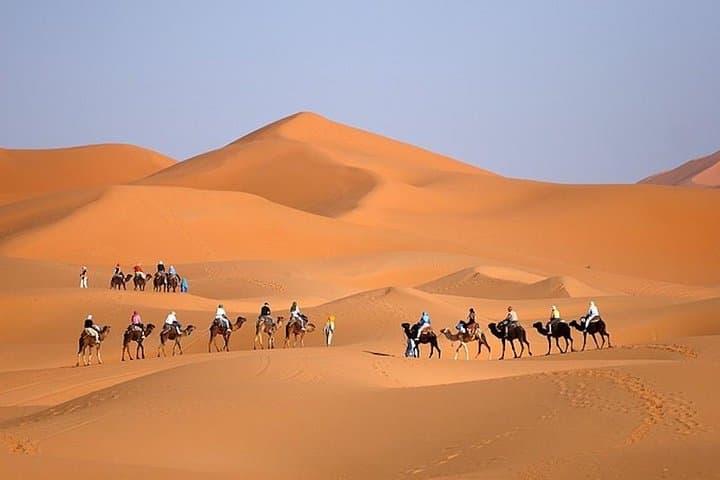
The first light spills across the red roofs of Marrakech as the road climbs the High Atlas, and by afternoon the fortified clay walls of Ait Ben Haddou appear like a timeworn film set. Over four days you move from mountain switchbacks into sculpted gorges, then into the wind-shaped sea of Erg Chebbi where camels lead you to a camp under an enormous sky.
Verified experiences and guided adventures in the surrounding area.
Operated by Fes Sahara Tours · Merzouga, Drâa-Tafilalet
The first light spills across the red roofs of Marrakech as the road climbs the High Atlas, and by afternoon the fortified clay walls of Ait Ben Haddou appear like a timeworn film set. Over four days you move from mountain switchbacks into sculpted gorges, then into the wind-shaped sea of Erg Chebbi where camels lead you to a camp under an enormous sky.
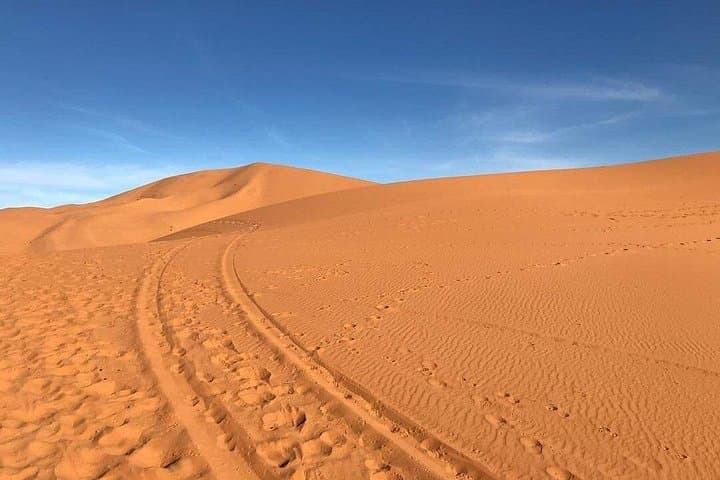
This route threads Moroccan history: caravan corridors that linked sub-Saharan trade routes, the kasbah architecture of Ouarzazate and Ait Ben Haddou, and the Berber villages of the Dades and Todra valleys carved into limestone and compacted earth. Geologically the transition is abrupt — folded, uplifted granite of the High Atlas gives way to river-cut gorges and then to wind-blown Saharan sands shaped by seasonal mistral currents.
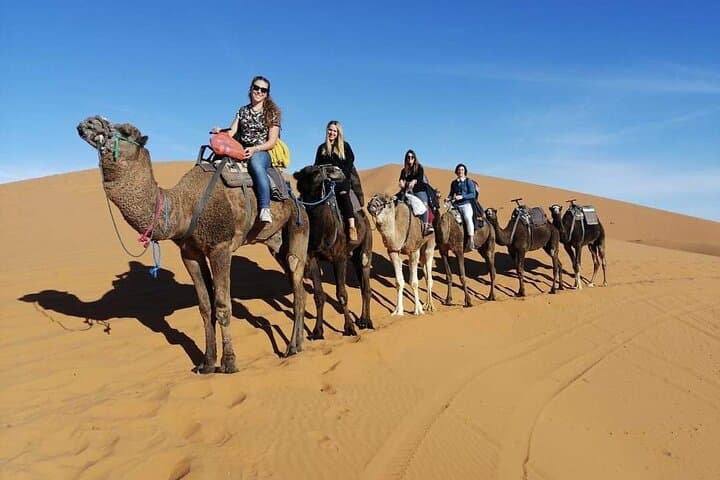
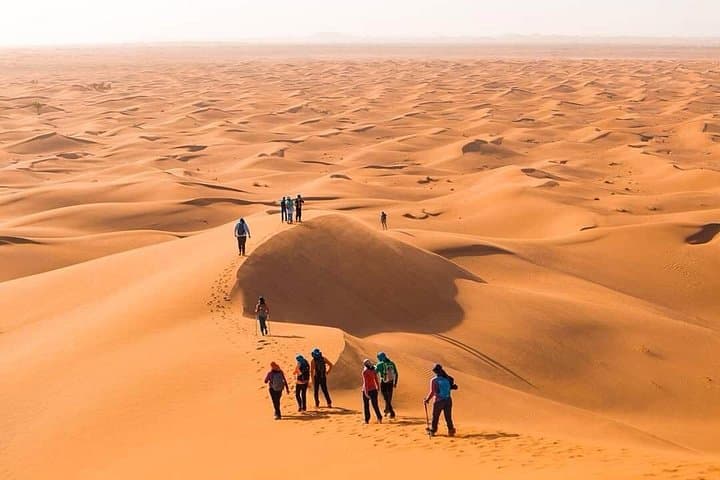
Culturally the journey is defined by hospitality: riads in Marrakech, family-run auberges in Dades, and nomad-style tents near Merzouga where shared dinners and music late into the night are common. Expect long driving legs (several 4–8 hour days), short hikes by oasis and canyon, and a camel trek at sunrise or sunset (about 1–2 hours) across the dunes.
Practical guidance: pack sun protection, a warm layer for desert nights, sturdy shoes for rocky approaches, and a small daypack for water and camera. Time your photography for dawn and dusk when sand color and shadow are richest. If you have limited time, prioritize the Erg Chebbi camel experience and an overnight desert camp — those are the heart of the trip.
moderate.
4 days.
Suitable for travelers in average fitness; you should be comfortable with multi-hour drives and short walks over sand and uneven terrain
Typical camel treks to the camp last about 1–2 hours each way, timed for sunrise or sunset to avoid midday heat.
Yes — the tour includes overnight stays in hotels/riads and at least one desert camp (tented).
The tour is private and can accommodate families; however, it involves long drives and uneven walking surfaces so consider mobility and health restrictions.
Moroccan dirham is used locally; tipping drivers, guides, and camp staff is customary — small amounts in local currency are appreciated.
The route follows parts of historic trans-Saharan corridors; Ait Ben Haddou served as a fortified caravan post and later a film location.
Respect dune vegetation and avoid driving on the sand; support local hostels and guides to keep tourism benefits local and sustainable.
Fes Sahara Tours operates guided outdoor trips and adventures with an emphasis on safety, stewardship, and memorable experiences.
The first light spills across the red roofs of Marrakech as the road climbs the High Atlas, and by afternoon the fortified clay walls of Ait Ben Haddou appear like a timeworn film set. Over four days you move from mountain switchbacks into sculpted gorges, then into the wind-shaped sea of Erg Chebbi where camels lead you to a camp under an enormous sky.
The first light spills across the red roofs of Marrakech as the road climbs the High Atlas, and by afternoon the fortified clay walls of Ait Ben Haddou appear like a timeworn film set. Over four days you move from mountain switchbacks into sculpted gorges, then into the wind-shaped sea of Erg Chebbi where camels lead you to a camp under an enormous sky.
This route threads Moroccan history: caravan corridors that linked sub-Saharan trade routes, the kasbah architecture of Ouarzazate and Ait Ben Haddou, and the Berber villages of the Dades and Todra valleys carved into limestone and compacted earth. Geologically the transition is abrupt — folded, uplifted granite of the High Atlas gives way to river-cut gorges and then to wind-blown Saharan sands shaped by seasonal mistral currents.
Culturally the journey is defined by hospitality: riads in Marrakech, family-run auberges in Dades, and nomad-style tents near Merzouga where shared dinners and music late into the night are common. Expect long driving legs (several 4–8 hour days), short hikes by oasis and canyon, and a camel trek at sunrise or sunset (about 1–2 hours) across the dunes.
Practical guidance: pack sun protection, a warm layer for desert nights, sturdy shoes for rocky approaches, and a small daypack for water and camera. Time your photography for dawn and dusk when sand color and shadow are richest. If you have limited time, prioritize the Erg Chebbi camel experience and an overnight desert camp — those are the heart of the trip.