THE ADVENTURE COLLECTIVE® · Independent discovery and booking for outdoor travel

Cross the High Atlas, walk Ait Ben Haddou’s earthen lanes, and sleep beneath towering Erg Chebbi dunes on this four-day Marrakech-to-Fes desert tour. Expect long drives, camel treks at sunrise and sunset, and firsthand encounters with Berber culture.
Cross the High Atlas, walk Ait Ben Haddou’s earthen lanes, and sleep beneath towering Erg Chebbi dunes on this four-day Marrakech-to-Fes desert tour. Expect long drives, camel treks at sunrise and sunset, and firsthand encounters with Berber culture.
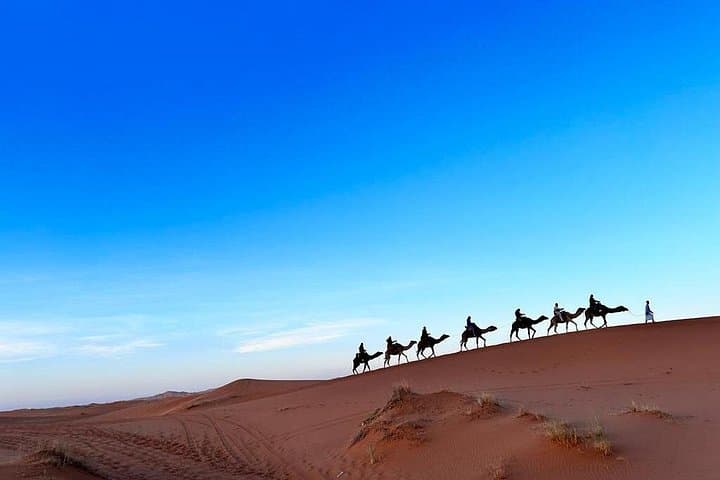
A hot morning in Marrakech and the road unfurls — hairpin turns through the Tizi n’Tichka pass, ochre kasbahs shrinking in the rearview, and the Atlas Mountains pressing like an old companion. By evening the terrain softens: palms and oases give way to the rising ridges of Erg Chebbi. At sunset, camels pick their way up a dune and the Sahara pushes you to its edge: wind-sanded ripples, a horizon that looks built for silence.
Verified experiences and guided adventures in the surrounding area.
Operated by Imperial Trail Tours · Merzouga, Drâa-Tafilalet
A hot morning in Marrakech and the road unfurls — hairpin turns through the Tizi n’Tichka pass, ochre kasbahs shrinking in the rearview, and the Atlas Mountains pressing like an old companion. By evening the terrain softens: palms and oases give way to the rising ridges of Erg Chebbi. At sunset, camels pick their way up a dune and the Sahara pushes you to its edge: wind-sanded ripples, a horizon that looks built for silence.
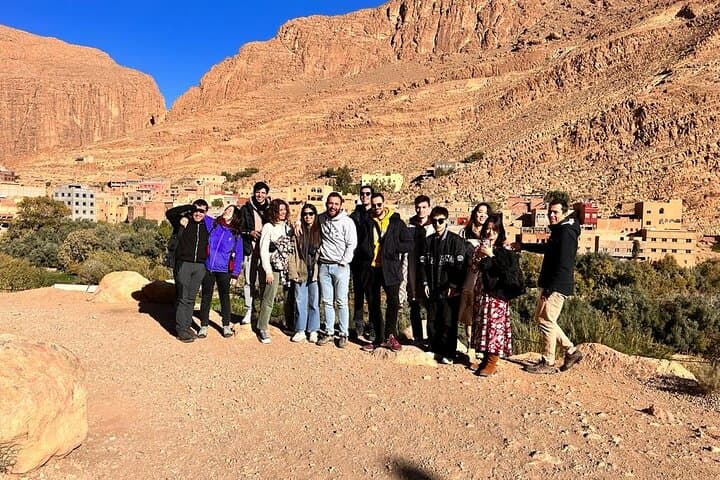
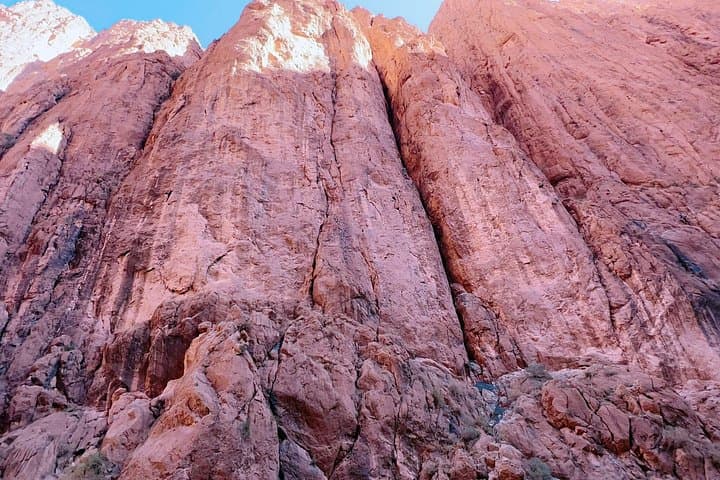
This four-day loop threads history and geology. Ait Ben Haddou’s earthen kasbah is a reminder of trans-Saharan trade and mud-brick architecture; Todgha Gorge cuts a dramatic limestone cleft shaped by ancient rivers; the Erg Chebbi dunes are wind-sculpted Pleistocene deposits on a dry basin. Culturally, you’ll meet Berber communities, hear Gnawa music in Khamlia and taste tagine passed around communal tables.
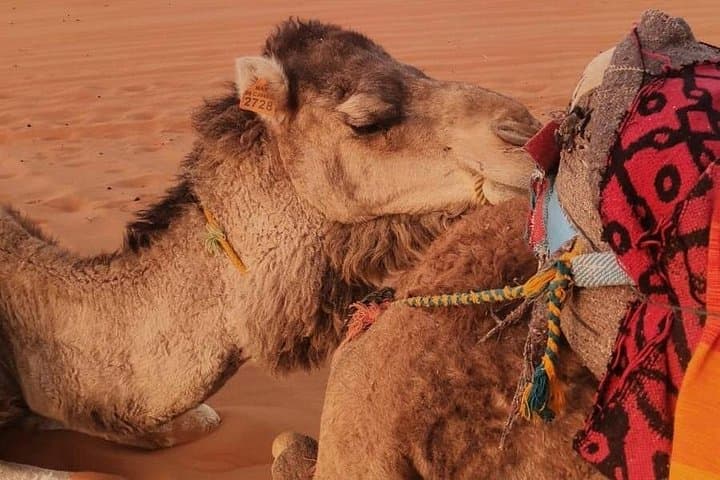
Expect nights split between simple riads and a desert camp under a wide sky, with one- to two-hour camel treks at sunrise and sunset for the best light. Terrain alternates paved roads, rough desert tracks and soft sand; footwear with good ankle support and gaiters for sand are useful. Hydrate frequently — Sahara heat and high sun gain can deplete you fast — and time photography around golden hour.
Practical notes: pack a small overnight bag for the camp, carry cash for small purchases, and allow patience for long drives across remote stretches. The route rewards travelers who want varied landscapes, authentic cultural contact and the quiet authority of the desert.
moderate.
4 days.
Suitable for travelers with basic fitness; must be comfortable walking on sand and sitting for long drives.
Camel rides are gentle and guided; you’ll sit on the saddle for short periods and walk on foot for dune climbs—no technical fitness required.
Nights are split between simple hotels/riads and a shared desert camp with Berber-style tents and basic sleeping arrangements.
Yes—tour details list it as suitable for all fitness levels, but long drives and desert conditions may be tiring for very young children.
Cell service is limited near Erg Chebbi and in remote passes; plan for offline maps and notify contacts before heading into the dunes.
The route follows old trans-Saharan lines: caravan towns like Ait Ben Haddou and the Tafilalet oases were nodes in centuries of trade between sub-Saharan Africa and the Mediterranean.
Stick to marked tracks and avoid trampling dunes or vegetation; water is scarce—minimize waste and support local guides who follow low-impact camping practices.
Imperial Trail Tours operates guided outdoor trips and adventures with an emphasis on safety, stewardship, and memorable experiences.
A hot morning in Marrakech and the road unfurls — hairpin turns through the Tizi n’Tichka pass, ochre kasbahs shrinking in the rearview, and the Atlas Mountains pressing like an old companion. By evening the terrain softens: palms and oases give way to the rising ridges of Erg Chebbi. At sunset, camels pick their way up a dune and the Sahara pushes you to its edge: wind-sanded ripples, a horizon that looks built for silence.
A hot morning in Marrakech and the road unfurls — hairpin turns through the Tizi n’Tichka pass, ochre kasbahs shrinking in the rearview, and the Atlas Mountains pressing like an old companion. By evening the terrain softens: palms and oases give way to the rising ridges of Erg Chebbi. At sunset, camels pick their way up a dune and the Sahara pushes you to its edge: wind-sanded ripples, a horizon that looks built for silence.
This four-day loop threads history and geology. Ait Ben Haddou’s earthen kasbah is a reminder of trans-Saharan trade and mud-brick architecture; Todgha Gorge cuts a dramatic limestone cleft shaped by ancient rivers; the Erg Chebbi dunes are wind-sculpted Pleistocene deposits on a dry basin. Culturally, you’ll meet Berber communities, hear Gnawa music in Khamlia and taste tagine passed around communal tables.
Expect nights split between simple riads and a desert camp under a wide sky, with one- to two-hour camel treks at sunrise and sunset for the best light. Terrain alternates paved roads, rough desert tracks and soft sand; footwear with good ankle support and gaiters for sand are useful. Hydrate frequently — Sahara heat and high sun gain can deplete you fast — and time photography around golden hour.
Practical notes: pack a small overnight bag for the camp, carry cash for small purchases, and allow patience for long drives across remote stretches. The route rewards travelers who want varied landscapes, authentic cultural contact and the quiet authority of the desert.