THE ADVENTURE COLLECTIVE® · Independent discovery and booking for outdoor travel

A compact four‑day trek from Pokhara that trades crowds for ridge lines and village hospitality. Steep ascents and high viewpoints deliver sweeping Annapurna and Fishtail panoramas — plan for altitude and changeable weather.
A compact four‑day trek from Pokhara that trades crowds for ridge lines and village hospitality. Steep ascents and high viewpoints deliver sweeping Annapurna and Fishtail panoramas — plan for altitude and changeable weather.
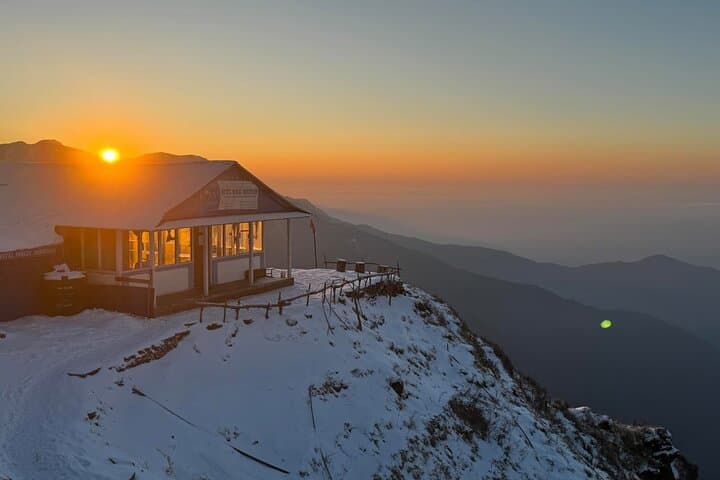
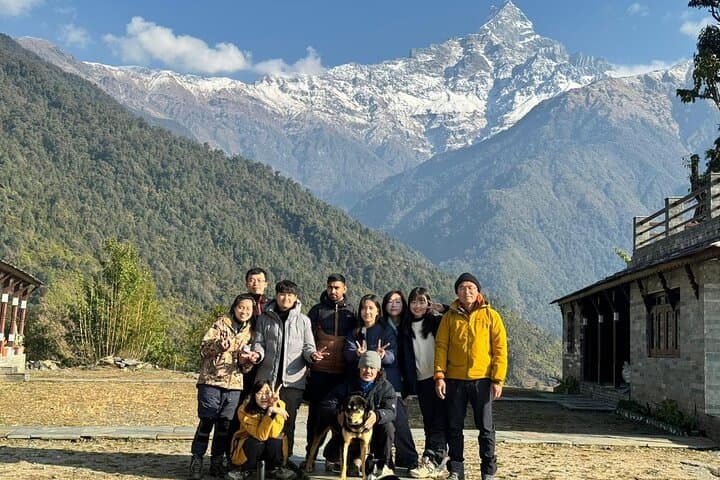
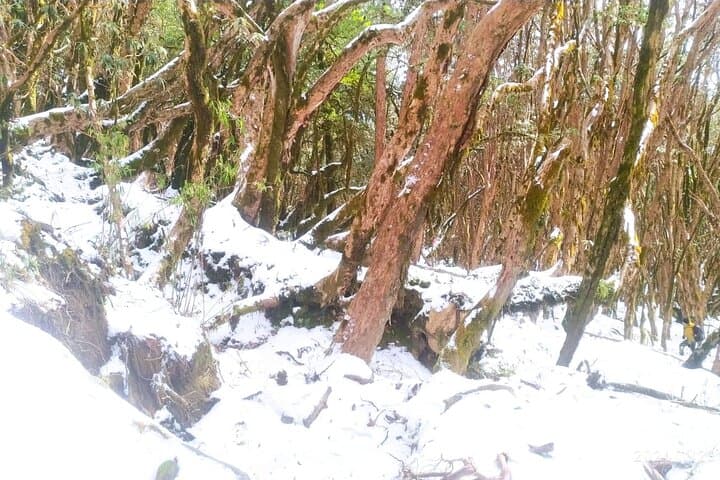
A cold morning in the Annapurna foothills and the trail ahead is a ribbon of packed earth, rhododendron roots, and stepped stone that climbs toward a skyline of serrated peaks. On this four‑day loop you leave Pokhara’s lakeshore bustle for a quieter ridge walk: the forest exhales moss and the valley opens in stages, each viewpoint rearranging Machhapuchhre, Annapurna South and Hiunchuli into new compositions.
Verified experiences and guided adventures in the surrounding area.
Operated by CAN Travels · Pokhara, Gandaki Province
A cold morning in the Annapurna foothills and the trail ahead is a ribbon of packed earth, rhododendron roots, and stepped stone that climbs toward a skyline of serrated peaks. On this four‑day loop you leave Pokhara’s lakeshore bustle for a quieter ridge walk: the forest exhales moss and the valley opens in stages, each viewpoint rearranging Machhapuchhre, Annapurna South and Hiunchuli into new compositions.
The route threads traditional Gurung villages, terraced fields and high alpine meadows. Geologically the Mardi area sits on uplifted metamorphic rock carved by glaciers and monsoon-fed streams; you’ll move from subtropical forest into subalpine scrub in a matter of hours. Tea houses provide practical hospitality — dal bhat, a hot stove and shared stories — and the culture along the trail is straightforward, village life tuned to altitude and season.
Expect steep pitches on days two and three, with the highest viewpoint near 4,500m where panoramic angles reward early starts. Weather can flip quickly: clear dawns often give way to afternoon cloud and wind. Altitude, not technical terrain, is the primary challenge—no ropes or crampons required on the standard route, but boots with good grip and layered insulation are nonnegotiable.
Plan for 4 days with 4–7 hours of walking on trekking days, carry water, and use daylight to push for viewpoints. Respect local trails, pack out waste from tea houses when possible, and allow an extra acclimatization buffer if you’re sensitive to altitude. The Mardi trek is compact but uncompromising in scenery: efficient, human‑scaled, and intensely Himalayan.
challenging.
4 days.
Good aerobic fitness and experience with day hikes and sustained uphill; comfortable with 4–7 hour trekking days.
The highest viewpoint on this trek reaches around 4,500 meters, with overnight stops lower in guest houses.
No technical gear is required for the standard 4‑day route; the trail is non‑technical but steep in sections.
Yes — the itinerary gains altitude quickly, so monitor symptoms, stay hydrated and communicate with your guide if you feel unwell.
Accommodation is in basic tourist guest houses/tea houses with shared rooms and simple meals provided.
The Mardi region has long been seasonally grazed and traversed by Gurung and Magar communities; recent trekking routes were established in the late 20th century as Annapurna tourism expanded.
Trail erosion and waste at popular viewpoints are growing concerns; many operators support local clean‑up efforts and encourage packing out non‑organic trash.
CAN Travels operates guided outdoor trips and adventures with an emphasis on safety, stewardship, and memorable experiences.

A cold morning in the Annapurna foothills and the trail ahead is a ribbon of packed earth, rhododendron roots, and stepped stone that climbs toward a skyline of serrated peaks. On this four‑day loop you leave Pokhara’s lakeshore bustle for a quieter ridge walk: the forest exhales moss and the valley opens in stages, each viewpoint rearranging Machhapuchhre, Annapurna South and Hiunchuli into new compositions.
A cold morning in the Annapurna foothills and the trail ahead is a ribbon of packed earth, rhododendron roots, and stepped stone that climbs toward a skyline of serrated peaks. On this four‑day loop you leave Pokhara’s lakeshore bustle for a quieter ridge walk: the forest exhales moss and the valley opens in stages, each viewpoint rearranging Machhapuchhre, Annapurna South and Hiunchuli into new compositions.
The route threads traditional Gurung villages, terraced fields and high alpine meadows. Geologically the Mardi area sits on uplifted metamorphic rock carved by glaciers and monsoon-fed streams; you’ll move from subtropical forest into subalpine scrub in a matter of hours. Tea houses provide practical hospitality — dal bhat, a hot stove and shared stories — and the culture along the trail is straightforward, village life tuned to altitude and season.
Expect steep pitches on days two and three, with the highest viewpoint near 4,500m where panoramic angles reward early starts. Weather can flip quickly: clear dawns often give way to afternoon cloud and wind. Altitude, not technical terrain, is the primary challenge—no ropes or crampons required on the standard route, but boots with good grip and layered insulation are nonnegotiable.
Plan for 4 days with 4–7 hours of walking on trekking days, carry water, and use daylight to push for viewpoints. Respect local trails, pack out waste from tea houses when possible, and allow an extra acclimatization buffer if you’re sensitive to altitude. The Mardi trek is compact but uncompromising in scenery: efficient, human‑scaled, and intensely Himalayan.