THE ADVENTURE COLLECTIVE® · Independent discovery and booking for outdoor travel

A four-day push from Cusco into Manu National Park that pairs dawn macaw displays with nocturnal wildlife walks, river-side lodgings, and guided rainforest treks. Practical, wildlife-focused and ideal for travelers wanting a deep, accessible Amazon experience.
A four-day push from Cusco into Manu National Park that pairs dawn macaw displays with nocturnal wildlife walks, river-side lodgings, and guided rainforest treks. Practical, wildlife-focused and ideal for travelers wanting a deep, accessible Amazon experience.
Before sunrise a convoy leaves Cusco and the highland air gives way to damp clouds and a green that seems to move. The road drops through the Acjanaco pass and the first wide view of the Amazon unfurls below—an ocean of canopy where macaws flash like living punctuation and rivers dare you to follow them downstream.
Verified experiences and guided adventures in the surrounding area.
Operated by Jungle Adventures Peru · Atalaya, Madre de Dios
Before sunrise a convoy leaves Cusco and the highland air gives way to damp clouds and a green that seems to move. The road drops through the Acjanaco pass and the first wide view of the Amazon unfurls below—an ocean of canopy where macaws flash like living punctuation and rivers dare you to follow them downstream.
Manu National Park, created in 1973 and later recognized as a UNESCO Biosphere Reserve and World Heritage site, protects one of the continent’s most complete elevational gradients. Geology here is a sharp handoff: steep Andean slopes erode into cloud forest and then into the flat, river-stitched lowland rainforest of the Alto Madre de Dios. Indigenous cultures—Quechua and Amazonian groups like the Matsiguenka and Ese’eja—have long read the forest’s signs and still practice selective harvesting and crafts that shape the human ecology of Manu.
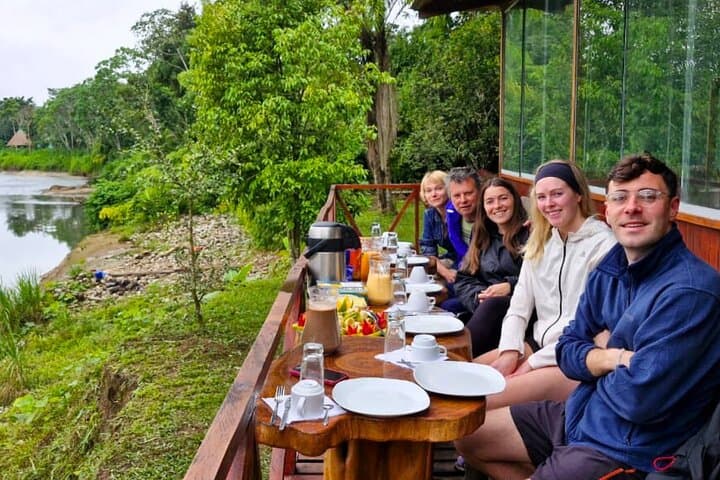
Over four days you’ll move from roadside viewpoints to the Treehouse Inn, walk to macaw clay licks at dawn, join guided daytime treks in a private reserve (including a short climb to a jungle mountain), and do nocturnal searches for frogs, caimans, and sleeping mammals. Expect muddy trails, sudden tropical downpours, and hours of bird sound rather than silence—this landscape has personality and it speaks.
Practical tips: acclimatize in Cusco before departure, pack lightweight rain gear, reliable hiking shoes, insect repellent, a headlamp and binoculars. The itinerary includes round-trip transport, meals, entrance fees and guided walks, but medical and mobility restrictions apply—confirm suitability if you have spine, heart or pregnancy concerns. Timing is everything: early mornings and dusk are when wildlife shows best.
moderate.
3–4 days.
Suitable for travelers in good general health who can manage several hours of walking on uneven, muddy trails; minimal climbing required.
This tour includes round-trip transportation from hotels in Cusco; expect a long day of travel with stops at Paucartambo and viewpoints before entering the park.
The itinerary notes it is suitable for most fitness levels but is not recommended for travelers with spinal injuries, serious heart conditions, or for pregnant guests—check specifics with the operator.
Common sightings include macaws at clay licks, capuchin and howler monkeys, a variety of parrots, and nocturnal animals like caimans and tree frogs; larger mammals like tapirs are possible but less predictable.
Consult your doctor about routine vaccines and malaria prevention; bring personal medications and a basic first-aid kit—guides will carry emergency supplies but remote evacuation can be slow.
Manu’s protected status dates to the 1970s; the park preserves traditional indigenous territories and ecosystems that span from high Andes to Amazon lowlands.
Visitor numbers are managed and most lodges follow strict waste and water practices; stick to trails, avoid feeding wildlife, and support local guides to minimize your footprint.
Jungle Adventures Peru operates guided outdoor trips and adventures with an emphasis on safety, stewardship, and memorable experiences.



Before sunrise a convoy leaves Cusco and the highland air gives way to damp clouds and a green that seems to move. The road drops through the Acjanaco pass and the first wide view of the Amazon unfurls below—an ocean of canopy where macaws flash like living punctuation and rivers dare you to follow them downstream.
Before sunrise a convoy leaves Cusco and the highland air gives way to damp clouds and a green that seems to move. The road drops through the Acjanaco pass and the first wide view of the Amazon unfurls below—an ocean of canopy where macaws flash like living punctuation and rivers dare you to follow them downstream.
Manu National Park, created in 1973 and later recognized as a UNESCO Biosphere Reserve and World Heritage site, protects one of the continent’s most complete elevational gradients. Geology here is a sharp handoff: steep Andean slopes erode into cloud forest and then into the flat, river-stitched lowland rainforest of the Alto Madre de Dios. Indigenous cultures—Quechua and Amazonian groups like the Matsiguenka and Ese’eja—have long read the forest’s signs and still practice selective harvesting and crafts that shape the human ecology of Manu.
Over four days you’ll move from roadside viewpoints to the Treehouse Inn, walk to macaw clay licks at dawn, join guided daytime treks in a private reserve (including a short climb to a jungle mountain), and do nocturnal searches for frogs, caimans, and sleeping mammals. Expect muddy trails, sudden tropical downpours, and hours of bird sound rather than silence—this landscape has personality and it speaks.
Practical tips: acclimatize in Cusco before departure, pack lightweight rain gear, reliable hiking shoes, insect repellent, a headlamp and binoculars. The itinerary includes round-trip transport, meals, entrance fees and guided walks, but medical and mobility restrictions apply—confirm suitability if you have spine, heart or pregnancy concerns. Timing is everything: early mornings and dusk are when wildlife shows best.