THE ADVENTURE COLLECTIVE® · Independent discovery and booking for outdoor travel

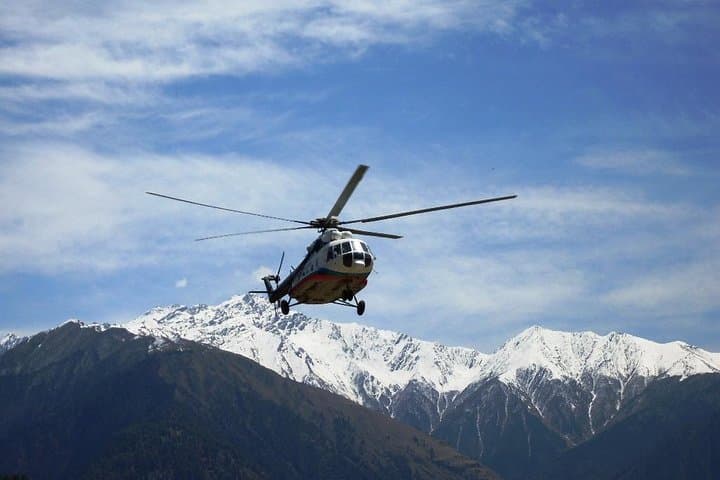
Short on time but eager for the Annapurna panorama? This four-day luxury itinerary pairs classic trekking days with a helicopter return from Annapurna Base Camp, delivering sunrise summits and dramatic mountain views in a compact package.
Short on time but eager for the Annapurna panorama? This four-day luxury itinerary pairs classic trekking days with a helicopter return from Annapurna Base Camp, delivering sunrise summits and dramatic mountain views in a compact package.
Dawn arrives at Machhapuchhre Base Camp with a hard, cold clarity: ridgelines throw long blue shadows and a thin wind pushes the snowfields toward the Annapurna massif. On this accelerated luxury route you’ll hike the high trails by day and trade descent time for a helicopter lift back to Pokhara by afternoon — a compact way to stand at 4,130 m (Annapurna Base Camp) without a two-week commitment.
Verified experiences and guided adventures in the surrounding area.
Operated by Shishu Tours & Travel · Pokhara, Gandaki Province
Dawn arrives at Machhapuchhre Base Camp with a hard, cold clarity: ridgelines throw long blue shadows and a thin wind pushes the snowfields toward the Annapurna massif. On this accelerated luxury route you’ll hike the high trails by day and trade descent time for a helicopter lift back to Pokhara by afternoon — a compact way to stand at 4,130 m (Annapurna Base Camp) without a two-week commitment.
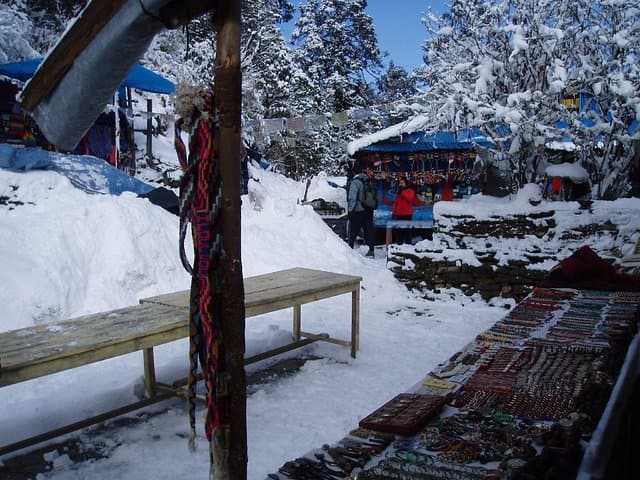
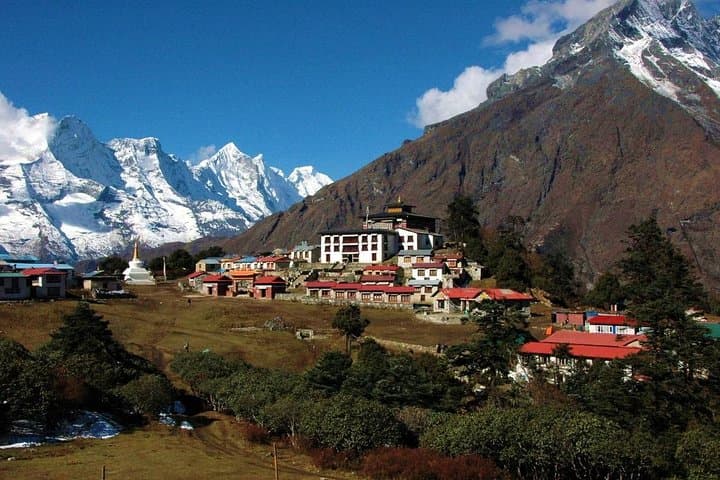
The Annapurna Sanctuary sits in a glacial amphitheater carved over millennia by ice and monsoon-fed rivers; local Gurung villages dot the lower slopes, their terraced fields and stone teahouses offering the human counterpoint to raw geology. The Annapurna Conservation Area Project (ACAP) governs permits here and has shaped trekking culture with conservation fees and community-run lodges.
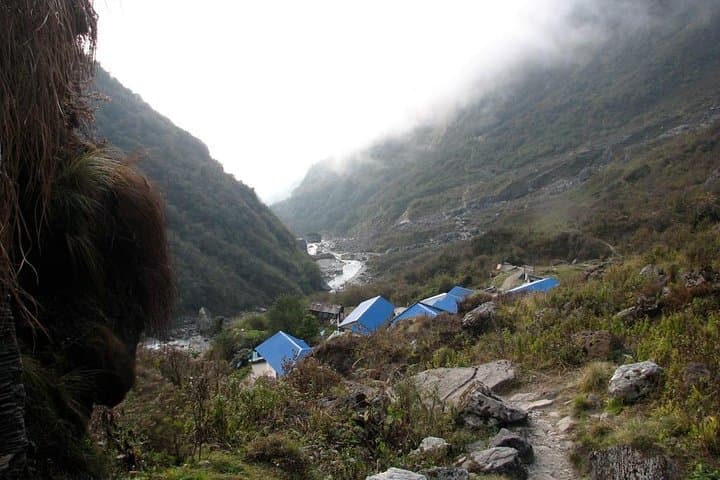
Expect mixed terrain: stone stairways and river crossings below 3,000 m, steep forested pitches through rhododendron and oak, then open moraines and scree toward MBC and ABC. Typical schedule follows: 30-minute flight Kathmandu–Pokhara, drive into Siwai, 2–4 hour day to Jhinu/Chhomrung, longer 7–8 hour stretches to Himalaya, then 4–5 hours to MBC and 2 hours to ABC; helicopter return ~25 minutes.
Practical edge: prioritize slow pacing for altitude, bring layered insulation for windy summits, and book helicopter slots with weather buffers — flights are subject to visibility and wind. Carry water treatment, extra calories, and a basic first-aid kit; teahouses provide meals and lodgings but can be rustic. This four-day luxury itinerary compresses the most iconic Himalayan panoramas into a time-efficient, high-altitude experience.
challenging.
4 days.
Good cardiovascular fitness and prior multi-day hiking experience; able to walk 4–8 hours on consecutive days at altitude.
No—helicopter flights are weather dependent. Operators usually schedule with contingency times; expect cancellations or delays in poor visibility or high winds.
You need the Annapurna Conservation Area Permit (ACAP) and a TIMS (Trekkers' Information Management System) card; organizers usually handle these before the trek.
The itinerary is physically demanding due to long days and rapid ascent to over 4,000 m; beginners should have prior multi-day hiking experience or consider longer itineraries for better acclimatization.
Yes—this package includes breakfasts, lunches, dinners, and nights in local tea lodges during the trek, plus one hotel night in Pokhara and the helicopter transfer.
The Annapurna region is home to Gurung and Magar communities and was designated Nepal’s first conservation area (ACAP) in the late 1980s to protect ecology while supporting local livelihoods.
ACAP manages visitor permits and community lodges to limit impact; minimize waste, avoid single-use plastics, and follow lodge and guide guidance on human-wildlife interactions.
Shishu Tours & Travel operates guided outdoor trips and adventures with an emphasis on safety, stewardship, and memorable experiences.
Dawn arrives at Machhapuchhre Base Camp with a hard, cold clarity: ridgelines throw long blue shadows and a thin wind pushes the snowfields toward the Annapurna massif. On this accelerated luxury route you’ll hike the high trails by day and trade descent time for a helicopter lift back to Pokhara by afternoon — a compact way to stand at 4,130 m (Annapurna Base Camp) without a two-week commitment.
Dawn arrives at Machhapuchhre Base Camp with a hard, cold clarity: ridgelines throw long blue shadows and a thin wind pushes the snowfields toward the Annapurna massif. On this accelerated luxury route you’ll hike the high trails by day and trade descent time for a helicopter lift back to Pokhara by afternoon — a compact way to stand at 4,130 m (Annapurna Base Camp) without a two-week commitment.
The Annapurna Sanctuary sits in a glacial amphitheater carved over millennia by ice and monsoon-fed rivers; local Gurung villages dot the lower slopes, their terraced fields and stone teahouses offering the human counterpoint to raw geology. The Annapurna Conservation Area Project (ACAP) governs permits here and has shaped trekking culture with conservation fees and community-run lodges.
Expect mixed terrain: stone stairways and river crossings below 3,000 m, steep forested pitches through rhododendron and oak, then open moraines and scree toward MBC and ABC. Typical schedule follows: 30-minute flight Kathmandu–Pokhara, drive into Siwai, 2–4 hour day to Jhinu/Chhomrung, longer 7–8 hour stretches to Himalaya, then 4–5 hours to MBC and 2 hours to ABC; helicopter return ~25 minutes.
Practical edge: prioritize slow pacing for altitude, bring layered insulation for windy summits, and book helicopter slots with weather buffers — flights are subject to visibility and wind. Carry water treatment, extra calories, and a basic first-aid kit; teahouses provide meals and lodgings but can be rustic. This four-day luxury itinerary compresses the most iconic Himalayan panoramas into a time-efficient, high-altitude experience.