THE ADVENTURE COLLECTIVE® · Independent discovery and booking for outdoor travel

See Lake Manyara, Serengeti and Ngorongoro in four days on a camping safari that combines dawn game drives, crater vistas and woodland wildlife. This compact loop delivers high wildlife density and contrasting terrain on an accessible, activity-packed schedule.
See Lake Manyara, Serengeti and Ngorongoro in four days on a camping safari that combines dawn game drives, crater vistas and woodland wildlife. This compact loop delivers high wildlife density and contrasting terrain on an accessible, activity-packed schedule.
Dawn on the Serengeti feels immediate: the flat grassland exhales cool air while a dusty 4x4 pushes forward and the horizon resolves into herds and lone silhouettes.
Verified experiences and guided adventures in the surrounding area.
Operated by Kilimeru Trek and Safari · Arusha, Arusha Region
Dawn on the Serengeti feels immediate: the flat grassland exhales cool air while a dusty 4x4 pushes forward and the horizon resolves into herds and lone silhouettes.
This four-day camping safari threads three contrasting landscapes—Lake Manyara’s alkaline shorelines and groundwater forests, the open plains of the Serengeti, and the bowl of the Ngorongoro Crater. Geologically the crater is a collapsed volcano whose rim sits around 2,200–2,400 meters, producing cooler nights and a dense concentration of resident wildlife. The Serengeti’s rolling savanna (roughly 1,000–1,800 meters elevation) offers long sightlines where predators and prey meet in wide, visible encounters. Lake Manyara’s damp soils, fed by subterranean springs, create a woodland edge where tree-climbing lions and flamingo-lined flats are common.
Culturally, the route crosses Maasai grazing lands and the Ngorongoro Conservation Area, where pastoral livelihoods coexist with conservation rules established in the mid-20th century. Expect rustic public campsites, simple communal facilities, and full-day game drives led by guides familiar with animal behaviors and seasonal movements.
Practical guidance: pack layered clothing for hot days and cold crater mornings, bring a refillable water bottle and sun protection, and prepare for extended hours in vehicles—drives between parks commonly total several hours each day. Early morning and late afternoon drives yield the best sightings; midday is for rest and short walks near camps. Respect viewing distance rules, follow your guide’s instructions, and keep noise low—wildlife patterns here are sensitive to disturbance.
moderate.
4 days.
Light to moderate fitness; you should be comfortable sitting for long periods, getting in/out of vehicles, and walking short distances at camps.
Expect several hours of driving between parks—Arusha to Lake Manyara ~2–3 hours, Manyara/Ngorongoro Highlands to Serengeti 4–6 hours depending on route and road conditions.
This specific itinerary indicates admissions and fees are included in the tour price, but confirm at booking for any optional extras or upgrades.
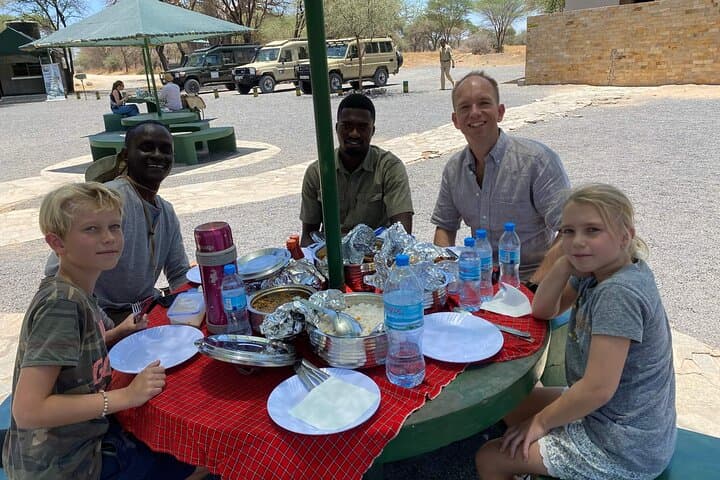
The trip uses public campsites with communal facilities and basic tents; expect simple sleeping arrangements and shared amenities.
The operator notes it is not recommended for pregnant travelers; children are allowed but check age restrictions and comfort with long drives.
The Ngorongoro Crater formed when a large volcanic mountain collapsed two to three million years ago; the area has long been inhabited by Maasai pastoralists whose grazing rights shape land management today.
The Ngorongoro Conservation Area balances wildlife protection with Maasai grazing—follow local rules, minimize waste, and support community-run enterprises where possible.
Kilimeru Trek and Safari operates guided outdoor trips and adventures with an emphasis on safety, stewardship, and memorable experiences.

Dawn on the Serengeti feels immediate: the flat grassland exhales cool air while a dusty 4x4 pushes forward and the horizon resolves into herds and lone silhouettes.
Dawn on the Serengeti feels immediate: the flat grassland exhales cool air while a dusty 4x4 pushes forward and the horizon resolves into herds and lone silhouettes.
This four-day camping safari threads three contrasting landscapes—Lake Manyara’s alkaline shorelines and groundwater forests, the open plains of the Serengeti, and the bowl of the Ngorongoro Crater. Geologically the crater is a collapsed volcano whose rim sits around 2,200–2,400 meters, producing cooler nights and a dense concentration of resident wildlife. The Serengeti’s rolling savanna (roughly 1,000–1,800 meters elevation) offers long sightlines where predators and prey meet in wide, visible encounters. Lake Manyara’s damp soils, fed by subterranean springs, create a woodland edge where tree-climbing lions and flamingo-lined flats are common.
Culturally, the route crosses Maasai grazing lands and the Ngorongoro Conservation Area, where pastoral livelihoods coexist with conservation rules established in the mid-20th century. Expect rustic public campsites, simple communal facilities, and full-day game drives led by guides familiar with animal behaviors and seasonal movements.
Practical guidance: pack layered clothing for hot days and cold crater mornings, bring a refillable water bottle and sun protection, and prepare for extended hours in vehicles—drives between parks commonly total several hours each day. Early morning and late afternoon drives yield the best sightings; midday is for rest and short walks near camps. Respect viewing distance rules, follow your guide’s instructions, and keep noise low—wildlife patterns here are sensitive to disturbance.