THE ADVENTURE COLLECTIVE® · Independent discovery and booking for outdoor travel

A compact four-day circuit linking Petra’s rock-cut streets, Wadi Rum’s lunar dunes and the buoyant waters of the Dead Sea. Ideal for travelers who want a mix of archaeology, desert adventure and restorative time at the lowest point on Earth.
A compact four-day circuit linking Petra’s rock-cut streets, Wadi Rum’s lunar dunes and the buoyant waters of the Dead Sea. Ideal for travelers who want a mix of archaeology, desert adventure and restorative time at the lowest point on Earth.
Morning air in Amman tightens as the coach pulls away, the city shrinking behind stone terraces and olive groves.
By midday you step through Petra’s Siq: a shaded gorge that funnels you toward the carved façade of the Treasury, rose-hued sandstone glowing with the desert sun.
Ancient Nabatean streets and rock-cut tombs unfold over packed-sand paths, stone steps and narrow ledges—history written into rock and reached on foot.
Verified experiences and guided adventures in the surrounding area.
Operated by Global Conquest · Amman, Amman Governorate
Morning air in Amman tightens as the coach pulls away, the city shrinking behind stone terraces and olive groves.
By midday you step through Petra’s Siq: a shaded gorge that funnels you toward the carved façade of the Treasury, rose-hued sandstone glowing with the desert sun.
Ancient Nabatean streets and rock-cut tombs unfold over packed-sand paths, stone steps and narrow ledges—history written into rock and reached on foot.
Geology and culture sit side by side here: Petra’s sandstone layered by time, Wadi Rum’s towering sandstone and granite masses scoured into arches and ridges, and the Dead Sea’s hyper-saline basin marking the lowest point on Earth.
Bedouin presence threads each stop—stories over tea, camp kitchens under starlit skies, and hospitality in transparent desert bubbles.
Expect long walking days in uneven terrain (the main Petra route from the entrance to the Treasury is roughly 1–1.5 km; reaching the Monastery adds steeper sections and several hundred steps).
Wadi Rum is mostly driven but includes short hikes and climbs; vehicle rides across dunes can be bumpy.
Dead Sea time is restorative—floating is effortless, but avoid submerging your face and rinse off mineral-rich mud after.
Practical edge: start early to beat heat, carry 2–3 liters of water daily, wear supportive shoes with grip, and bring sun protection and a lightweight wind layer for evening desert chills.
Respect local dress norms in towns and at religious sites, pack a small cash reserve for tips and village purchases, and plan for minimal cell coverage in remote valleys.
easy.
4 days.
Suitable for most travelers who can walk 1–3 miles on uneven ground; minimal technical fitness required
Yes — this tour’s inclusions list ticket entry to Petra, Wadi Rum and the Dead Sea as part of the package.
Petra involves extended walking with steps and uneven rock; Wadi Rum is mostly a vehicle-based Jeep tour with optional short hikes—overall suitable for most fitness levels.
You can float but avoid dunking your head; the water’s high salinity stings open cuts and eyes—rinse thoroughly after and use resort showers.
Yes — the itinerary includes two nights in Wadi Rum bubbles, one night at a Dead Sea resort and transport with pickup/drop-off.
Petra was the Nabatean capital from the 4th century BCE and flourished as a caravan hub; Wadi Rum has been inhabited and traversed by Bedouin tribes for millennia.
Stick to marked paths, avoid taking rock or shells, and minimise plastic waste—Dead Sea water levels are declining, so responsible tourism supports local conservation efforts.
Global Conquest operates guided outdoor trips and adventures with an emphasis on safety, stewardship, and memorable experiences.


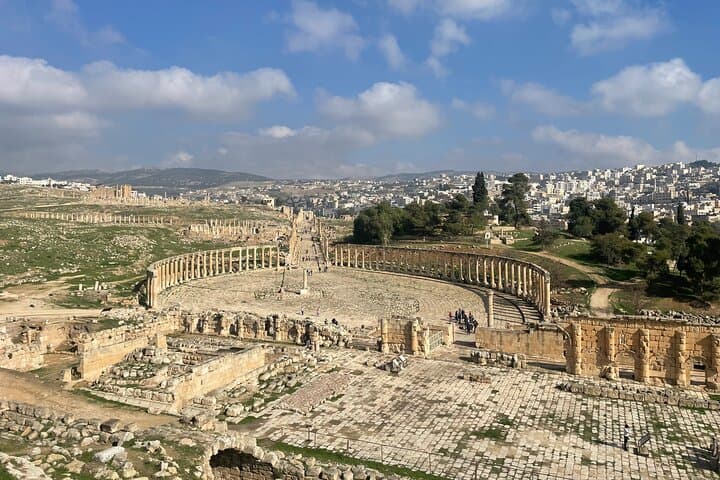

Morning air in Amman tightens as the coach pulls away, the city shrinking behind stone terraces and olive groves.
By midday you step through Petra’s Siq: a shaded gorge that funnels you toward the carved façade of the Treasury, rose-hued sandstone glowing with the desert sun.
Ancient Nabatean streets and rock-cut tombs unfold over packed-sand paths, stone steps and narrow ledges—history written into rock and reached on foot.
Geology and culture sit side by side here: Petra’s sandstone layered by time, Wadi Rum’s towering sandstone and granite masses scoured into arches and ridges, and the Dead Sea’s hyper-saline basin marking the lowest point on Earth.
Bedouin presence threads each stop—stories over tea, camp kitchens under starlit skies, and hospitality in transparent desert bubbles.
Expect long walking days in uneven terrain (the main Petra route from the entrance to the Treasury is roughly 1–1.5 km; reaching the Monastery adds steeper sections and several hundred steps).
Wadi Rum is mostly driven but includes short hikes and climbs; vehicle rides across dunes can be bumpy.
Dead Sea time is restorative—floating is effortless, but avoid submerging your face and rinse off mineral-rich mud after.
Practical edge: start early to beat heat, carry 2–3 liters of water daily, wear supportive shoes with grip, and bring sun protection and a lightweight wind layer for evening desert chills.
Respect local dress norms in towns and at religious sites, pack a small cash reserve for tips and village purchases, and plan for minimal cell coverage in remote valleys.