THE ADVENTURE COLLECTIVE® · Independent discovery and booking for outdoor travel

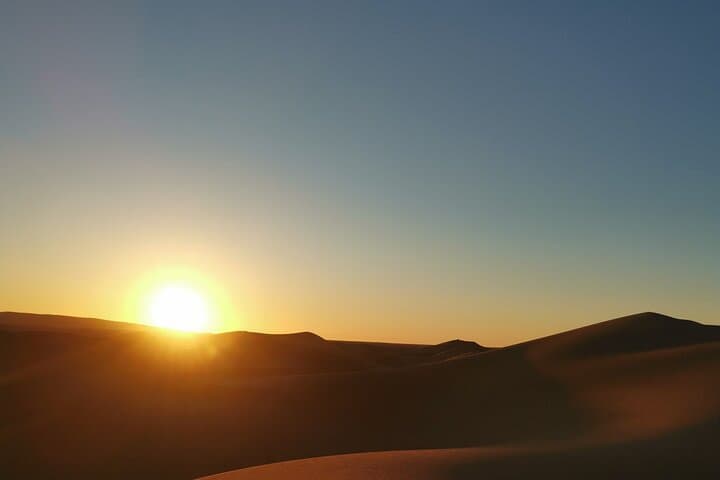
Traverse folded mountain ridges, sip mint tea in a hidden oasis and sleep under dunes that glow at sunset. This four-day trek with Amazigh guides pairs geological spectacle with deep cultural immersion.
Traverse folded mountain ridges, sip mint tea in a hidden oasis and sleep under dunes that glow at sunset. This four-day trek with Amazigh guides pairs geological spectacle with deep cultural immersion.
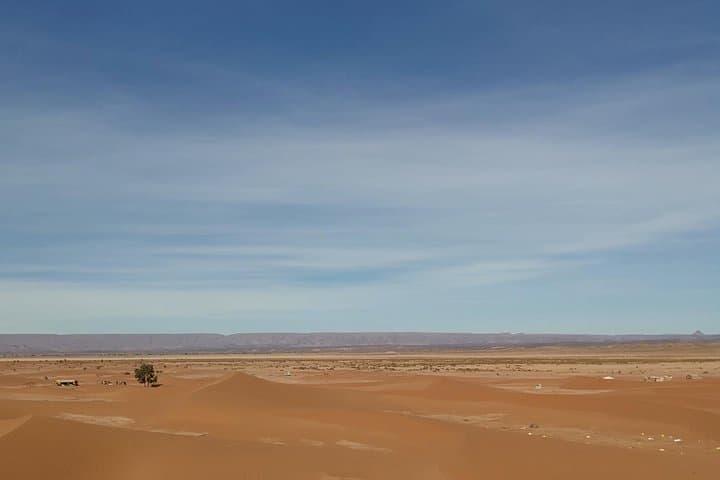
Dawn breaks cold and quick over the rocky ridges of Jebel Bani; the first light rims the cliffs and the camels stir as your team loads gear. You climb through scrub and folded limestone, then step down into an oasis where palms shade an improvised camp—tea steam curling like a promise. By the second day the mountains fall away and Erg Chigagaa opens: an ocean of sand that seems to breathe, dunes rising and leaning with the wind, daring you to cross their crests.
Verified experiences and guided adventures in the surrounding area.
Operated by Tours _ Caravane Cimes et Dunes · Zagora, Drâa-Tafilalet
Dawn breaks cold and quick over the rocky ridges of Jebel Bani; the first light rims the cliffs and the camels stir as your team loads gear. You climb through scrub and folded limestone, then step down into an oasis where palms shade an improvised camp—tea steam curling like a promise. By the second day the mountains fall away and Erg Chigagaa opens: an ocean of sand that seems to breathe, dunes rising and leaning with the wind, daring you to cross their crests.
This route threads human history and geology. Jebel Bani’s folded strata record uplift and erosion; the valley oases were waypoints on trans-Saharan trade routes used by Amazigh (Berber) peoples for centuries. The guides and cooks on this trip are Amazigh, and their songs, mint tea and tagines are as much a part of the landscape as the dunes—living culture shaped by the demands of desert life.
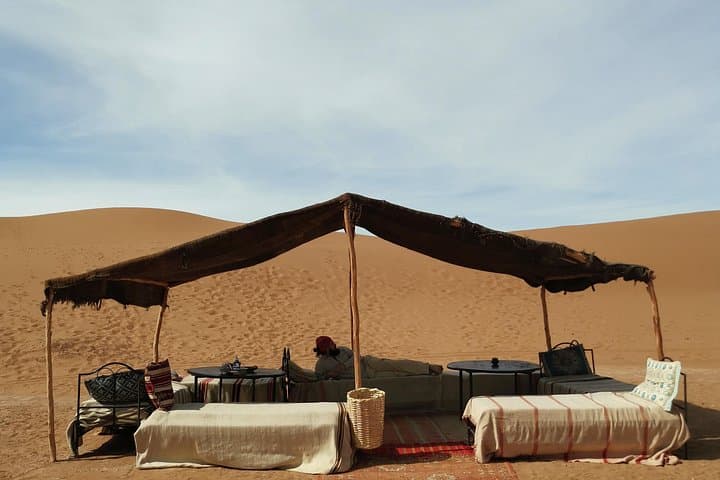
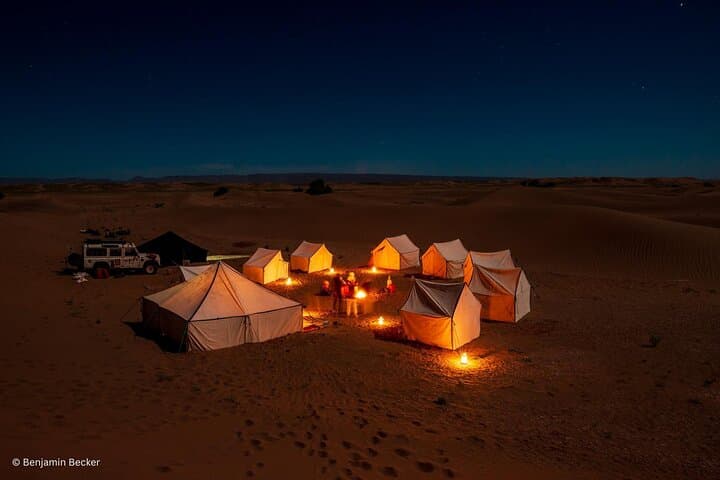
Expect long walks on soft sand, intermittent rocky ascents, and shaded breaks under tamarisk or acacia. Nights are in small tents at mobile bivouacs; sleeping bags and mats are required. Hydration strategy and sun protection matter more than speed: plan for 3–5 hours of hiking between camps, with camel or 4x4 transfers at start and finish. Footwear with good sand drainage, layered clothing for hot days and cold nights, and a compact headlamp will keep you comfortable. Leave no trace: the desert is resilient in appearance but fragile in recovery—pack out waste and respect local customs. If you want an immersive, culturally rich desert crossing that balances physical challenge with attentive local guidance, this four-day trek delivers a clear, elemental taste of the Sahara.
moderate.
4 days.
Moderate fitness: able to hike 3–5 hours per day over soft sand and uneven trail with occasional ascents; comfortable carrying a daypack.
Most days include 3–5 hours of walking on varied terrain—soft sand, rocky tracks and short ascents—so moderate fitness is recommended.
Yes. Tents are provided but you must bring your own sleeping bag and sleeping mat as stated in the itinerary.
Yes—groups may be mixed; the tour is private in terms of staff, and guides accommodate solo travelers but check pickup logistics in advance.
Guides are Amazigh and typically speak Arabic and Tamazight; many also speak French and basic English—confirm language needs when booking.
The Jebel Bani region sits along historic cross-desert routes used by Amazigh caravans trading salt and dates; local nomadic culture remains integral to travel here.
The dunes and oases are fragile—stick to established camp sites, avoid disturbing vegetation, and pack out all non-biodegradable waste to protect the ecosystem.
Tours _ Caravane Cimes et Dunes operates guided outdoor trips and adventures with an emphasis on safety, stewardship, and memorable experiences.
Dawn breaks cold and quick over the rocky ridges of Jebel Bani; the first light rims the cliffs and the camels stir as your team loads gear. You climb through scrub and folded limestone, then step down into an oasis where palms shade an improvised camp—tea steam curling like a promise. By the second day the mountains fall away and Erg Chigagaa opens: an ocean of sand that seems to breathe, dunes rising and leaning with the wind, daring you to cross their crests.
Dawn breaks cold and quick over the rocky ridges of Jebel Bani; the first light rims the cliffs and the camels stir as your team loads gear. You climb through scrub and folded limestone, then step down into an oasis where palms shade an improvised camp—tea steam curling like a promise. By the second day the mountains fall away and Erg Chigagaa opens: an ocean of sand that seems to breathe, dunes rising and leaning with the wind, daring you to cross their crests.
This route threads human history and geology. Jebel Bani’s folded strata record uplift and erosion; the valley oases were waypoints on trans-Saharan trade routes used by Amazigh (Berber) peoples for centuries. The guides and cooks on this trip are Amazigh, and their songs, mint tea and tagines are as much a part of the landscape as the dunes—living culture shaped by the demands of desert life.
Expect long walks on soft sand, intermittent rocky ascents, and shaded breaks under tamarisk or acacia. Nights are in small tents at mobile bivouacs; sleeping bags and mats are required. Hydration strategy and sun protection matter more than speed: plan for 3–5 hours of hiking between camps, with camel or 4x4 transfers at start and finish. Footwear with good sand drainage, layered clothing for hot days and cold nights, and a compact headlamp will keep you comfortable. Leave no trace: the desert is resilient in appearance but fragile in recovery—pack out waste and respect local customs. If you want an immersive, culturally rich desert crossing that balances physical challenge with attentive local guidance, this four-day trek delivers a clear, elemental taste of the Sahara.