THE ADVENTURE COLLECTIVE® · Independent discovery and booking for outdoor travel

Drive the Georgian Military Highway from Tbilisi to the high valleys of Gudauri and Kazbegi, visiting Ananuri fortress, Gergeti Trinity Church beneath Mount Kazbek, and the ancient towns of Mtskheta and Uplistsikhe. This four-day group tour blends dramatic alpine scenery with UNESCO-listed history and practical, vehicle-based sightseeing.
Drive the Georgian Military Highway from Tbilisi to the high valleys of Gudauri and Kazbegi, visiting Ananuri fortress, Gergeti Trinity Church beneath Mount Kazbek, and the ancient towns of Mtskheta and Uplistsikhe. This four-day group tour blends dramatic alpine scenery with UNESCO-listed history and practical, vehicle-based sightseeing.
The early-morning road from Tbilisi climbs and tightens like a story being told faster — river canyons narrow, the air thins, and the first spikes of the Greater Caucasus appear on the horizon. You’ll pass the blue mirror of Zhinvali Reservoir and the crenellated silhouette of Ananuri before the slopes of Gudauri open into wide, wind-brushed alpine meadows. Higher still, Gergeti Trinity Church perches beneath the white face of Mount Kazbek; the stone church seems to watch the mountain as much as the mountain watches it.
Verified experiences and guided adventures in the surrounding area.
Operated by Kartutours · Tbilisi, Tbilisi
The early-morning road from Tbilisi climbs and tightens like a story being told faster — river canyons narrow, the air thins, and the first spikes of the Greater Caucasus appear on the horizon. You’ll pass the blue mirror of Zhinvali Reservoir and the crenellated silhouette of Ananuri before the slopes of Gudauri open into wide, wind-brushed alpine meadows. Higher still, Gergeti Trinity Church perches beneath the white face of Mount Kazbek; the stone church seems to watch the mountain as much as the mountain watches it.
This route follows the historic Georgian Military Highway, a corridor shaped by tectonics and human strategy: the Caucasus rose in a long collision of plates, and centuries of trade and conflict left castles, monasteries, and cave cities like Uplistsikhe cut into volcanic rock. Mtskheta, Georgia’s ancient capital, offers early Christian monuments — Jvari and Svetitskhoveli — that anchor modern life to a long spiritual past. Culturally, expect warm, simple hospitality: bread, strong tea, and regional wine served in family-run eateries.
Practical notes: days are full and vehicle-based; wear sturdy shoes for uneven paths and dress in layers for alpine wind and sun. Bring cash for small purchases and a camera with a wide lens — many viewpoints are broad and exposed. If you plan to hike up to Gergeti Church, allow extra time and be prepared for a steep, rocky track at altitude. Guides manage logistics and local permits; follow their lead to respect sacred sites and fragile mountain vegetation.
easy.
11 hours (per guided day).
Suitable for travelers in average health; mostly vehicle-based with short walks at altitude and some uneven surfaces
Expect full days of travel—roughly 8–11 hours including stops—because sites are spread along the Georgian Military Highway and require driving between towns.
Meals are generally not included; the itinerary lists accommodation but allows time to eat at local restaurants and roadside cafes.
The tour is vehicle-based and many sites are viewable from short, level approaches, but some attractions (Gergeti Church, Uplistsikhe) have uneven access and steps; accessibility varies by stop.
Most stops are below 2,300 m and risk is low for healthy travelers, but those sensitive to altitude should move slowly, hydrate, and avoid strenuous exertion on the first day.
The route follows the Georgian Military Highway, an ancient corridor later improved during imperial and Soviet eras; sites like Jvari and Svetitskhoveli reflect Georgia’s early Christian heritage dating to the 6th–11th centuries.
Alpine meadows and archaeological sites are sensitive to foot traffic; stick to marked paths, avoid collecting artifacts, and support local guides to reduce impact.
Kartutours operates guided outdoor trips and adventures with an emphasis on safety, stewardship, and memorable experiences.
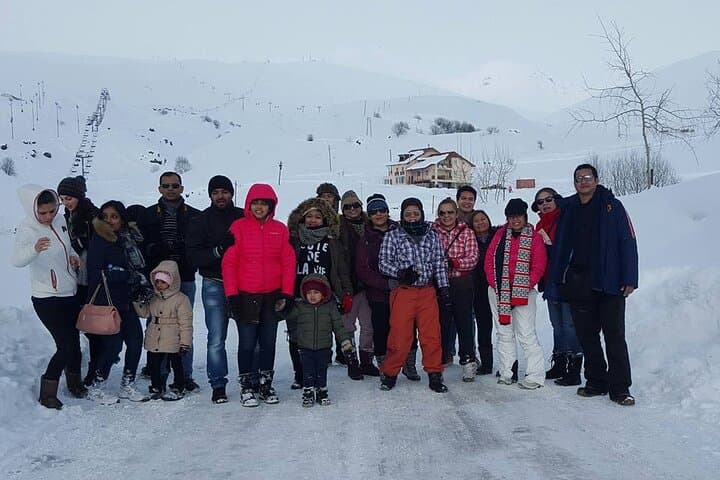
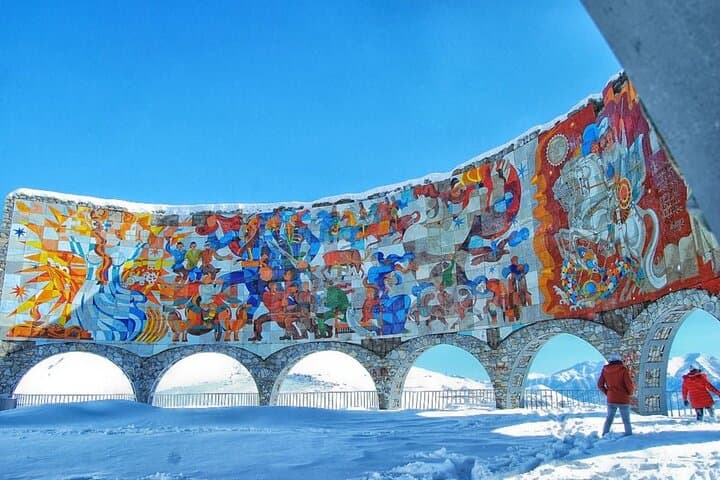


The early-morning road from Tbilisi climbs and tightens like a story being told faster — river canyons narrow, the air thins, and the first spikes of the Greater Caucasus appear on the horizon. You’ll pass the blue mirror of Zhinvali Reservoir and the crenellated silhouette of Ananuri before the slopes of Gudauri open into wide, wind-brushed alpine meadows. Higher still, Gergeti Trinity Church perches beneath the white face of Mount Kazbek; the stone church seems to watch the mountain as much as the mountain watches it.
The early-morning road from Tbilisi climbs and tightens like a story being told faster — river canyons narrow, the air thins, and the first spikes of the Greater Caucasus appear on the horizon. You’ll pass the blue mirror of Zhinvali Reservoir and the crenellated silhouette of Ananuri before the slopes of Gudauri open into wide, wind-brushed alpine meadows. Higher still, Gergeti Trinity Church perches beneath the white face of Mount Kazbek; the stone church seems to watch the mountain as much as the mountain watches it.
This route follows the historic Georgian Military Highway, a corridor shaped by tectonics and human strategy: the Caucasus rose in a long collision of plates, and centuries of trade and conflict left castles, monasteries, and cave cities like Uplistsikhe cut into volcanic rock. Mtskheta, Georgia’s ancient capital, offers early Christian monuments — Jvari and Svetitskhoveli — that anchor modern life to a long spiritual past. Culturally, expect warm, simple hospitality: bread, strong tea, and regional wine served in family-run eateries.
Practical notes: days are full and vehicle-based; wear sturdy shoes for uneven paths and dress in layers for alpine wind and sun. Bring cash for small purchases and a camera with a wide lens — many viewpoints are broad and exposed. If you plan to hike up to Gergeti Church, allow extra time and be prepared for a steep, rocky track at altitude. Guides manage logistics and local permits; follow their lead to respect sacred sites and fragile mountain vegetation.