THE ADVENTURE COLLECTIVE® · Independent discovery and booking for outdoor travel

Climb ancient trade paths through rhododendron forests to watch Annapurna and Dhaulagiri ignite at sunrise. This 3-night, 4-day trek blends cultural stops in Gurung villages with accessible high-mountain viewpoints.
Climb ancient trade paths through rhododendron forests to watch Annapurna and Dhaulagiri ignite at sunrise. This 3-night, 4-day trek blends cultural stops in Gurung villages with accessible high-mountain viewpoints.
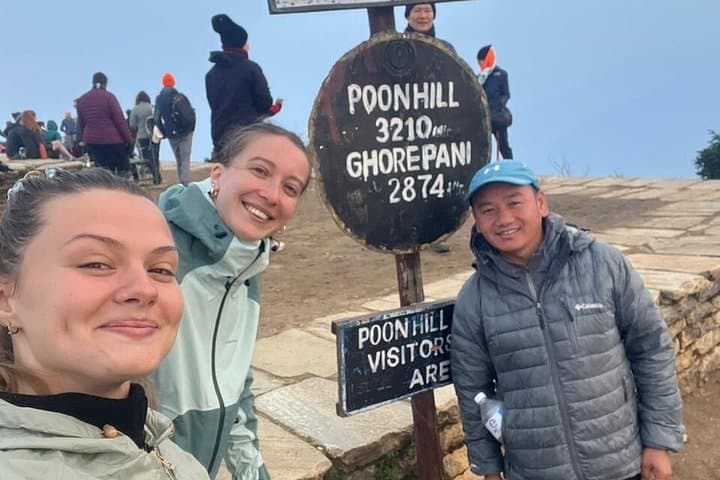
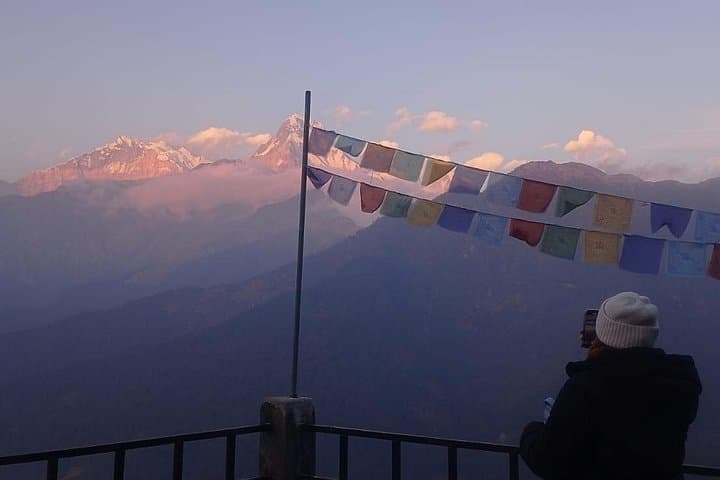
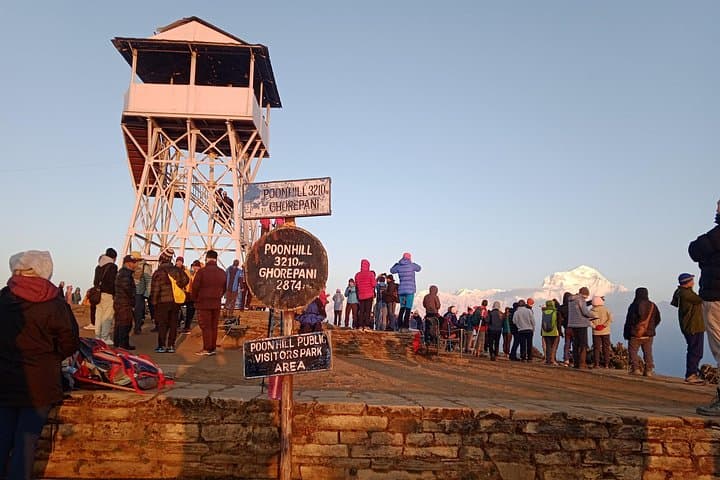
A thin strip of pre-dawn sky colors the Himalaya as you climb the final switchbacks to Poon Hill. On the ridge the air is cold, the horizon edged with jagged summits — Annapurna I, Dhaulagiri and Machhapuchhre — their faces lighting up in sequence as the sun pushes the night back. The trail below threads villages and forests, and the pace is deliberate: breath, step, small talk with a guide who knows each name of every hamlet.
Verified experiences and guided adventures in the surrounding area.
Operated by The Tibetan Encounter Day Tours P. Ltd · Ghorepani, Gandaki Province
A thin strip of pre-dawn sky colors the Himalaya as you climb the final switchbacks to Poon Hill. On the ridge the air is cold, the horizon edged with jagged summits — Annapurna I, Dhaulagiri and Machhapuchhre — their faces lighting up in sequence as the sun pushes the night back. The trail below threads villages and forests, and the pace is deliberate: breath, step, small talk with a guide who knows each name of every hamlet.
The Ghorepani–Poon Hill route follows old trans-Himalayan trade tracks that once moved salt and grain between mountain communities and the Pokhara valley. Geologically the trail skirts the southern flanks of the Annapurna massif where glacially carved valleys meet steep ridgelines; you move from lowland agricultural terraces into rhododendron and oak forests before the treeline opens to alpine scrub and panoramic viewpoints.
Culturally, teahouses in Ghandruk and Tadapani offer a window into Gurung and Magar village life — homes built from stone, prayer flags fluttering above mani walls, and kitchens that serve dal bhat at any hour. Wildlife is subtle: pheasants and langur calls are more common than large mammals, but tracks and seasonal birds enliven the walk.
Practical guidance: the four-day itinerary covers roughly 25–35 km round-trip with about 2,000–2,300 m total ascent to Poon Hill (3,210 m). Expect steep stone stair sections (Ulleri), uneven dirt tracks, and daily hiking of 4–7 hours. Acclimatize by keeping a steady pace, carry warm layers for pre-sunrise hours, bring cash for teahouses, and hydrate regularly. Sunrise timing is key—plan your final pre-dawn hike to arrive at Poon Hill before first light for the clearest views.
moderate.
3–4 days.
Good general fitness—able to walk 4–7 hours/day on uneven uphill and downhill terrain; some prior hiking experience helpful
Poon Hill sits at about 3,210 m (10,531 ft). The route includes gradual gains designed for acclimatization, but altitude can still affect people—watch symptoms and avoid rapid ascent.
Most treks begin near Nayapul or Tikhedhunga after a short drive from Pokhara and finish back at the same trailhead; Pokhara is the nearest hub for accommodation and gear.
Teahouses are basic lodges offering a bed, shared bathroom, and main-course meals like dal bhat; hot showers are sometimes available for a fee.
Trekking in the Annapurna Conservation Area requires a TIMS card and an Annapurna Conservation Area Permit (ACAP); hiring a guide is recommended for logistics, culture, and safety, especially for first-time trekkers.
Poon Hill sits on historic trade routes that linked hill communities with the Pokhara valley; teahouses evolved from rest stops for mule caravans to today’s trekking lodges.
The trek lies within the Annapurna Conservation Area; stick to established trails, avoid single-use plastics, and support local lodges to keep economic benefits in community hands.
The Tibetan Encounter Day Tours P. Ltd operates guided outdoor trips and adventures with an emphasis on safety, stewardship, and memorable experiences.

A thin strip of pre-dawn sky colors the Himalaya as you climb the final switchbacks to Poon Hill. On the ridge the air is cold, the horizon edged with jagged summits — Annapurna I, Dhaulagiri and Machhapuchhre — their faces lighting up in sequence as the sun pushes the night back. The trail below threads villages and forests, and the pace is deliberate: breath, step, small talk with a guide who knows each name of every hamlet.
A thin strip of pre-dawn sky colors the Himalaya as you climb the final switchbacks to Poon Hill. On the ridge the air is cold, the horizon edged with jagged summits — Annapurna I, Dhaulagiri and Machhapuchhre — their faces lighting up in sequence as the sun pushes the night back. The trail below threads villages and forests, and the pace is deliberate: breath, step, small talk with a guide who knows each name of every hamlet.
The Ghorepani–Poon Hill route follows old trans-Himalayan trade tracks that once moved salt and grain between mountain communities and the Pokhara valley. Geologically the trail skirts the southern flanks of the Annapurna massif where glacially carved valleys meet steep ridgelines; you move from lowland agricultural terraces into rhododendron and oak forests before the treeline opens to alpine scrub and panoramic viewpoints.
Culturally, teahouses in Ghandruk and Tadapani offer a window into Gurung and Magar village life — homes built from stone, prayer flags fluttering above mani walls, and kitchens that serve dal bhat at any hour. Wildlife is subtle: pheasants and langur calls are more common than large mammals, but tracks and seasonal birds enliven the walk.
Practical guidance: the four-day itinerary covers roughly 25–35 km round-trip with about 2,000–2,300 m total ascent to Poon Hill (3,210 m). Expect steep stone stair sections (Ulleri), uneven dirt tracks, and daily hiking of 4–7 hours. Acclimatize by keeping a steady pace, carry warm layers for pre-sunrise hours, bring cash for teahouses, and hydrate regularly. Sunrise timing is key—plan your final pre-dawn hike to arrive at Poon Hill before first light for the clearest views.