THE ADVENTURE COLLECTIVE® · Independent discovery and booking for outdoor travel

Condensed into four days, this Galápagos tour pairs hands-on conservation at the Charles Darwin Research Station with iconic day trips to Bartolomé or North Seymour. Expect close wildlife encounters, boardwalk viewpoints, and open-ocean snorkeling off Santa Cruz.
Condensed into four days, this Galápagos tour pairs hands-on conservation at the Charles Darwin Research Station with iconic day trips to Bartolomé or North Seymour. Expect close wildlife encounters, boardwalk viewpoints, and open-ocean snorkeling off Santa Cruz.
You step off the small ferry into Puerto Ayora and the air immediately carries salt, diesel, and something wilder: the low, indifferent breathing of a marine iguana sunning itself on black lava. Local boats rock at the quay like patient beasts, waiting to take you out past Pinnacle Rock and into water so clear it dares you to dive in.
Verified experiences and guided adventures in the surrounding area.
Operated by BM TOURS SA · Puerto Ayora, Galápagos
You step off the small ferry into Puerto Ayora and the air immediately carries salt, diesel, and something wilder: the low, indifferent breathing of a marine iguana sunning itself on black lava. Local boats rock at the quay like patient beasts, waiting to take you out past Pinnacle Rock and into water so clear it dares you to dive in.
This four-day itinerary condenses the Galápagos’ essential encounters into a compact loop: a morning at the Charles Darwin Research Station on Santa Cruz, day trips to either Bartolomé or North Seymour, a bay tour where sea lions treat snorkelers like an attraction, and quiet hours on Turtle Bay’s white sand.
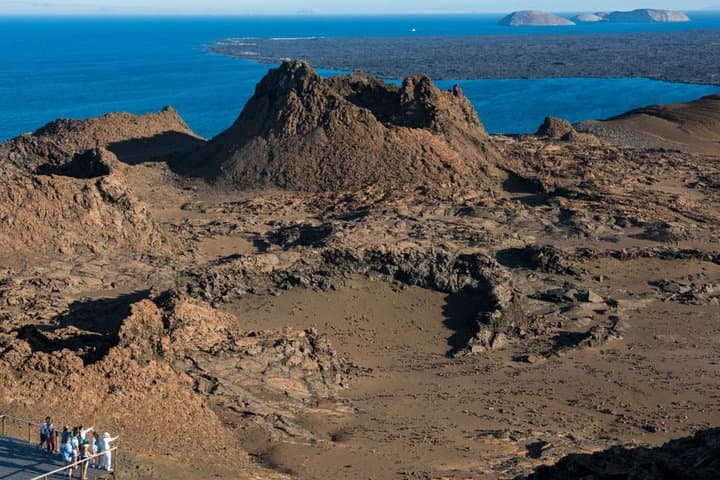
Geology here is recent and blunt. Pillow lava and scoria cones created the islands out of hotspot fire, and the jagged silhouette of Pinnacle Rock on Bartolomé reads like a volcanic fingernail thrust upright. The Darwin Station, founded in the 1960s, anchors the human story: a working lab and nursery where giant tortoises are bred, rehabilitated, and returned to genetic lines that are perilously fragmented.
Culture in Puerto Ayora is pragmatic island life—fishermen, naturalist guides, and guesthouses that hum with travelers planning their next dinghy ride. Meals are straightforward; many hotels include air conditioning and private bathrooms. Conservation rules are firm: trails are signed, guides lead landings, and the National Park limits where boots and fins may go.
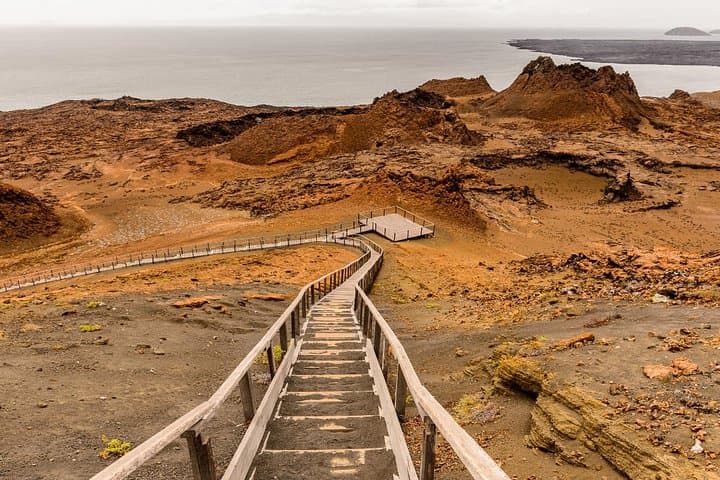
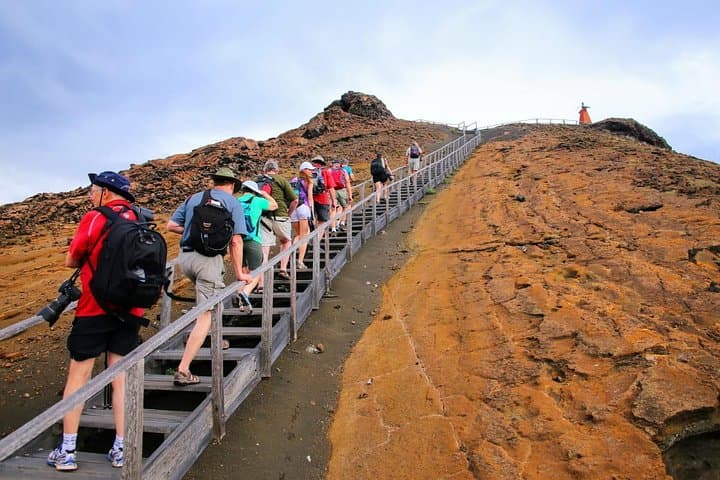
Practical guidance: this is a multi-day, low-technical tour that still demands preparation. Expect several 30–90 minute guided walks and at least one climb on Bartolomé of roughly 114 boardwalk steps to the summit viewpoint (moderate effort; short, steep). Snorkel sessions commonly run 30–60 minutes—visibility 10–20 meters in calm conditions. Boat transfers between Santa Cruz and day islands can total several hours across a day, so pace your hydration and motion-sickness precautions.
Bring a valid passport—the operator requires it at booking and for park registration. Allow for the Galápagos National Park entrance fee (paid on arrival) and the Transit Control Card (TCT). Hotel pickup in Puerto Ayora is standard; airport transfers are included to and from Baltra with schedules tied to flights, so verify exact times.
Tips for comfort: reef-safe sunscreen, a light wind jacket for open-boat spray, and secure footwear for jagged lava and sandy coves. Expect close wildlife encounters—blue-footed boobies, frigatebirds, penguins, sea lions—and follow your guide’s distance rules to protect both you and the islands.
In four days you won’t see everything, but you’ll feel the current of the Galápagos: persistent, unhurried, and always observing you back.
moderate.
4 days (full days).
Moderate fitness: able to handle 1–2 hours of walking on uneven terrain and short steep boardwalk climbs
Yes—your passport is required at booking and for Galápagos National Park registration upon arrival.
Park entrance fees and the Transit Control Card are usually paid on arrival and are not included in the basic package price—confirm current amounts before travel.
The Bartolomé viewpoint involves roughly 114 steps and a short steep climb; it’s short but requires moderate effort and steady footing.
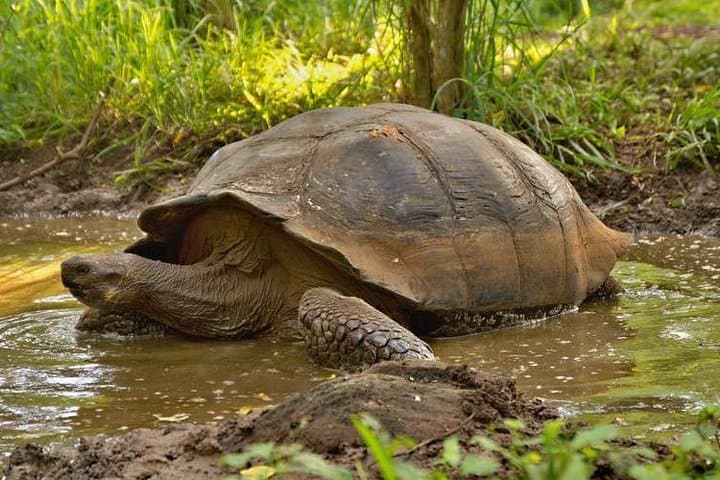
Yes—the Charles Darwin Research Station displays breeding tortoise programs and you’ll likely see tortoises in the reserve areas on Santa Cruz.
Yes—guided snorkeling sections are common and guides brief beginners; however, comfort in open water is helpful and flotation vests are available.
Bring waterproof protection for cameras and phones, extra batteries or power banks (hotels may have limited outlets), and a polarizing filter to reduce glare on water shots.
The Galápagos’ scientific fame grew after Charles Darwin’s 1835 visit; ongoing research at the Charles Darwin Research Station drives modern conservation and restoration programs.
Strict visitor rules, guide-led landings, and wildlife distance regulations help limit human impact; choose reef-safe products and follow all guide instructions to support protection efforts.
BM TOURS SA operates guided outdoor trips and adventures with an emphasis on safety, stewardship, and memorable experiences.
You step off the small ferry into Puerto Ayora and the air immediately carries salt, diesel, and something wilder: the low, indifferent breathing of a marine iguana sunning itself on black lava. Local boats rock at the quay like patient beasts, waiting to take you out past Pinnacle Rock and into water so clear it dares you to dive in.
You step off the small ferry into Puerto Ayora and the air immediately carries salt, diesel, and something wilder: the low, indifferent breathing of a marine iguana sunning itself on black lava. Local boats rock at the quay like patient beasts, waiting to take you out past Pinnacle Rock and into water so clear it dares you to dive in.
This four-day itinerary condenses the Galápagos’ essential encounters into a compact loop: a morning at the Charles Darwin Research Station on Santa Cruz, day trips to either Bartolomé or North Seymour, a bay tour where sea lions treat snorkelers like an attraction, and quiet hours on Turtle Bay’s white sand.
Geology here is recent and blunt. Pillow lava and scoria cones created the islands out of hotspot fire, and the jagged silhouette of Pinnacle Rock on Bartolomé reads like a volcanic fingernail thrust upright. The Darwin Station, founded in the 1960s, anchors the human story: a working lab and nursery where giant tortoises are bred, rehabilitated, and returned to genetic lines that are perilously fragmented.
Culture in Puerto Ayora is pragmatic island life—fishermen, naturalist guides, and guesthouses that hum with travelers planning their next dinghy ride. Meals are straightforward; many hotels include air conditioning and private bathrooms. Conservation rules are firm: trails are signed, guides lead landings, and the National Park limits where boots and fins may go.
Practical guidance: this is a multi-day, low-technical tour that still demands preparation. Expect several 30–90 minute guided walks and at least one climb on Bartolomé of roughly 114 boardwalk steps to the summit viewpoint (moderate effort; short, steep). Snorkel sessions commonly run 30–60 minutes—visibility 10–20 meters in calm conditions. Boat transfers between Santa Cruz and day islands can total several hours across a day, so pace your hydration and motion-sickness precautions.
Bring a valid passport—the operator requires it at booking and for park registration. Allow for the Galápagos National Park entrance fee (paid on arrival) and the Transit Control Card (TCT). Hotel pickup in Puerto Ayora is standard; airport transfers are included to and from Baltra with schedules tied to flights, so verify exact times.
Tips for comfort: reef-safe sunscreen, a light wind jacket for open-boat spray, and secure footwear for jagged lava and sandy coves. Expect close wildlife encounters—blue-footed boobies, frigatebirds, penguins, sea lions—and follow your guide’s distance rules to protect both you and the islands.
In four days you won’t see everything, but you’ll feel the current of the Galápagos: persistent, unhurried, and always observing you back.