THE ADVENTURE COLLECTIVE® · Independent discovery and booking for outdoor travel

Trade the riads of Fez for four days of Atlas passes, limestone gorges and the vast dunes of Erg Chebbi. Expect long drives, camel treks to a desert camp, and cultural stops like Khamlia and Ait-Ben-Haddou.
Trade the riads of Fez for four days of Atlas passes, limestone gorges and the vast dunes of Erg Chebbi. Expect long drives, camel treks to a desert camp, and cultural stops like Khamlia and Ait-Ben-Haddou.
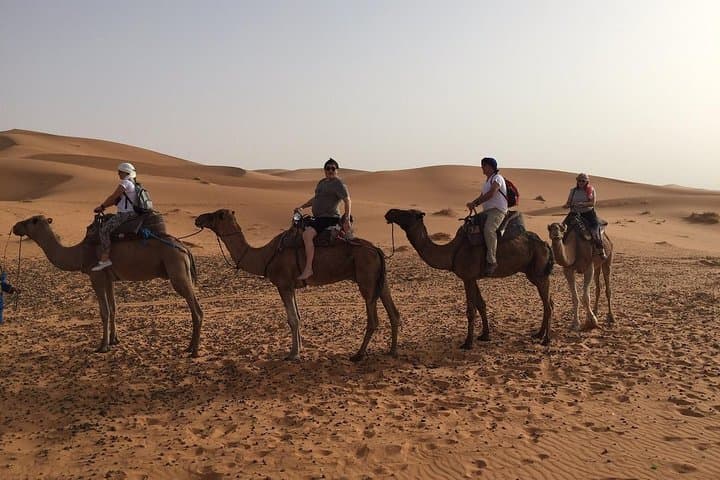
Dawn spills gold across the crests of Erg Chebbi as a line of camels cuts a slow silhouette against the morning sky. You begin in Fez before the city wakes, trading tiled alleys for cedar forests, river-cut gorges and finally the enormous quiet of the Sahara.
Verified experiences and guided adventures in the surrounding area.
Operated by Farka Tours · Merzouga, Drâa-Tafilalet
Dawn spills gold across the crests of Erg Chebbi as a line of camels cuts a slow silhouette against the morning sky. You begin in Fez before the city wakes, trading tiled alleys for cedar forests, river-cut gorges and finally the enormous quiet of the Sahara.
This route threads Moroccan history and geology: the cedar groves and Middle Atlas where Barbary macaques live; the Ziz valley that fed caravan routes; the wind-sculpted erg of Merzouga formed by millennia of shifting sand; and the red mud-brick Ksar of Ait-Ben-Haddou, a fortified village that stood guard on trans-Saharan trade lines and later against cinematic cameras. Todgha Gorge showcases vertical limestone walls where the river has carved narrow canyons through the High Atlas.
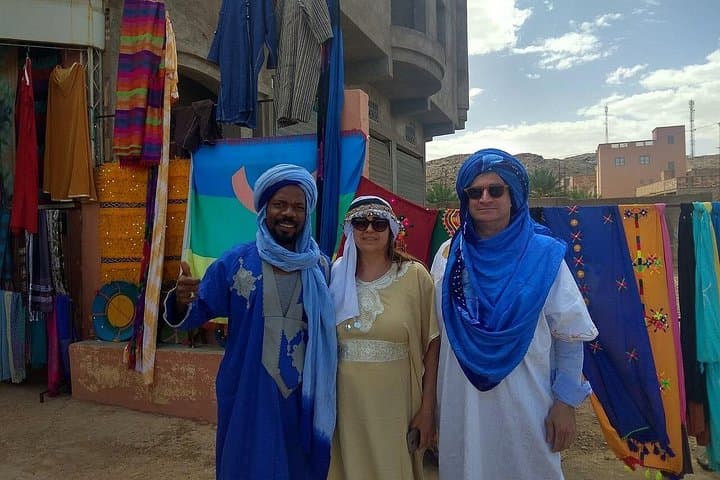
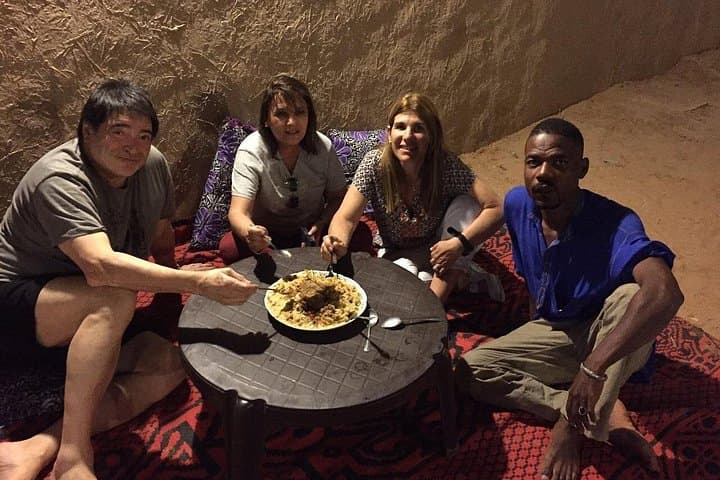
Culturally, expect Berber hospitality, nomadic camps, and Gnawa music in Khamlia — music born of cross-Saharan connections. Nights in a desert camp mean a low-fire dinner, a blanket of stars and a sunrise that compels early climbs up steep sand for the best view.
Practical notes: drives are long—plan for 6–9 hours on some travel days—so pace yourself, hydrate, and break up driving with stops at oases and gorges. Camel transfers to camps are typically 1–2 hours. Dress in layers, protect skin from sun and sand, and time dune walks for cooler morning or late-afternoon hours. If you’re sensitive to long drives or limited mobility, review transfer details; many operators provide hotel pickup and some accessible options. This is an overland adventure that rewards patience: the landscape changes slowly, then stuns you all at once.
easy.
4 days.
Basic fitness for short dune hikes and a 1–2 hour camel ride; able to handle long vehicle transfers.
Expect the longest transfer on day one (roughly 6–9 hours from Fez to Merzouga with stops). Other days include shorter drives of 3–6 hours between sites like Todgha Gorge and Ouarzazate.
Camel rides to the camp are typically 1–2 hours at a walking pace; mounts and handlers are experienced and rides are suitable for most travelers comfortable mounting an animal.
Desert camps range from basic to comfortable; most provide sleeping mats/bedrolls, blankets, and communal facilities—check with the operator for specific camp standards and shower access.
The trip involves uneven sand and some walking; the operator lists wheelchair-accessible transport and pickup options, but accessibility at remote desert camps can be limited—confirm details before booking.
This route follows centuries-old caravan corridors linking Saharan oases to Atlas passes; Ait-Ben-Haddou served as a fortified trading post and film location.
Stay on established tracks to limit erosion of fragile dune edges and avoid leaving waste—local operators aim to minimize camp impact and use communal water sources sparingly.
Farka Tours operates guided outdoor trips and adventures with an emphasis on safety, stewardship, and memorable experiences.
Dawn spills gold across the crests of Erg Chebbi as a line of camels cuts a slow silhouette against the morning sky. You begin in Fez before the city wakes, trading tiled alleys for cedar forests, river-cut gorges and finally the enormous quiet of the Sahara.
Dawn spills gold across the crests of Erg Chebbi as a line of camels cuts a slow silhouette against the morning sky. You begin in Fez before the city wakes, trading tiled alleys for cedar forests, river-cut gorges and finally the enormous quiet of the Sahara.
This route threads Moroccan history and geology: the cedar groves and Middle Atlas where Barbary macaques live; the Ziz valley that fed caravan routes; the wind-sculpted erg of Merzouga formed by millennia of shifting sand; and the red mud-brick Ksar of Ait-Ben-Haddou, a fortified village that stood guard on trans-Saharan trade lines and later against cinematic cameras. Todgha Gorge showcases vertical limestone walls where the river has carved narrow canyons through the High Atlas.
Culturally, expect Berber hospitality, nomadic camps, and Gnawa music in Khamlia — music born of cross-Saharan connections. Nights in a desert camp mean a low-fire dinner, a blanket of stars and a sunrise that compels early climbs up steep sand for the best view.
Practical notes: drives are long—plan for 6–9 hours on some travel days—so pace yourself, hydrate, and break up driving with stops at oases and gorges. Camel transfers to camps are typically 1–2 hours. Dress in layers, protect skin from sun and sand, and time dune walks for cooler morning or late-afternoon hours. If you’re sensitive to long drives or limited mobility, review transfer details; many operators provide hotel pickup and some accessible options. This is an overland adventure that rewards patience: the landscape changes slowly, then stuns you all at once.