THE ADVENTURE COLLECTIVE® · Independent discovery and booking for outdoor travel

Four days of Egypt that pair the surreal White Desert and its crystal ridges with the monumental temples of Luxor and Abu Simbel. Expect desert camping, guided tomb visits, and a serene felucca crossing of the Nile.
Four days of Egypt that pair the surreal White Desert and its crystal ridges with the monumental temples of Luxor and Abu Simbel. Expect desert camping, guided tomb visits, and a serene felucca crossing of the Nile.
A diesel-scented jeep hums awake at dawn as the party is collected from Cairo Airport and the city’s flat skyline recedes. Road and sand take over: 4x4s climb into black volcanic ribs, then out again into the White Desert where wind has sculpted chalky pillars into chickens, mushrooms and pharaonic silhouettes. At night a Bedouin crew pitches canvas against a sky that pushes stars low to the horizon.
Verified experiences and guided adventures in the surrounding area.
Operated by Bastet Travel · Cairo, Cairo Governorate
A diesel-scented jeep hums awake at dawn as the party is collected from Cairo Airport and the city’s flat skyline recedes. Road and sand take over: 4x4s climb into black volcanic ribs, then out again into the White Desert where wind has sculpted chalky pillars into chickens, mushrooms and pharaonic silhouettes. At night a Bedouin crew pitches canvas against a sky that pushes stars low to the horizon.
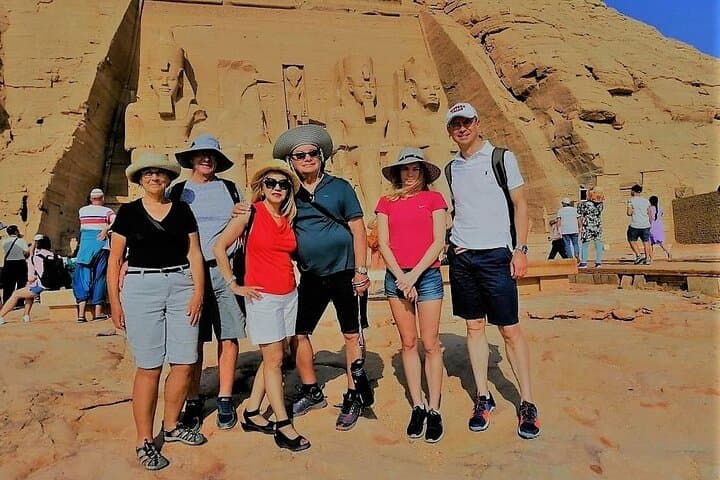
This itinerary threads two landscapes of different ages. The White Desert’s chalk formations are aeolian works, carved by millennia of sand and gust; nearby Crystal Mountain is a glittering remnant of hydrothermal quartz. Downriver, Luxor and Aswan map Egypt’s imperial engineering — Karnak’s added pylons, Hatshepsut’s terraced funerary temple, and the New Kingdom tombs in the Valley of the Kings. Abu Simbel closes the loop: massive Ramses II colossi saved and reassembled stone-by-stone during the 1960s Nile resettlement program.
Expect short drives, guided walks among ruins, one overnight desert camp, and a felucca sail around Elephantine Island. Practical notes: carry sun protection and a reusable water bottle, plan for cool desert nights even after hot days, and keep local currency for small purchases and tips. Many sites require separate tickets for special tombs; a private Egyptologist guide handles logistics but wear comfortable closed-toe shoes for uneven temple floors and bring a light layer for dawn and dusk. The trip balances raw desert exposure with structured cultural visits — it’s as much about geology and night sky as it is about carved stone and river calm.
easy.
4 days.
Suitable for travelers in general good health; involves walking on uneven temple floors and short desert hikes
The tour is graded easy; most walking is moderate and short but involves uneven surfaces and steps in temples and tombs.
The itinerary includes entrance fees to many sites, but separate tickets (e.g., Tutankhamun’s tomb) may require an additional fee on site.
One night is spent in a simple Bedouin-style desert camp with tents and shared facilities; hotels in Cairo, Luxor and Aswan are 4–5 star.
Yes — it’s an early start with a long transfer; the site visit itself is several hours including travel time from Aswan, typically by road or a short flight depending on the operator.
The tour links Pharaonic monumental architecture with millennia of human adaptation to scarce water — notably the 1960s relocation of Abu Simbel to save it from Lake Nasser.
Visitors are encouraged to minimize waste, avoid climbing fragile rock formations in the White Desert, and respect landscaped temple zones where foot traffic accelerates erosion.
Bastet Travel operates guided outdoor trips and adventures with an emphasis on safety, stewardship, and memorable experiences.
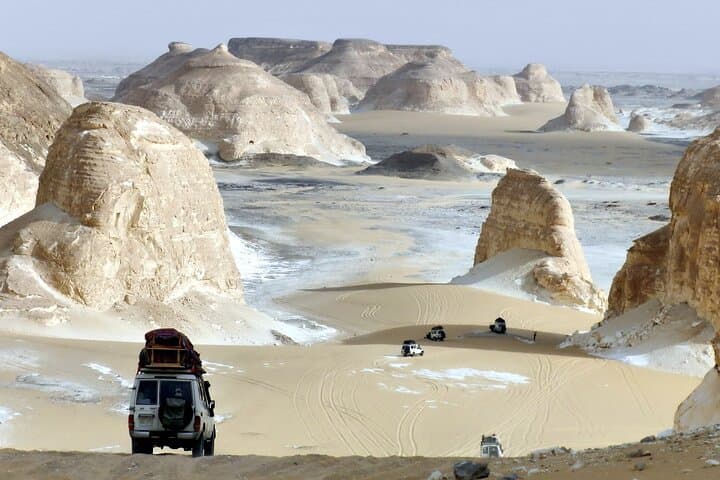
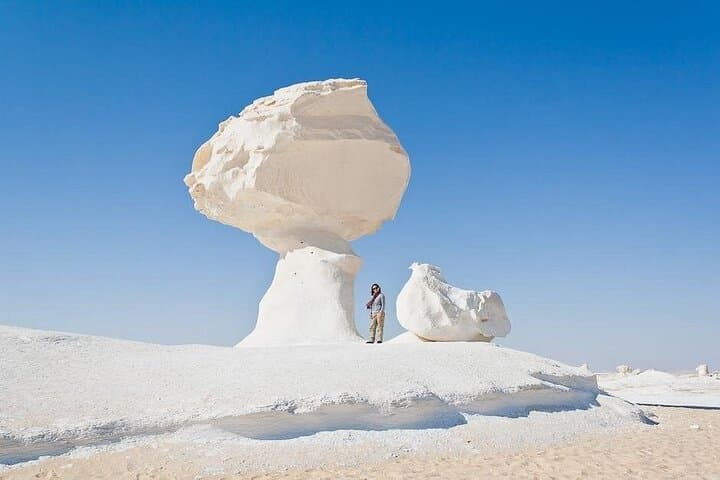
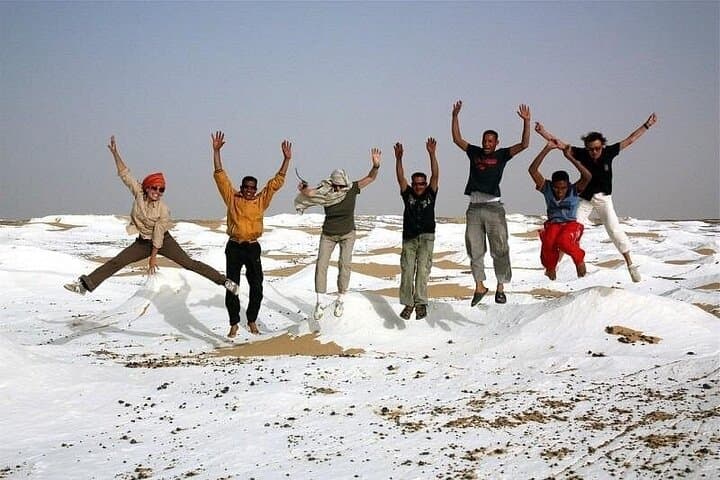
A diesel-scented jeep hums awake at dawn as the party is collected from Cairo Airport and the city’s flat skyline recedes. Road and sand take over: 4x4s climb into black volcanic ribs, then out again into the White Desert where wind has sculpted chalky pillars into chickens, mushrooms and pharaonic silhouettes. At night a Bedouin crew pitches canvas against a sky that pushes stars low to the horizon.
A diesel-scented jeep hums awake at dawn as the party is collected from Cairo Airport and the city’s flat skyline recedes. Road and sand take over: 4x4s climb into black volcanic ribs, then out again into the White Desert where wind has sculpted chalky pillars into chickens, mushrooms and pharaonic silhouettes. At night a Bedouin crew pitches canvas against a sky that pushes stars low to the horizon.
This itinerary threads two landscapes of different ages. The White Desert’s chalk formations are aeolian works, carved by millennia of sand and gust; nearby Crystal Mountain is a glittering remnant of hydrothermal quartz. Downriver, Luxor and Aswan map Egypt’s imperial engineering — Karnak’s added pylons, Hatshepsut’s terraced funerary temple, and the New Kingdom tombs in the Valley of the Kings. Abu Simbel closes the loop: massive Ramses II colossi saved and reassembled stone-by-stone during the 1960s Nile resettlement program.
Expect short drives, guided walks among ruins, one overnight desert camp, and a felucca sail around Elephantine Island. Practical notes: carry sun protection and a reusable water bottle, plan for cool desert nights even after hot days, and keep local currency for small purchases and tips. Many sites require separate tickets for special tombs; a private Egyptologist guide handles logistics but wear comfortable closed-toe shoes for uneven temple floors and bring a light layer for dawn and dusk. The trip balances raw desert exposure with structured cultural visits — it’s as much about geology and night sky as it is about carved stone and river calm.