THE ADVENTURE COLLECTIVE® · Independent discovery and booking for outdoor travel

Cross high Atlas passes, walk dune ridgelines, and sleep in a desert camp on this four-day loop from Agadir. Expect long drives, brief hikes up sand slopes, and rich cultural stops in kasbah towns and Gnawa villages.
Cross high Atlas passes, walk dune ridgelines, and sleep in a desert camp on this four-day loop from Agadir. Expect long drives, brief hikes up sand slopes, and rich cultural stops in kasbah towns and Gnawa villages.
Dawn finds you leaving Agadir’s Atlantic light for the high passes of the Anti-Atlas, the road sweeping up through saffron fields and patched Berber villages before the land opens into the ochre of Erg Chebbi.
Verified experiences and guided adventures in the surrounding area.
Operated by Face Tours · Merzouga, Drâa-Tafilalet
Dawn finds you leaving Agadir’s Atlantic light for the high passes of the Anti-Atlas, the road sweeping up through saffron fields and patched Berber villages before the land opens into the ochre of Erg Chebbi.
Across four days you cross roughly 550–600 km of varied terrain: paved highways, the Tizi n’Tichka-style passes into higher Atlas country (peaks near 2,200 m), then sandstone gorges and finally standing on dunes that can top 100–150 m. Geology here reads like a pageant — folded mountains, river-cut canyons (Todra and Dades), and wind-sculpted sands shaped by Saharan gusts.
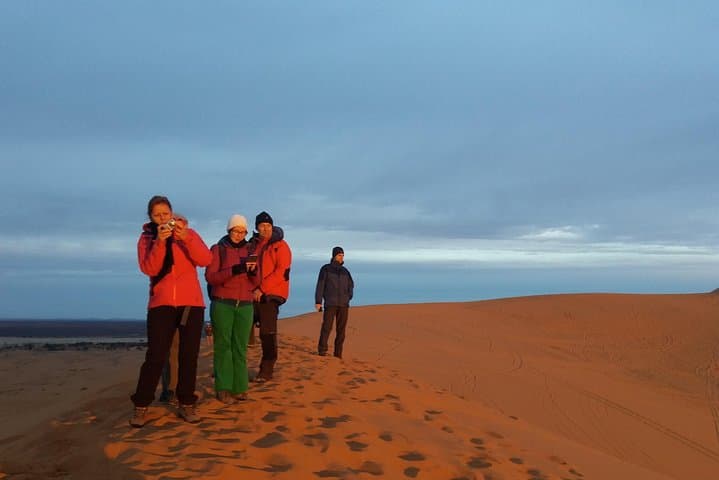
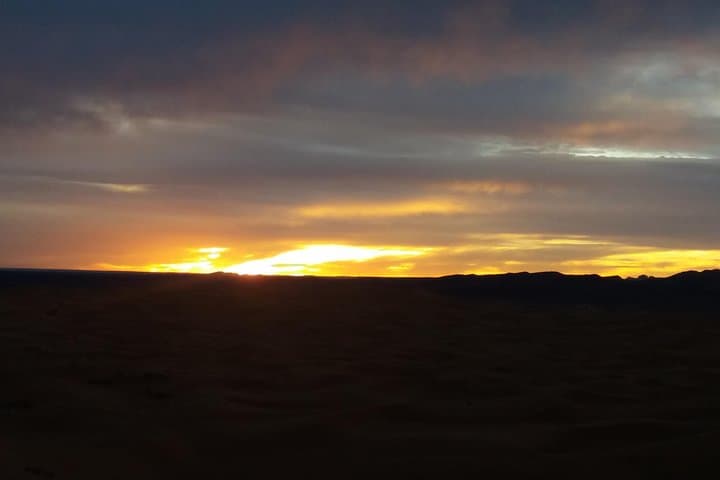
Culture threads the route: Taliouine’s saffron growers, the woven panels of Taznakhte, kasbahs such as Taourirt and Ait Ben Haddou that hint at trans-Saharan trade, and the Gnawa rhythms of southern villages near Merzouga. Nights under the tent bring clear, cold air and the slow cadence of camel caravans; sunrise on the ridge is the travel tableau most people remember.
Practical guide: expect long seat time between stops, short hikes up dune crests, and a camel trek at a steady 3–4 km/h. Temperatures swing dramatically — hot daytime sun and near-freezing desert nights in winter — so layer. Hydration and sun protection matter more than fitness; roads are good but some transfers are remote, so bring a charged phone, cash for small purchases, and a light headlamp for camp.
This tour balances cultural stops, geology, and an overnight desert camp — rewarding for travelers who want a compact Saharan experience with practical comforts.
moderate.
4 days.
Suitable for most fitness levels; requires ability to mount a camel and short dune climbs (100–150 m elevation gain on ridges).
Yes — private, air-conditioned transport from Agadir is included; confirm your pickup point at booking.
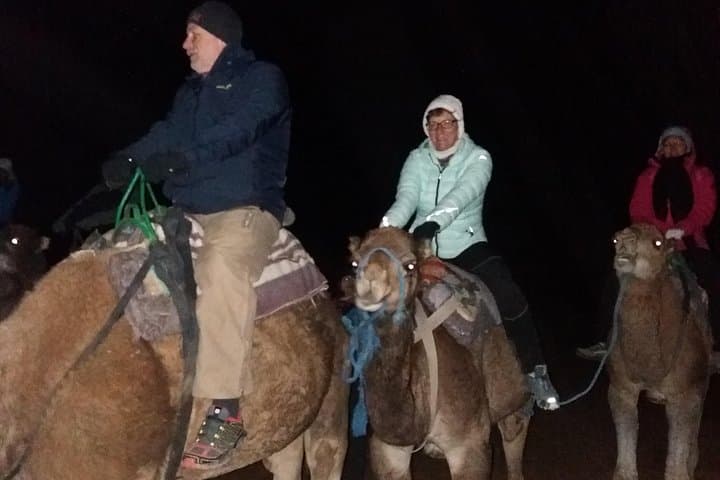
Camel treks across Erg Chebbi are typically 1–3 hours between camp and the dunes at a relaxed pace; guides assist mounting and dismounting.
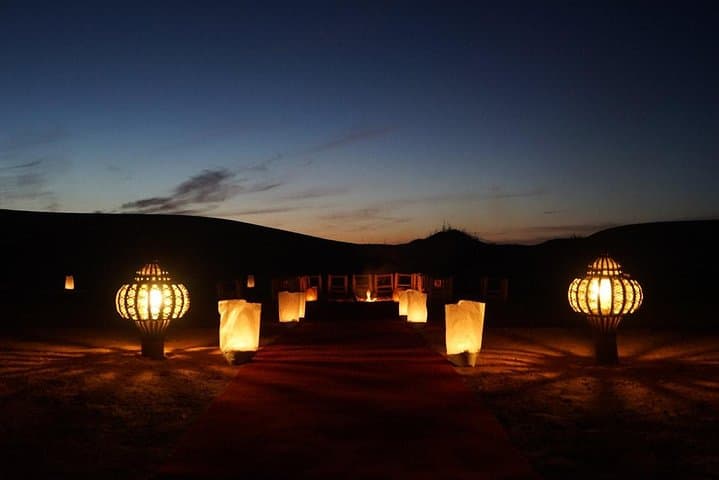
Overnight stays are in desert-style tents with basic bedding; standards vary by operator but warm blankets are provided — bring a personal liner if you sleep cold.
Transport is wheelchair-accessible per the operator, but dune walking and camel rides are not fully accessible — contact the operator to plan transfers and accommodations.
The route follows old caravan corridors and features kasbahs that grew from trans-Saharan trade; Ait Ben Haddou and Taourirt recall clay architecture and caravan-era wealth.
Water is scarce and fragile dune ecosystems are easily disturbed — stick to marked paths, avoid driving on vegetated areas, and minimize single-use plastics.
Face Tours operates guided outdoor trips and adventures with an emphasis on safety, stewardship, and memorable experiences.
Dawn finds you leaving Agadir’s Atlantic light for the high passes of the Anti-Atlas, the road sweeping up through saffron fields and patched Berber villages before the land opens into the ochre of Erg Chebbi.
Dawn finds you leaving Agadir’s Atlantic light for the high passes of the Anti-Atlas, the road sweeping up through saffron fields and patched Berber villages before the land opens into the ochre of Erg Chebbi.
Across four days you cross roughly 550–600 km of varied terrain: paved highways, the Tizi n’Tichka-style passes into higher Atlas country (peaks near 2,200 m), then sandstone gorges and finally standing on dunes that can top 100–150 m. Geology here reads like a pageant — folded mountains, river-cut canyons (Todra and Dades), and wind-sculpted sands shaped by Saharan gusts.
Culture threads the route: Taliouine’s saffron growers, the woven panels of Taznakhte, kasbahs such as Taourirt and Ait Ben Haddou that hint at trans-Saharan trade, and the Gnawa rhythms of southern villages near Merzouga. Nights under the tent bring clear, cold air and the slow cadence of camel caravans; sunrise on the ridge is the travel tableau most people remember.
Practical guide: expect long seat time between stops, short hikes up dune crests, and a camel trek at a steady 3–4 km/h. Temperatures swing dramatically — hot daytime sun and near-freezing desert nights in winter — so layer. Hydration and sun protection matter more than fitness; roads are good but some transfers are remote, so bring a charged phone, cash for small purchases, and a light headlamp for camp.
This tour balances cultural stops, geology, and an overnight desert camp — rewarding for travelers who want a compact Saharan experience with practical comforts.