THE ADVENTURE COLLECTIVE® · Independent discovery and booking for outdoor travel

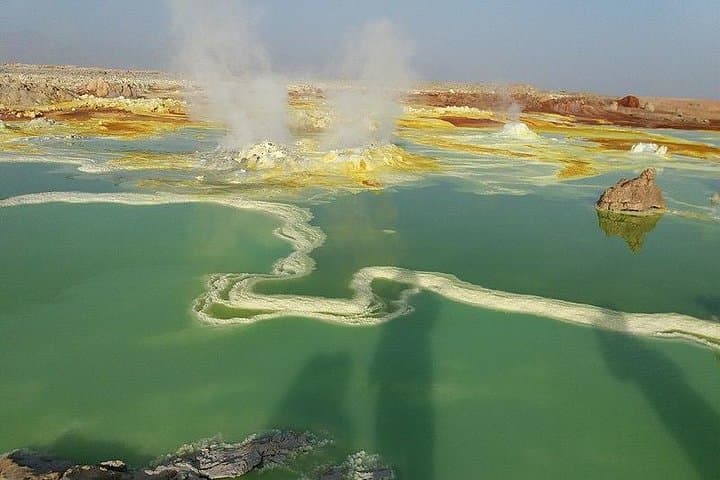
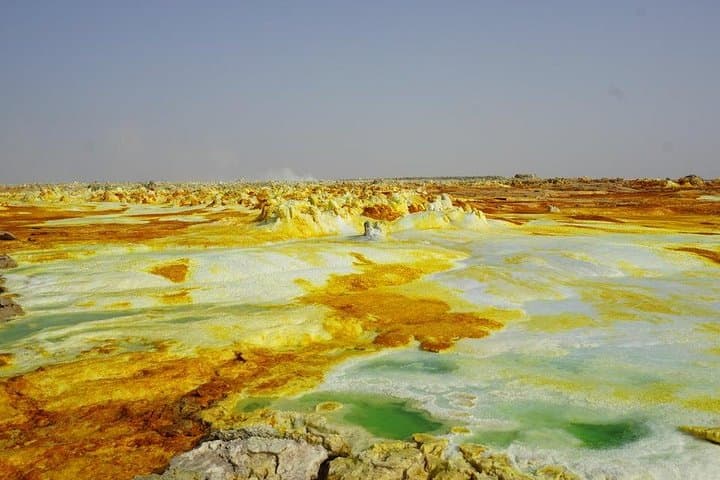
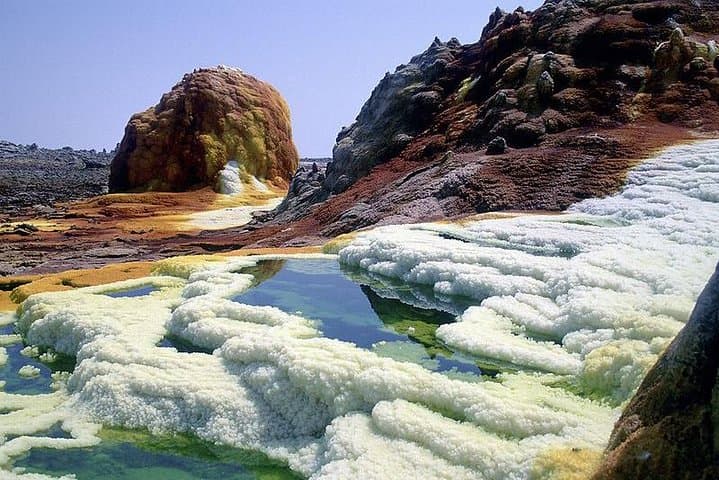
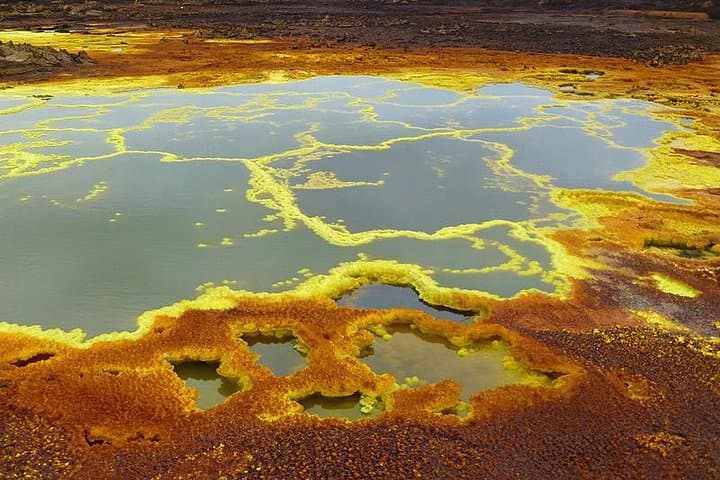
A four-day expedition across one of Earth’s most extreme landscapes: trek to Erta Ale’s lava lake, watch Dallol’s acid terraces at sunrise, and walk the salt flats of Lake Afdera. Expect long desert drives, camels, and primitive camping.
A four-day expedition across one of Earth’s most extreme landscapes: trek to Erta Ale’s lava lake, watch Dallol’s acid terraces at sunrise, and walk the salt flats of Lake Afdera. Expect long desert drives, camels, and primitive camping.
At dawn the desert reads like a page of molten geography: wind-sanded salt flats glinting white, a low caldera breathing orange from a permanent lava lake, and caravans of camels tracing routes older than maps.
Verified experiences and guided adventures in the surrounding area.
Operated by Ethio Travel And Tours · Mekele, Tigray
At dawn the desert reads like a page of molten geography: wind-sanded salt flats glinting white, a low caldera breathing orange from a permanent lava lake, and caravans of camels tracing routes older than maps.
This four-day route threads through the northern Danakil Depression — a corner of the Afar Triangle where three tectonic plates pull apart and chemistry paints the ground. You move by 4WD and on foot: roughly 80 km of desert driving between hamlets, a 9 km trek (about 3 hours) from Askoma to New Erta Ale, and short walks around Dallol’s acid pools and the salt pans of Lake Afdera. The depression includes places well below sea level (Dallol ~‑116 m; Lake Afdera ~‑102 m) and volcanic summits with pit craters rising above the flats.
Afar culture and salt commerce still shape life here — salt cut into blocks and loaded onto camels is both livelihood and landscape. Security protocols and local guides are standard: tours commonly include police or scouts and use camels to shuttle camp gear to volcanic rims.
Practical edge: expect exposed desert sun by day and sharp-cold nights at higher camps. Footwear should handle rocky lava and soft salt crusts; carry 3–4 liters of water per day, and plan early starts to avoid midday heat. Medical or mobility limitations, pregnancy, and serious heart or spinal conditions are contraindications. Permits, a willingness to camp in primitive conditions, and basic endurance for multi-hour treks make this an expedition-style experience rather than a comfort tour.
challenging.
4 days (approx. 96 hours).
Good cardiovascular fitness and the ability to walk several hours across uneven terrain are required.
The trek from Askoma is about 9 km and takes roughly 3 hours over mixed rock, sand and cooled lava — moderate to strenuous depending on heat and pace.
Yes — tours typically include local guides and security escorts (scouts or police) as part of standard operating procedure in the Afar Region.
You can reach the crater rim and watch molten activity; access below the rim is restricted for safety. Nights at the rim offer the best viewing conditions.
No — operators advise against participation for pregnant travelers and those with serious heart or spinal conditions due to the remote, physically demanding nature of the tour.
The Danakil sits inside the Afar Triangle, where rifting plates expose volcanoes and salt basins; salt extraction has sustained Afar communities for centuries.
Hydrothermal features and fragile salt crusts are vulnerable to erosion; stay on established routes, avoid collecting minerals, and follow guide instructions to minimize impact.
Ethio Travel And Tours operates guided outdoor trips and adventures with an emphasis on safety, stewardship, and memorable experiences.
At dawn the desert reads like a page of molten geography: wind-sanded salt flats glinting white, a low caldera breathing orange from a permanent lava lake, and caravans of camels tracing routes older than maps.
At dawn the desert reads like a page of molten geography: wind-sanded salt flats glinting white, a low caldera breathing orange from a permanent lava lake, and caravans of camels tracing routes older than maps.
This four-day route threads through the northern Danakil Depression — a corner of the Afar Triangle where three tectonic plates pull apart and chemistry paints the ground. You move by 4WD and on foot: roughly 80 km of desert driving between hamlets, a 9 km trek (about 3 hours) from Askoma to New Erta Ale, and short walks around Dallol’s acid pools and the salt pans of Lake Afdera. The depression includes places well below sea level (Dallol ~‑116 m; Lake Afdera ~‑102 m) and volcanic summits with pit craters rising above the flats.
Afar culture and salt commerce still shape life here — salt cut into blocks and loaded onto camels is both livelihood and landscape. Security protocols and local guides are standard: tours commonly include police or scouts and use camels to shuttle camp gear to volcanic rims.
Practical edge: expect exposed desert sun by day and sharp-cold nights at higher camps. Footwear should handle rocky lava and soft salt crusts; carry 3–4 liters of water per day, and plan early starts to avoid midday heat. Medical or mobility limitations, pregnancy, and serious heart or spinal conditions are contraindications. Permits, a willingness to camp in primitive conditions, and basic endurance for multi-hour treks make this an expedition-style experience rather than a comfort tour.