THE ADVENTURE COLLECTIVE® · Independent discovery and booking for outdoor travel

Drive the main sights of the Chui Valley and the shores of Issyk‑Kul in four packed days. This tour mixes Silk Road history, dramatic canyons, petroglyph fields and a night in a yurt camp — ideal for travelers who want culture and landscapes without extended trekking.
Drive the main sights of the Chui Valley and the shores of Issyk‑Kul in four packed days. This tour mixes Silk Road history, dramatic canyons, petroglyph fields and a night in a yurt camp — ideal for travelers who want culture and landscapes without extended trekking.
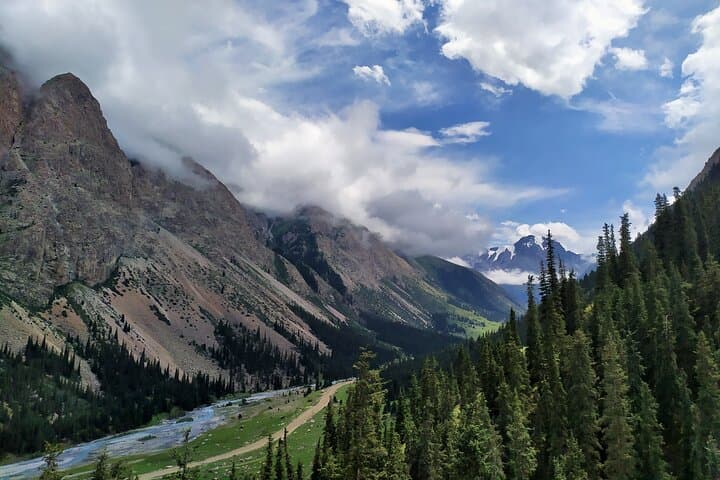
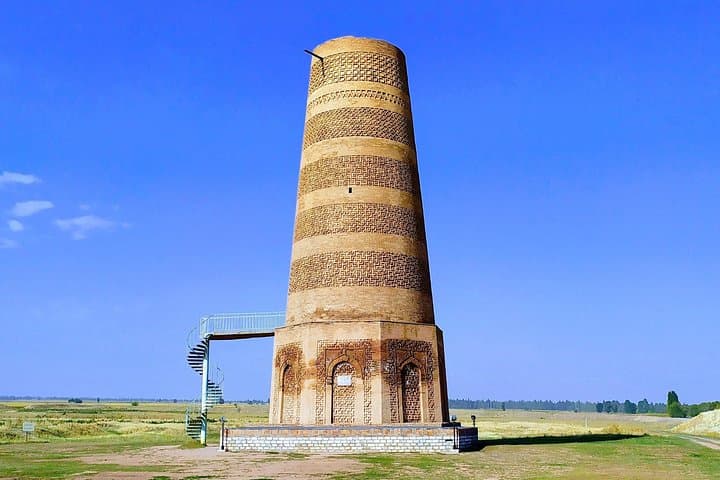
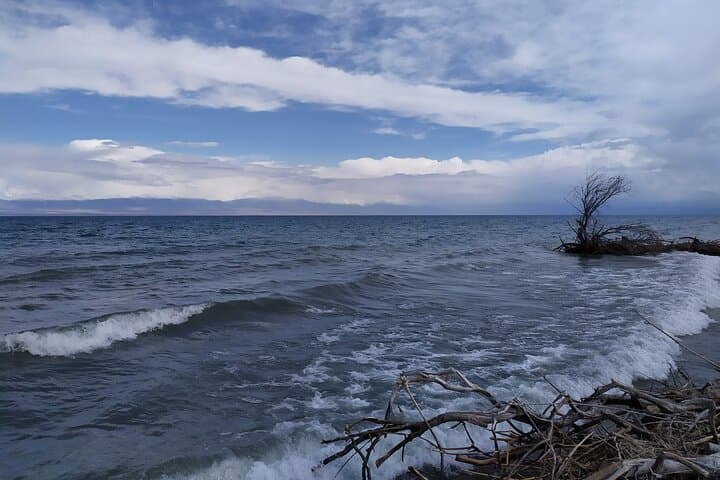
A dust-scented morning in Bishkek, and the road unfurls toward the high bowl of Issyk‑Kul — a hard, blue lake that refuses to freeze. You climb out of the city into the Chui Valley: wheat fields give way to steppe, then to craggy ridgelines that push the sky. Over four days the trip alternates quiet drives with short, purposeful walks — a climb of stone steps at Burana Tower, a slot-like squeeze through Konorchek’s eroded walls, and a late-afternoon arrival at the yurt camp where the horizon tilts orange across the lake.
Verified experiences and guided adventures in the surrounding area.
Operated by Visit Bishkek · Bishkek, Chuy Region
A dust-scented morning in Bishkek, and the road unfurls toward the high bowl of Issyk‑Kul — a hard, blue lake that refuses to freeze. You climb out of the city into the Chui Valley: wheat fields give way to steppe, then to craggy ridgelines that push the sky. Over four days the trip alternates quiet drives with short, purposeful walks — a climb of stone steps at Burana Tower, a slot-like squeeze through Konorchek’s eroded walls, and a late-afternoon arrival at the yurt camp where the horizon tilts orange across the lake.
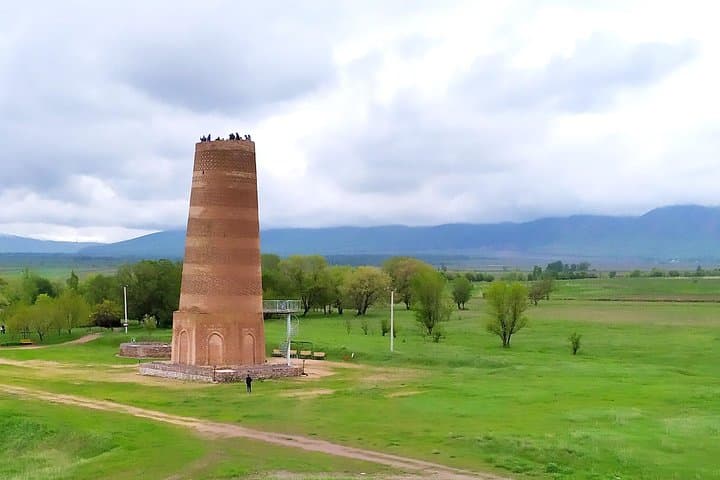
This circuit threads Silk Road history and Tien‑Shan geology. Burana’s remaining minaret marks the site of Balasagun, a Karakhanid capital, while Issyk‑Kul’s shoreline shelters petroglyphs and Bronze‑Age sites. Konorchek’s badlands were carved by millennia of erosion, exposing layers of sediment and ancient shell remains; Fairy Tale Canyon on the south shore is red sandstone shaped into figures by wind and rain.
Culture here is tangible: nomadic hospitality, felt-making, and falconry traditions persist in villages between Karakol and Cholpon‑Ata. Expect short interpretive stops, easy to moderate walking on uneven ground, and long stretches spent in a vehicle.
Practicalities: bring sun protection, a sturdy pair of shoes for short canyon walks, and cash for remote purchases. Plan travel time generously — mountain roads and viewpoints invite unplanned stops. Hydrate, dress in layers for high‑altitude swings, and let the landscape set a steady, deliberate pace for exploration.
easy.
4 days.
Suitable for most travellers; expect short walks of 20–90 minutes on uneven ground and several hours seated during drives.
Most tours depart from Bishkek and return there on day four; specific pickup points are confirmed at booking.
No — the itinerary includes short walks and viewpoint stops rather than multi-hour treks; it’s suitable for travelers of average mobility.
Yurt camps typically offer basic sleeping arrangements, shared or private ablutions depending on the site, and communal meals reflecting local cuisine.
Guides often speak Russian and English at minimum; inform the operator of language needs when booking to confirm availability.
Burana Tower marks the ruins of Balasagun, once a Karakhanid capital on trade routes; nearby petroglyphs and Saka-era stones attest to millennia of human presence.
Issyk‑Kul is an endorheic lake sensitive to pollution and shoreline development; visitors should minimize plastic waste, respect grazing lands, and avoid disturbing archaeological sites.
Visit Bishkek operates guided outdoor trips and adventures with an emphasis on safety, stewardship, and memorable experiences.
A dust-scented morning in Bishkek, and the road unfurls toward the high bowl of Issyk‑Kul — a hard, blue lake that refuses to freeze. You climb out of the city into the Chui Valley: wheat fields give way to steppe, then to craggy ridgelines that push the sky. Over four days the trip alternates quiet drives with short, purposeful walks — a climb of stone steps at Burana Tower, a slot-like squeeze through Konorchek’s eroded walls, and a late-afternoon arrival at the yurt camp where the horizon tilts orange across the lake.
A dust-scented morning in Bishkek, and the road unfurls toward the high bowl of Issyk‑Kul — a hard, blue lake that refuses to freeze. You climb out of the city into the Chui Valley: wheat fields give way to steppe, then to craggy ridgelines that push the sky. Over four days the trip alternates quiet drives with short, purposeful walks — a climb of stone steps at Burana Tower, a slot-like squeeze through Konorchek’s eroded walls, and a late-afternoon arrival at the yurt camp where the horizon tilts orange across the lake.
This circuit threads Silk Road history and Tien‑Shan geology. Burana’s remaining minaret marks the site of Balasagun, a Karakhanid capital, while Issyk‑Kul’s shoreline shelters petroglyphs and Bronze‑Age sites. Konorchek’s badlands were carved by millennia of erosion, exposing layers of sediment and ancient shell remains; Fairy Tale Canyon on the south shore is red sandstone shaped into figures by wind and rain.
Culture here is tangible: nomadic hospitality, felt-making, and falconry traditions persist in villages between Karakol and Cholpon‑Ata. Expect short interpretive stops, easy to moderate walking on uneven ground, and long stretches spent in a vehicle.
Practicalities: bring sun protection, a sturdy pair of shoes for short canyon walks, and cash for remote purchases. Plan travel time generously — mountain roads and viewpoints invite unplanned stops. Hydrate, dress in layers for high‑altitude swings, and let the landscape set a steady, deliberate pace for exploration.