THE ADVENTURE COLLECTIVE® · Independent discovery and booking for outdoor travel

A compact four‑day loop from Casablanca to the Zagora dunes that combines Marrakech’s medina, Atlas Mountain passes, Ait Benhaddou’s kasbahs, and a night under Sahara skies. Expect long drives, short camel treks, and vivid cultural stops.
A compact four‑day loop from Casablanca to the Zagora dunes that combines Marrakech’s medina, Atlas Mountain passes, Ait Benhaddou’s kasbahs, and a night under Sahara skies. Expect long drives, short camel treks, and vivid cultural stops.
Dawn slides over Casablanca as a private 4‑wheel vehicle pulls away from the Atlantic, the city’s concrete giving way to the ochres of the High Atlas. By afternoon the road climbs Tizi n’Tichka, hairpins opening onto stony valleys; by the second evening the sand begins to claim the horizon and the Sahara’s dunes outline the camp.
Verified experiences and guided adventures in the surrounding area.
Operated by Marrakech Expert Tours · Zagora, Drâa-Tafilalet
Dawn slides over Casablanca as a private 4‑wheel vehicle pulls away from the Atlantic, the city’s concrete giving way to the ochres of the High Atlas. By afternoon the road climbs Tizi n’Tichka, hairpins opening onto stony valleys; by the second evening the sand begins to claim the horizon and the Sahara’s dunes outline the camp.
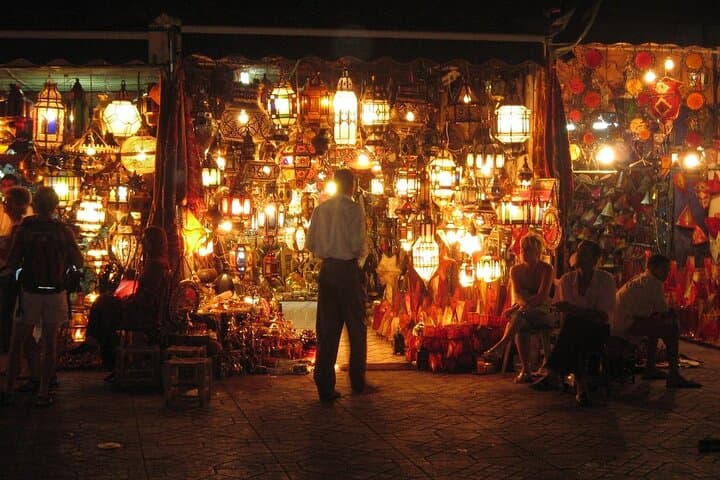
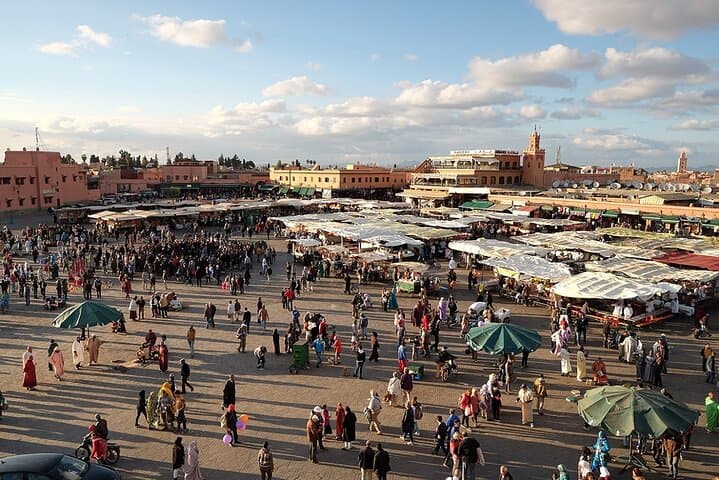
This route threads Morocco’s living history: Marrakech’s walled medina and Jamaa el‑Fna square, the cinematic mud‑brick kasbah of Ait Benhaddou (a UNESCO site), the film studios and kasbahs of Ouarzazate, and the palm-carpeted Draa Valley that feeds the desert’s edge. Geologically the trip moves from Atlantic‑fed plains to uplifted Precambrian and Mesozoic limestone, then to Quaternary alluvial fans and aeolian sands that shape Zagora’s dunes. Culturally, travelers encounter Berber towns, caravan routes and a hospitality tradition that centers shared evening meals and music beneath the stars.
Practically, expect long drives—the Tizi n’Tichka pass sits around 2,260 m—and a mix of paved roads and desert tracks. Nights in a desert camp mean basic facilities and communal tents; camel rides are short, guided treks across the dunes. Pack layered clothing for hot days and cool nights, sun protection, and a small daypack for camera gear and water. Allow time for photos at Ait Benhaddou, an early start to catch a Sahara sunrise, and a relaxed pace through the Draa oases. This itinerary suits travelers wanting cultural depth plus tactile desert time: the sand will test your balance, the stars will demand your silence.
easy.
4 days.
Suitable for travelers in average physical condition; requires tolerance for multi‑hour drives and short camel treks.
This private tour begins with pickup in Casablanca and returns there on day four, with overnight stays in Marrakech and a desert camp near Zagora.
Camel rides are short and guided across gentle dunes; desert camp accommodations are basic but comfortable, suitable for most travelers.
The highest point is Tizi n’Tichka (~2,260 m) with winding mountain roads—those prone to motion sickness should bring medication and sit forward in the vehicle.
Use Moroccan dirhams for purchases; tipping is customary for drivers and guides. Meals included are typically communal tagine dinners and simple breakfasts.
The caravan routes through the Draa valley have linked sub‑Saharan trade and North Africa for centuries; Ait Benhaddou grew as a fortified staging post along these routes and later became a film location.
Respect camp guidelines for waste and fire safety; water is scarce—minimize bottled plastic and follow local advice on water use.
Marrakech Expert Tours operates guided outdoor trips and adventures with an emphasis on safety, stewardship, and memorable experiences.


Dawn slides over Casablanca as a private 4‑wheel vehicle pulls away from the Atlantic, the city’s concrete giving way to the ochres of the High Atlas. By afternoon the road climbs Tizi n’Tichka, hairpins opening onto stony valleys; by the second evening the sand begins to claim the horizon and the Sahara’s dunes outline the camp.
Dawn slides over Casablanca as a private 4‑wheel vehicle pulls away from the Atlantic, the city’s concrete giving way to the ochres of the High Atlas. By afternoon the road climbs Tizi n’Tichka, hairpins opening onto stony valleys; by the second evening the sand begins to claim the horizon and the Sahara’s dunes outline the camp.
This route threads Morocco’s living history: Marrakech’s walled medina and Jamaa el‑Fna square, the cinematic mud‑brick kasbah of Ait Benhaddou (a UNESCO site), the film studios and kasbahs of Ouarzazate, and the palm-carpeted Draa Valley that feeds the desert’s edge. Geologically the trip moves from Atlantic‑fed plains to uplifted Precambrian and Mesozoic limestone, then to Quaternary alluvial fans and aeolian sands that shape Zagora’s dunes. Culturally, travelers encounter Berber towns, caravan routes and a hospitality tradition that centers shared evening meals and music beneath the stars.
Practically, expect long drives—the Tizi n’Tichka pass sits around 2,260 m—and a mix of paved roads and desert tracks. Nights in a desert camp mean basic facilities and communal tents; camel rides are short, guided treks across the dunes. Pack layered clothing for hot days and cool nights, sun protection, and a small daypack for camera gear and water. Allow time for photos at Ait Benhaddou, an early start to catch a Sahara sunrise, and a relaxed pace through the Draa oases. This itinerary suits travelers wanting cultural depth plus tactile desert time: the sand will test your balance, the stars will demand your silence.