THE ADVENTURE COLLECTIVE® · Independent discovery and booking for outdoor travel

A compact, four-day camping safari that crosses the Central Kalahari into Nxai Pan to see Baines Baobabs and desert-adapted wildlife. Expect early game drives, basic tents with stretcher bedrolls, and wide-open plains under brilliant stars.
A compact, four-day camping safari that crosses the Central Kalahari into Nxai Pan to see Baines Baobabs and desert-adapted wildlife. Expect early game drives, basic tents with stretcher bedrolls, and wide-open plains under brilliant stars.
Dawn breaks over rust-colored dunes as a convoy of canvas tents and open vehicles slides into the Kalahari’s wide silence. The air is crisp, the light is thin and pale, and the first game drive finds ostrich tracks like punctuation on the plain. Over four days this trip moves from the deep sands of the Central Kalahari Game Reserve to Nxai Pan, camping each night under big, star-heavy skies.
Verified experiences and guided adventures in the surrounding area.
Operated by Shipungo Safari & Tours · Maun, North-West District
Dawn breaks over rust-colored dunes as a convoy of canvas tents and open vehicles slides into the Kalahari’s wide silence. The air is crisp, the light is thin and pale, and the first game drive finds ostrich tracks like punctuation on the plain. Over four days this trip moves from the deep sands of the Central Kalahari Game Reserve to Nxai Pan, camping each night under big, star-heavy skies.
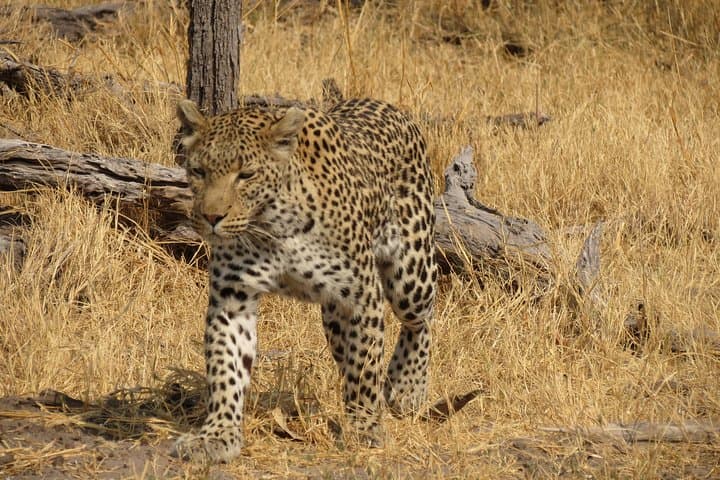
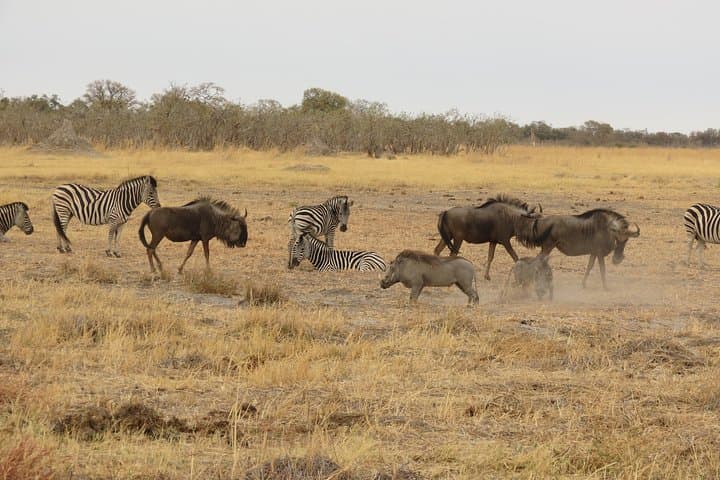
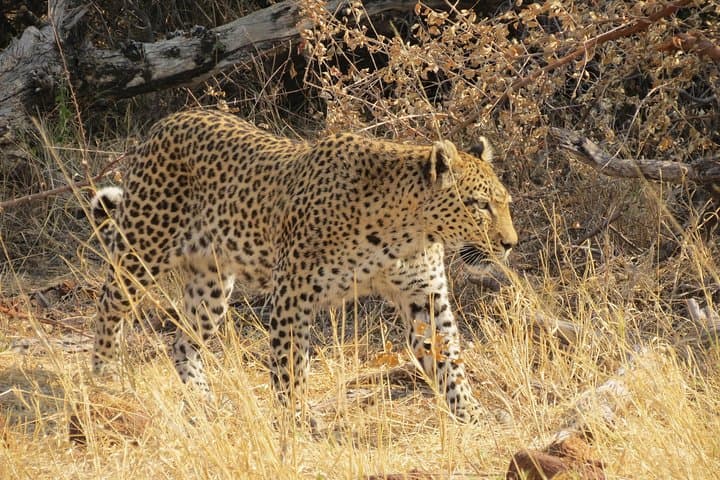
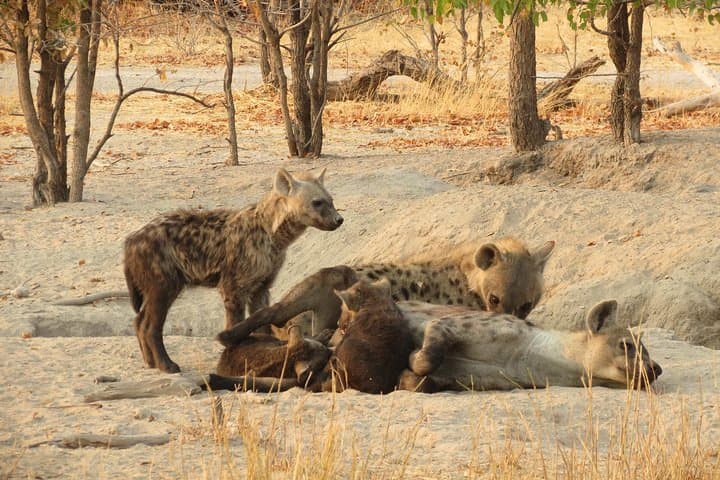
The itinerary threads living history with landscape: the Baines Baobabs—painted by 19th-century artist Thomas Baines—stand as landmark witnesses to travelers past. Geologically, Nxai Pan is an ancient salt pan—flat, white and hard after the dry season, flooded and reflective in wetter months—while the Central Kalahari’s interdunal valleys and grassy plains support desert-adapted species unique to Botswana.
Culturally, Maun functions as the gateway town; local guides bring deep knowledge of animal behavior and of waterholes that determine seasonal movements. Expect early starts for game drives, close-but-respectful wildlife viewing from vehicles, and rustic camps with shared showers and stretcher bedrolls.
Practical guidance: pack layered clothing for hot days and cold nights, bring sturdy shoes for walking around camp, and carry a headlamp and personal water bottle—3 liters per day are provided. Sun protection and binoculars transform a good sighting into a memorable one. Fitness should be moderate: you’ll climb in and out of safari vehicles and manage short, uneven walks.
This safari is direct, tactile and low-impact—an up-close encounter with wide open country and the species that test its limits.
moderate.
4 days.
Moderate fitness: able to enter/exit safari vehicles, walk short uneven trails, and tolerate basic camping conditions.
This trip is moderate: most time is spent in vehicles with short walks around camp; a reasonable level of mobility is required.
Meals listed (breakfasts, lunches, dinners) are included and 3 liters of bottled water per person per day are supplied during the trip.
Walk-in 3m x 3m tents with made bedrolls on stretchers and shared shower/toilet tents; towel provided for Nxai Pan night.
Dry winter months (May–October) concentrate wildlife around waterholes and offer clearer roads, while the wetter season can bring breeding birds and reflective pans.
The Baines Baobabs were famously painted by Thomas Baines in the 1860s and remain a cultural landmark on the route to Nxai Pan.
The pans and interdunal habitats are fragile; staying on tracks, minimizing campfire use and packing out waste help protect seasonal water sources and soil crusts.
Shipungo Safari & Tours operates guided outdoor trips and adventures with an emphasis on safety, stewardship, and memorable experiences.
Dawn breaks over rust-colored dunes as a convoy of canvas tents and open vehicles slides into the Kalahari’s wide silence. The air is crisp, the light is thin and pale, and the first game drive finds ostrich tracks like punctuation on the plain. Over four days this trip moves from the deep sands of the Central Kalahari Game Reserve to Nxai Pan, camping each night under big, star-heavy skies.
Dawn breaks over rust-colored dunes as a convoy of canvas tents and open vehicles slides into the Kalahari’s wide silence. The air is crisp, the light is thin and pale, and the first game drive finds ostrich tracks like punctuation on the plain. Over four days this trip moves from the deep sands of the Central Kalahari Game Reserve to Nxai Pan, camping each night under big, star-heavy skies.
The itinerary threads living history with landscape: the Baines Baobabs—painted by 19th-century artist Thomas Baines—stand as landmark witnesses to travelers past. Geologically, Nxai Pan is an ancient salt pan—flat, white and hard after the dry season, flooded and reflective in wetter months—while the Central Kalahari’s interdunal valleys and grassy plains support desert-adapted species unique to Botswana.
Culturally, Maun functions as the gateway town; local guides bring deep knowledge of animal behavior and of waterholes that determine seasonal movements. Expect early starts for game drives, close-but-respectful wildlife viewing from vehicles, and rustic camps with shared showers and stretcher bedrolls.
Practical guidance: pack layered clothing for hot days and cold nights, bring sturdy shoes for walking around camp, and carry a headlamp and personal water bottle—3 liters per day are provided. Sun protection and binoculars transform a good sighting into a memorable one. Fitness should be moderate: you’ll climb in and out of safari vehicles and manage short, uneven walks.
This safari is direct, tactile and low-impact—an up-close encounter with wide open country and the species that test its limits.