THE ADVENTURE COLLECTIVE® · Independent discovery and booking for outdoor travel

Cross the edge of the Sahara on a four-day camel trek from M'Hamid, walking between dunes, camping under stars, and visiting palm groves and kasbahs. Expect moderate daily hikes, communal desert camps, and a close-up look at nomadic life.
Cross the edge of the Sahara on a four-day camel trek from M'Hamid, walking between dunes, camping under stars, and visiting palm groves and kasbahs. Expect moderate daily hikes, communal desert camps, and a close-up look at nomadic life.
Dawn throws a flat, golden light across the caravan as camels clip the sand and the camp folds away. You move at the desert’s tempo—long afternoons of walking between dunes, brief tea breaks beneath tamarisk shade, nights under tents where stars seem close enough to touch.
Verified experiences and guided adventures in the surrounding area.
Operated by Desertbrise Travel · M'Hamid, Drâa-Tafilalet
Dawn throws a flat, golden light across the caravan as camels clip the sand and the camp folds away. You move at the desert’s tempo—long afternoons of walking between dunes, brief tea breaks beneath tamarisk shade, nights under tents where stars seem close enough to touch.
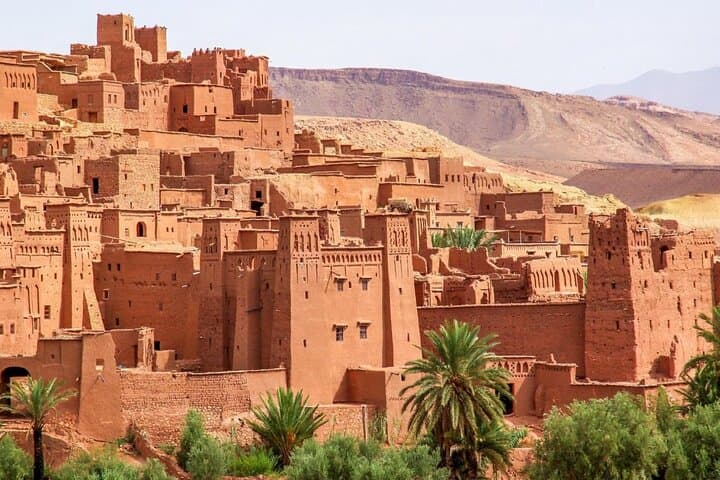
The route threads the southern edge of the High Atlas’s rain shadow, down the Draa river valley and past Ait Ben Haddou’s ancient kasbahs—historic waypoints on trans-Saharan routes. Geologically the region is a meeting of hardened river terraces, wind-sculpted erg fields and scattered palm oases that catch and keep life where water runs close to the surface.
Local culture is centered on movement: camel drivers who bake bread in the sand, tell oral histories at campfires, and point out the small, sacred shrines—marabouts—scattered across the dunes. Expect simple camps, communal meals of tajine and bread, and a pace governed by sun and sand.
Practical guidance: plan for intense sun by day and cold desert nights; layers are essential. Daily walking is moderate—several hours between camps with luggage carried by camels—so good footwear and blister care matter. Hydration strategy is critical: carry a minimum of 2–3 liters on walking legs and refill at camp. Time your trek outside the hottest months if you prefer milder daytime heat; winter brings freezing nights.
This four-day caravan is part cultural exchange, part low-tech endurance: you’ll trade modern conveniences for clear skies, shifting dunes, and an intimate view of a landscape that both challenges and calms.
moderate.
4 days (approx. 96 hours).
Should be in fair to good condition: comfortable walking 3–6 hours on uneven, sandy terrain each day.
Moderate: expect several hours of walking each day on sand with regular rest stops; a moderate level of fitness is recommended.
Overnight stays are in a nomadic-style camp in tents; camel drivers set up and provide communal meals and basic bedding—bring a liner for extra warmth.
Yes—many travelers go solo; the caravan offers group safety, and guides handle logistics, but let the operator know any special needs in advance.
Carry Moroccan dirhams for small purchases and tipping; tipping at camp for guides and drivers is customary—carry small bills separate from your main wallet.
The area sits on historic trans-Saharan corridors; kasbahs like Ait Ben Haddou once sheltered caravans and controlled trade routes between the coast and the desert.
The sand and sparse vegetation are fragile—stick to established camps, avoid single-use plastics, and minimize wood fires; leave no trace to protect local oases.
Desertbrise Travel operates guided outdoor trips and adventures with an emphasis on safety, stewardship, and memorable experiences.
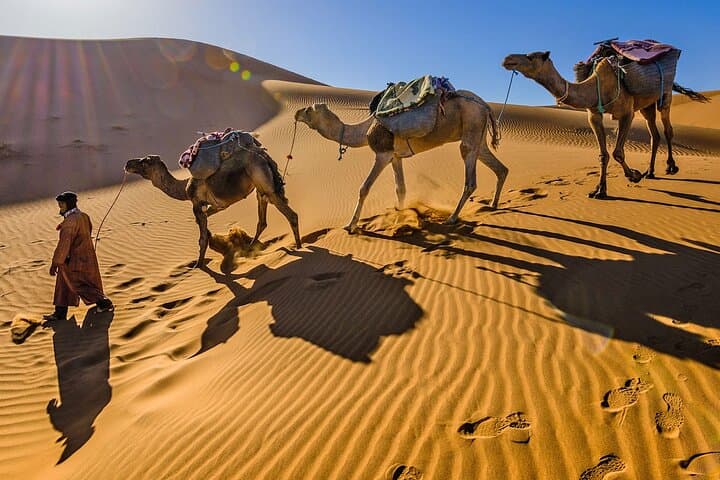
Dawn throws a flat, golden light across the caravan as camels clip the sand and the camp folds away. You move at the desert’s tempo—long afternoons of walking between dunes, brief tea breaks beneath tamarisk shade, nights under tents where stars seem close enough to touch.
Dawn throws a flat, golden light across the caravan as camels clip the sand and the camp folds away. You move at the desert’s tempo—long afternoons of walking between dunes, brief tea breaks beneath tamarisk shade, nights under tents where stars seem close enough to touch.
The route threads the southern edge of the High Atlas’s rain shadow, down the Draa river valley and past Ait Ben Haddou’s ancient kasbahs—historic waypoints on trans-Saharan routes. Geologically the region is a meeting of hardened river terraces, wind-sculpted erg fields and scattered palm oases that catch and keep life where water runs close to the surface.
Local culture is centered on movement: camel drivers who bake bread in the sand, tell oral histories at campfires, and point out the small, sacred shrines—marabouts—scattered across the dunes. Expect simple camps, communal meals of tajine and bread, and a pace governed by sun and sand.
Practical guidance: plan for intense sun by day and cold desert nights; layers are essential. Daily walking is moderate—several hours between camps with luggage carried by camels—so good footwear and blister care matter. Hydration strategy is critical: carry a minimum of 2–3 liters on walking legs and refill at camp. Time your trek outside the hottest months if you prefer milder daytime heat; winter brings freezing nights.
This four-day caravan is part cultural exchange, part low-tech endurance: you’ll trade modern conveniences for clear skies, shifting dunes, and an intimate view of a landscape that both challenges and calms.