THE ADVENTURE COLLECTIVE® · Independent discovery and booking for outdoor travel

A focused four-day circuit from Giza through Cairo to Alexandria that packs the pyramids, Saqqara, Saladin’s Citadel and the Library of Alexandria into a guided, easy-paced itinerary. Ideal for first-time visitors who want context and convenience.
A focused four-day circuit from Giza through Cairo to Alexandria that packs the pyramids, Saqqara, Saladin’s Citadel and the Library of Alexandria into a guided, easy-paced itinerary. Ideal for first-time visitors who want context and convenience.
You step out of the car onto the warm stone of Giza Plateau and the desert seems to hold its breath. The pyramids rise like engineered mountains; wind eases across the sand and the Sphinx watches over a landscape shaped by kings and river traffic.
Verified experiences and guided adventures in the surrounding area.
Operated by Egypt Best Holidays · Giza, Cairo Governorate
You step out of the car onto the warm stone of Giza Plateau and the desert seems to hold its breath. The pyramids rise like engineered mountains; wind eases across the sand and the Sphinx watches over a landscape shaped by kings and river traffic.
Across four compact days the itinerary threads modern Cairo and ancient Nile-side capitals. Begin with the Great Pyramids, valley temples and Saqqara’s Step Pyramid — early stonework that marks a turning point in human architecture. Memphis, once Egypt’s political heart, exposes layers of Pharaonic rule while Saladin’s Citadel and the Mohamed Ali Mosque reveal medieval Islamic power projected across the city. Alexandria shifts the texture: Greco-Roman ruins, the Catacombs, Qaitbay Citadel on the Mediterranean shoreline and the modern Library of Alexandria speak to a port city shaped by conquest and trade.
Geology and history are visible together here: limestone bedrock cut for tombs, Nile sediments that built the valley’s fertility, and coastal stone resisting Mediterranean storms. Local culture is immediate — call to prayer, street vendors, and coffee shops where history is debated as readily as football.
Practical guidance: expect several hours of walking on uneven surfaces, stepways and sandy approaches; bring sun protection, comfortable closed shoes, and a light layer for air-conditioned museums and evening breezes. Plan early starts to avoid midday heat, carry water and photocopies of your passport for museum entries. With a knowledgeable guide, this route is accessible, rich in context and tightly scheduled — ideal if you want a concentrated, well-supported introduction to Egypt’s major sites.
easy.
4 days.
Suitable for most fitness levels; expect several hours of walking each day on uneven ground and some staircases.
This tour description notes admissions are generally not included — check specific sites and bring cash or card for entry fees where required.
The transfer to Alexandria is about 2–3 hours one-way depending on traffic and route, so expect a full day for that excursion.
The provider lists wheelchair accessibility, but many ancient sites have uneven surfaces; contact the operator ahead to confirm accommodations and accessible routes.
Breakfast is included; guides can suggest or arrange alternative meals but you should notify the operator in advance about specific needs.
Cairo grew from successive capitals—ancient Memphis, Greco-Roman Alexandria and Islamic Cairo—making the city a palimpsest of empires and trade routes.
High visitor numbers strain fragile archaeological sites; stick to marked paths, avoid touching carved stone, and support local conservation fees when available.
Egypt Best Holidays operates guided outdoor trips and adventures with an emphasis on safety, stewardship, and memorable experiences.
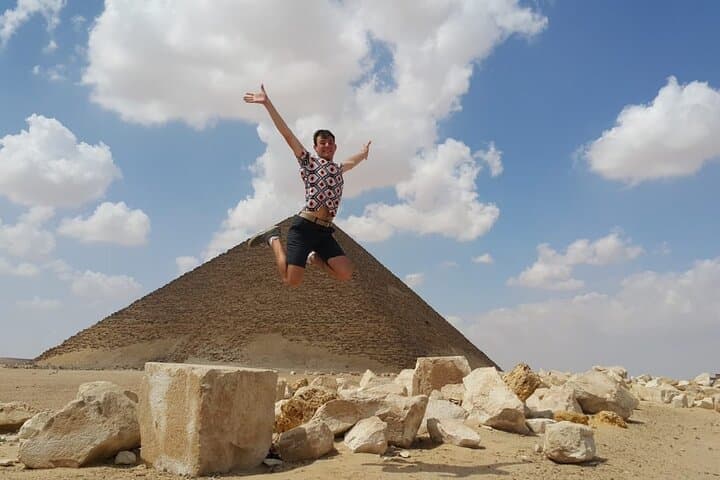
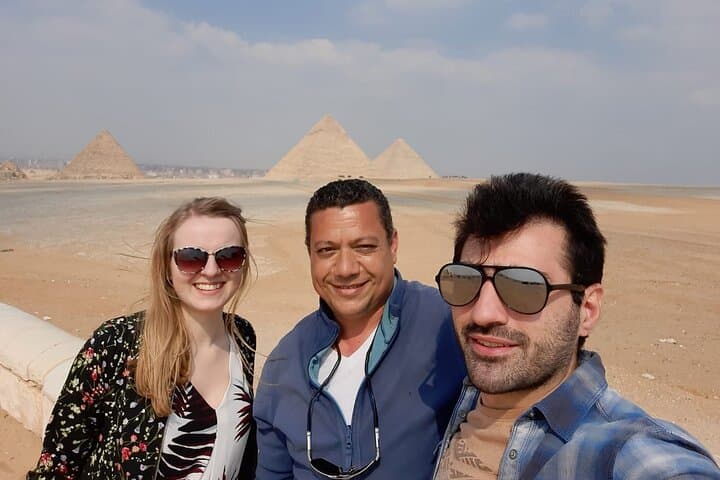
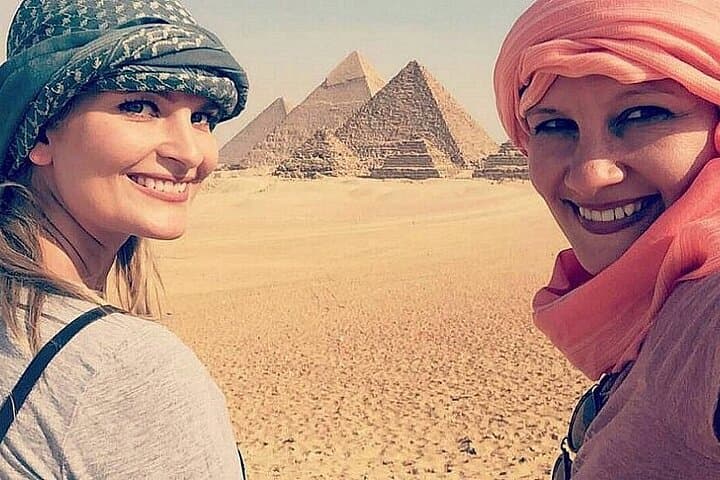
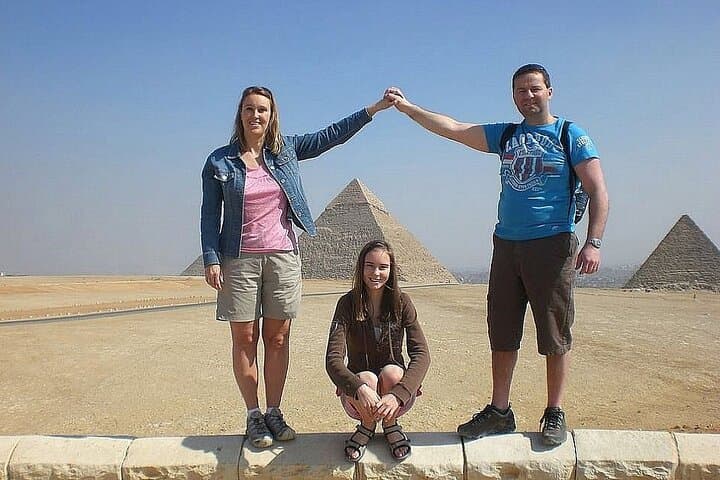
You step out of the car onto the warm stone of Giza Plateau and the desert seems to hold its breath. The pyramids rise like engineered mountains; wind eases across the sand and the Sphinx watches over a landscape shaped by kings and river traffic.
You step out of the car onto the warm stone of Giza Plateau and the desert seems to hold its breath. The pyramids rise like engineered mountains; wind eases across the sand and the Sphinx watches over a landscape shaped by kings and river traffic.
Across four compact days the itinerary threads modern Cairo and ancient Nile-side capitals. Begin with the Great Pyramids, valley temples and Saqqara’s Step Pyramid — early stonework that marks a turning point in human architecture. Memphis, once Egypt’s political heart, exposes layers of Pharaonic rule while Saladin’s Citadel and the Mohamed Ali Mosque reveal medieval Islamic power projected across the city. Alexandria shifts the texture: Greco-Roman ruins, the Catacombs, Qaitbay Citadel on the Mediterranean shoreline and the modern Library of Alexandria speak to a port city shaped by conquest and trade.
Geology and history are visible together here: limestone bedrock cut for tombs, Nile sediments that built the valley’s fertility, and coastal stone resisting Mediterranean storms. Local culture is immediate — call to prayer, street vendors, and coffee shops where history is debated as readily as football.
Practical guidance: expect several hours of walking on uneven surfaces, stepways and sandy approaches; bring sun protection, comfortable closed shoes, and a light layer for air-conditioned museums and evening breezes. Plan early starts to avoid midday heat, carry water and photocopies of your passport for museum entries. With a knowledgeable guide, this route is accessible, rich in context and tightly scheduled — ideal if you want a concentrated, well-supported introduction to Egypt’s major sites.