THE ADVENTURE COLLECTIVE® · Independent discovery and booking for outdoor travel

A compact four-day package that pairs Cairo’s pyramids and museums with Luxor’s Valley of the Kings and Karnak Temple. Expect guided walks across ancient stone, early starts to beat the heat, and seamless transfers between cities.
A compact four-day package that pairs Cairo’s pyramids and museums with Luxor’s Valley of the Kings and Karnak Temple. Expect guided walks across ancient stone, early starts to beat the heat, and seamless transfers between cities.
On the first morning the sun hits the Giza plateau and the pyramids throw long, precise shadows across sand that has held them for 4,500 years. Travelers arrive in Cairo, feel the city’s pulse, then move between colossal stone and narrow souks—each day a different scale of antiquity and human craft.
Verified experiences and guided adventures in the surrounding area.
Operated by Bastet Travel · Cairo, Cairo Governorate
On the first morning the sun hits the Giza plateau and the pyramids throw long, precise shadows across sand that has held them for 4,500 years. Travelers arrive in Cairo, feel the city’s pulse, then move between colossal stone and narrow souks—each day a different scale of antiquity and human craft.
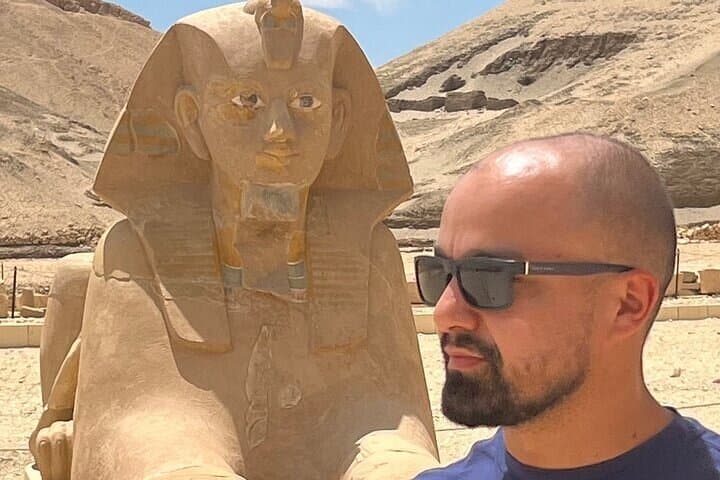
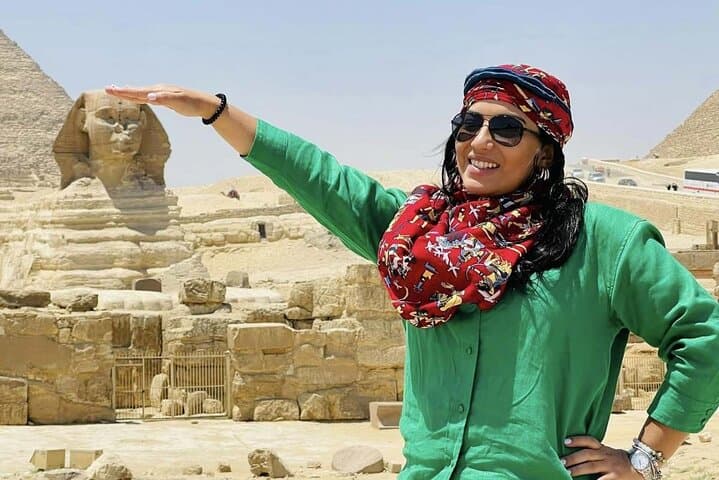
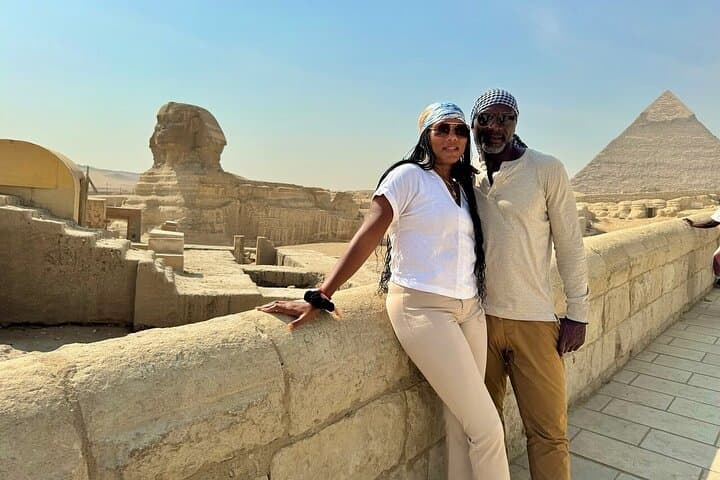
This four-day itinerary threads two of Egypt’s great archaeological centers. In Cairo visitors stand before the three Great Pyramids and the Sphinx on a plateau formed from limestone bedrock; expect 2–3 km of walking on uneven, compacted sandy terrain with minimal elevation change. The Egyptian Museum houses pharaonic treasures—King Tutankhamun’s collection and thousands of artifacts that chart millennia of Nile civilization. A short domestic flight moves the group to Luxor where the Valley of the Kings opens into arid hills carved by tomb-builders; many tombs require descending 40–100 stone steps into cool, painted chambers. Karnak Temple sprawls over roughly 200 acres along the Nile, with the hypostyle hall’s 134 columns creating one of the most arresting architectural spaces on Earth.
Practical guidance: start outdoor sights at dawn to avoid heat, wear sturdy walking shoes and a hat, and carry 2–3 liters of water daily. Bring passport copies for ticketing, small local-currency notes for tips, and lightweight layers for cooler evenings. Respect mosque dress codes in Islamic Cairo and expect moderate walking each day—this trip favors cultural immersion over technical exertion but rewards preparation with uninterrupted access to Egypt’s monumental past.
easy.
3–4 days.
Suitable for travelers in average physical condition who can walk several hours across uneven ground each day
Yes; the itinerary includes admission to listed sites and the domestic flight between Cairo and Luxor as noted in the inclusions.
Expect 2–4 hours of guided walking daily across sites with uneven surfaces and steps; minimal elevation gain overall.
Some sites have steps and uneven ground—transportation and hotels are wheelchair accessible, but access inside tombs and certain temple areas may be restricted.
Most visitors require a visa; check current entry rules for your nationality and carry your passport and copies for ticketing and transfers.
Cairo and Luxor sit on layers of Egyptian history—from Old Kingdom pyramid builders at Giza to New Kingdom pharaohs who sculpted Luxor’s tombs and temples.
High visitor numbers stress fragile painted tomb interiors; follow guide rules, avoid flash photography where prohibited, and use water sparingly to reduce local resource strain.
Bastet Travel operates guided outdoor trips and adventures with an emphasis on safety, stewardship, and memorable experiences.

On the first morning the sun hits the Giza plateau and the pyramids throw long, precise shadows across sand that has held them for 4,500 years. Travelers arrive in Cairo, feel the city’s pulse, then move between colossal stone and narrow souks—each day a different scale of antiquity and human craft.
On the first morning the sun hits the Giza plateau and the pyramids throw long, precise shadows across sand that has held them for 4,500 years. Travelers arrive in Cairo, feel the city’s pulse, then move between colossal stone and narrow souks—each day a different scale of antiquity and human craft.
This four-day itinerary threads two of Egypt’s great archaeological centers. In Cairo visitors stand before the three Great Pyramids and the Sphinx on a plateau formed from limestone bedrock; expect 2–3 km of walking on uneven, compacted sandy terrain with minimal elevation change. The Egyptian Museum houses pharaonic treasures—King Tutankhamun’s collection and thousands of artifacts that chart millennia of Nile civilization. A short domestic flight moves the group to Luxor where the Valley of the Kings opens into arid hills carved by tomb-builders; many tombs require descending 40–100 stone steps into cool, painted chambers. Karnak Temple sprawls over roughly 200 acres along the Nile, with the hypostyle hall’s 134 columns creating one of the most arresting architectural spaces on Earth.
Practical guidance: start outdoor sights at dawn to avoid heat, wear sturdy walking shoes and a hat, and carry 2–3 liters of water daily. Bring passport copies for ticketing, small local-currency notes for tips, and lightweight layers for cooler evenings. Respect mosque dress codes in Islamic Cairo and expect moderate walking each day—this trip favors cultural immersion over technical exertion but rewards preparation with uninterrupted access to Egypt’s monumental past.