THE ADVENTURE COLLECTIVE® · Independent discovery and booking for outdoor travel

A compact desert loop from Cairo that pairs the lunar formations of the White Desert with the living villages and thermal wells of Dakhla. Over four days expect 4x4 crossings, tent camping, and close-up geology and archaeology.
A compact desert loop from Cairo that pairs the lunar formations of the White Desert with the living villages and thermal wells of Dakhla. Over four days expect 4x4 crossings, tent camping, and close-up geology and archaeology.
Morning light strips the city grime from your windshield as the road west yawns toward a different Egypt — one of rock, salt pans and palm-ringed villages. The drive to Bahariya rolls about 350 km from Cairo; by late afternoon you’re pitching a tent beneath a black-sky dome, the wind already shaping the dunes that will greet you over the next days.
Verified experiences and guided adventures in the surrounding area.
Operated by Emo Tours Egypt · Bahariya Oasis, Giza
Morning light strips the city grime from your windshield as the road west yawns toward a different Egypt — one of rock, salt pans and palm-ringed villages. The drive to Bahariya rolls about 350 km from Cairo; by late afternoon you’re pitching a tent beneath a black-sky dome, the wind already shaping the dunes that will greet you over the next days.
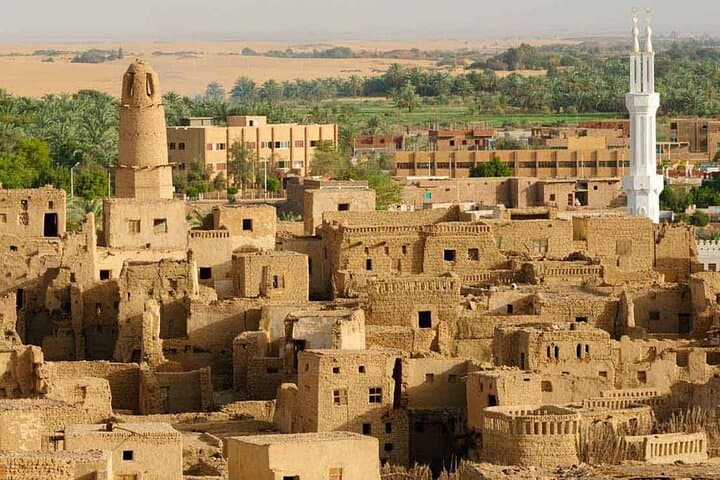
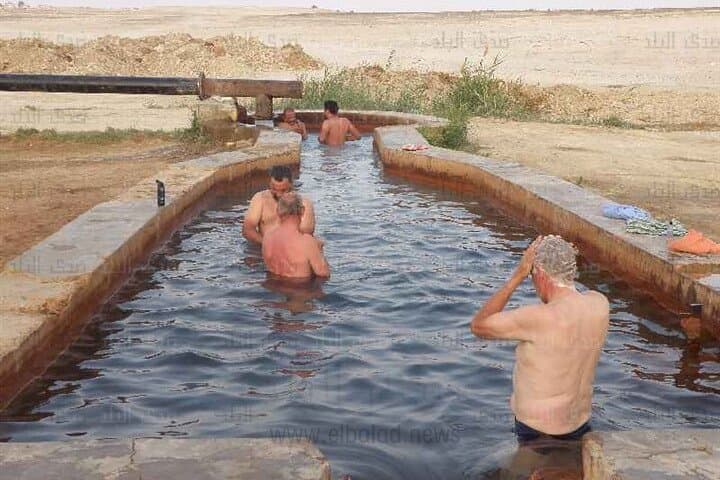
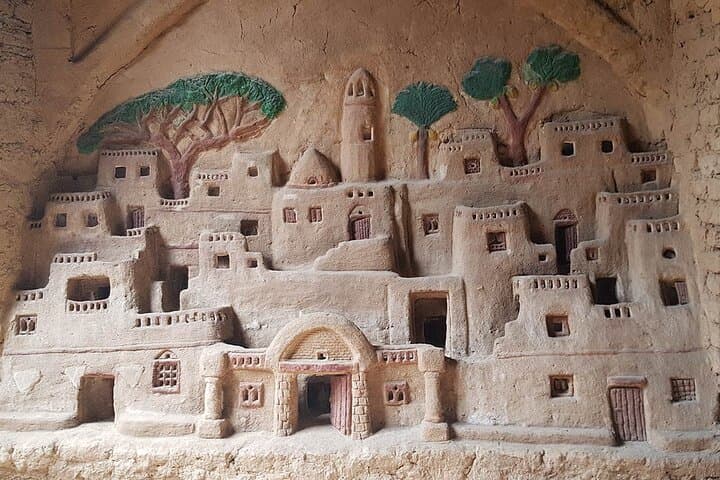
This loop threads two of Egypt’s great oases. Bahariya’s volcanic outcrops and the Black Desert record ancient eruptions; nearby the White Desert’s wind-carved chalk formations resemble oversized sculptures hewn by persistent sand-laden air. Dakhla’s mud-brick villages — Al-Qasr and Mut — keep living traditions: gated lanes, hot mineral wells and cemetery cliffs painted in ochre and red.
Expect geology and history at hand: volcanic jasper on Al-Marsous, crystal-studded outcrops in the Valley of Agabat, and World War I ruins on the so-called English Mountain. The landscape moves as a character — dunes pushing forward, sulfur wells hissing quietly — while Bedouin settlements and oasis agriculture remind you people have shaped and been shaped by this harshness for millennia.
Practical notes: travel is by private air-conditioned vehicle and 4x4 on unpaved tracks; camping two nights is in tents at Al Haiz. Temperatures swing widely — hot days, cold desert nights — and some walking on uneven rock and sand is required. Carry ample water, sun protection, warm layers for night, and sturdy boots for dune and rocky terrain. Guided entry fees and most meals are included; be prepared for basic campsite facilities and short transfers between archaeological sites.
moderate.
4 days.
Moderate — able to manage several short hikes, sand walking, and getting in/out of 4x4s; not technical but physically active.
The transfer is roughly 350 km and takes about 4 to 5 hours by private A/C vehicle depending on traffic and stops.
Camps are basic tented sites with mattresses and sleeping arrangements provided; hot-water facilities are limited and showers may be communal or at nearby guesthouses.
Yes — transfers between oases and into the Black and White Deserts include 4x4 sections on unpaved tracks; the operator supplies vehicles and drivers for those legs.
The tour is family-friendly but not recommended for anyone with serious mobility constraints due to sand walking, tent sleeping, and uneven terrain; check age and health restrictions with the operator.
The Bahariya and Dakhla oases have been inhabited for millennia; Dakhla’s Al-Qasr preserves medieval and Ottoman-era mud-brick planning, while English garrisons left visible traces from World War I.
These deserts are sensitive to off-track driving and litter; stick to marked routes, avoid disturbing archaeological sites, and take out all waste to reduce impact.
Emo Tours Egypt operates guided outdoor trips and adventures with an emphasis on safety, stewardship, and memorable experiences.
Morning light strips the city grime from your windshield as the road west yawns toward a different Egypt — one of rock, salt pans and palm-ringed villages. The drive to Bahariya rolls about 350 km from Cairo; by late afternoon you’re pitching a tent beneath a black-sky dome, the wind already shaping the dunes that will greet you over the next days.
Morning light strips the city grime from your windshield as the road west yawns toward a different Egypt — one of rock, salt pans and palm-ringed villages. The drive to Bahariya rolls about 350 km from Cairo; by late afternoon you’re pitching a tent beneath a black-sky dome, the wind already shaping the dunes that will greet you over the next days.
This loop threads two of Egypt’s great oases. Bahariya’s volcanic outcrops and the Black Desert record ancient eruptions; nearby the White Desert’s wind-carved chalk formations resemble oversized sculptures hewn by persistent sand-laden air. Dakhla’s mud-brick villages — Al-Qasr and Mut — keep living traditions: gated lanes, hot mineral wells and cemetery cliffs painted in ochre and red.
Expect geology and history at hand: volcanic jasper on Al-Marsous, crystal-studded outcrops in the Valley of Agabat, and World War I ruins on the so-called English Mountain. The landscape moves as a character — dunes pushing forward, sulfur wells hissing quietly — while Bedouin settlements and oasis agriculture remind you people have shaped and been shaped by this harshness for millennia.
Practical notes: travel is by private air-conditioned vehicle and 4x4 on unpaved tracks; camping two nights is in tents at Al Haiz. Temperatures swing widely — hot days, cold desert nights — and some walking on uneven rock and sand is required. Carry ample water, sun protection, warm layers for night, and sturdy boots for dune and rocky terrain. Guided entry fees and most meals are included; be prepared for basic campsite facilities and short transfers between archaeological sites.