THE ADVENTURE COLLECTIVE® · Independent discovery and booking for outdoor travel

A four-day, guided circuit that links Ausangate’s glaciated passes with a sunrise visit to Vinicunca (Rainbow Mountain). Expect high passes (around 5,000 m), remote campsites, hot springs, and Quechua cultural encounters.
A four-day, guided circuit that links Ausangate’s glaciated passes with a sunrise visit to Vinicunca (Rainbow Mountain). Expect high passes (around 5,000 m), remote campsites, hot springs, and Quechua cultural encounters.
A thin dawn light slides over corrugated rooftops in Cusco as your van climbs out of the city and into a landscape that feels tuned to extremes: puna grasslands give way to moraine slopes, and the air thins with each kilometer toward Ausangate.
Verified experiences and guided adventures in the surrounding area.
Operated by Apu Ausangate Trek · Cusco, Cusco
A thin dawn light slides over corrugated rooftops in Cusco as your van climbs out of the city and into a landscape that feels tuned to extremes: puna grasslands give way to moraine slopes, and the air thins with each kilometer toward Ausangate.
By mid-morning you’re already walking under the shadow of jagged glacial teeth. Ausangate has long been an Apu—an Andean sacred mountain—shaping local ritual life and seasonal herding patterns. Geologically the route threads through faulted volcanic beds and glacially carved basins; red and green mineral bands that later form the Rainbow Mountains are caused by iron oxide and other sedimentary layers exposed to erosion.
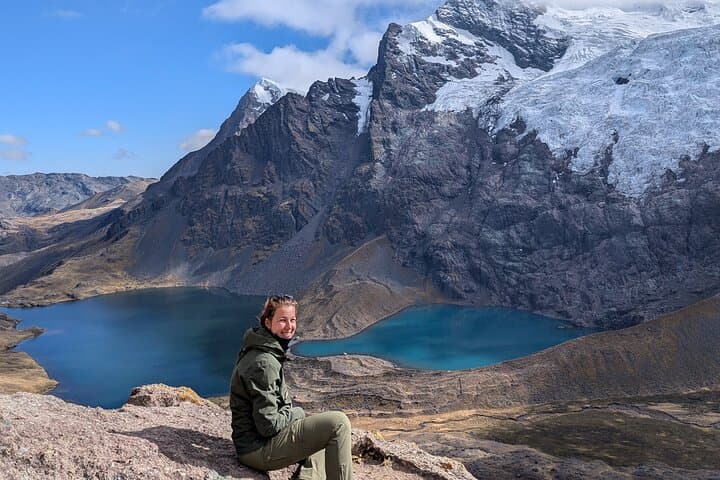
Cultural notes arrive in the villages: women in woven garments tending alpacas, herders speaking Quechua, and ancient pastoral practices still guiding grazing routes. On this circuit you’ll pass high lakes where vicuña graze and find thermal springs at Upis, a practical reward after long days.
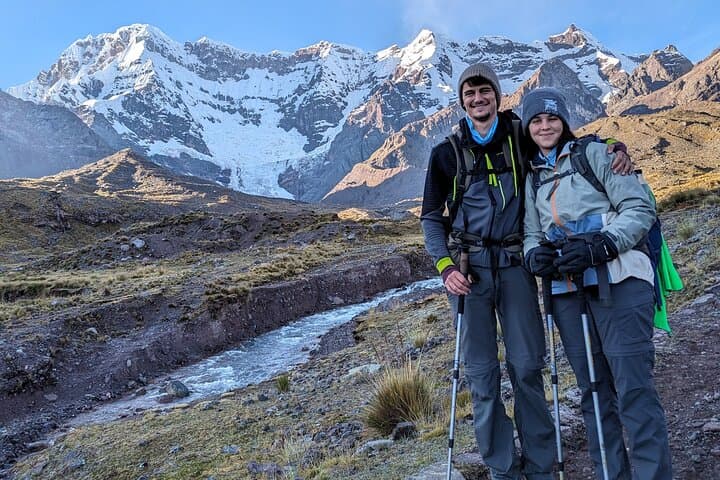
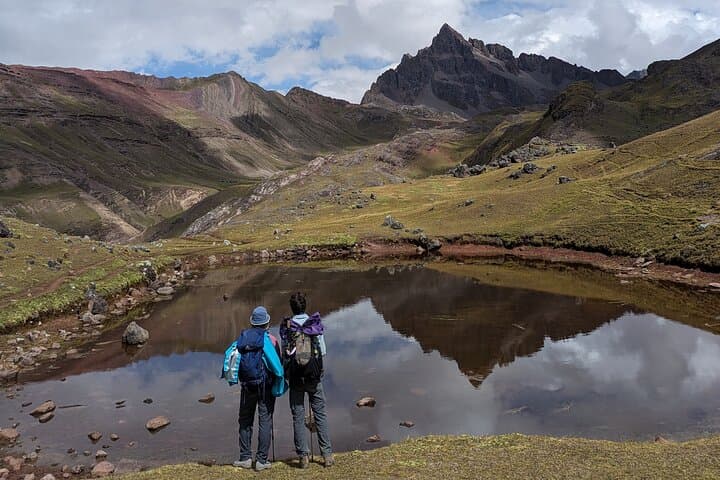
Practically: expect sustained high-altitude hiking—passes around 4,800–5,050 m—and variable weather: sun and wind by day, freezing nights. The itinerary mixes steady 3–6 hour hiking stretches with steep 1.5–3 hour ascents to high passes, then downhill sections to camp. Guides arrange meals, tents, porters and emergency horses; nevertheless bring layered clothing, sturdy boots, sun protection and hydration systems. Plan for acclimatization in Cusco beforehand, pace yourself on the climbs, and carry a small daypack for summit pushes and photography stops. The reward is raw Andean terrain, empty high lakes, and one of South America’s most photogenic ridgelines—earned, tangible, and unmistakably high-altitude.
challenging.
4 days.
Moderate to high aerobic fitness with prior high-altitude exposure recommended; comfortable with full-day hikes and camping at 4,000–5,050 m.
The route crosses passes at ~4,800–5,050 m; anyone attempting it should have recent hiking experience and allow time to acclimatize in Cusco beforehand.
Guides carry communication equipment and there are emergency horses for clients; operators arrange evacuation plans, but response times are limited by remoteness and weather.
Vinicunca can be busy on day-trip schedules; a multi-day approach with an early sunrise visit reduces crowds and gives more time at the viewpoint.
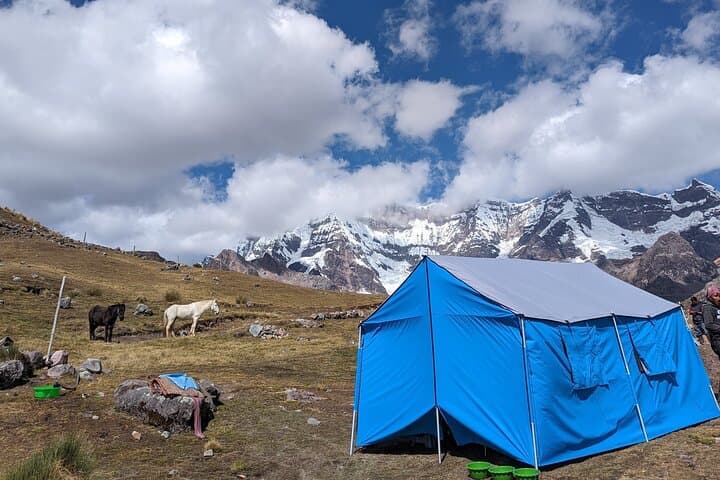
This tour includes camp accommodations with extra-thick foam mattresses, three breakfasts, four lunches, three dinners, a chef, and warm drinks; tents and cooking gear are provided.
Ausangate has been venerated for centuries as an Apu (sacred mountain) in Andean cosmology; local communities still perform seasonal rituals tied to herding and harvest cycles.
The high puna is fragile—stay on established trails, pack out waste, and follow guides’ protocols; supporting local operators helps fund community stewardship.
Apu Ausangate Trek operates guided outdoor trips and adventures with an emphasis on safety, stewardship, and memorable experiences.
A thin dawn light slides over corrugated rooftops in Cusco as your van climbs out of the city and into a landscape that feels tuned to extremes: puna grasslands give way to moraine slopes, and the air thins with each kilometer toward Ausangate.
A thin dawn light slides over corrugated rooftops in Cusco as your van climbs out of the city and into a landscape that feels tuned to extremes: puna grasslands give way to moraine slopes, and the air thins with each kilometer toward Ausangate.
By mid-morning you’re already walking under the shadow of jagged glacial teeth. Ausangate has long been an Apu—an Andean sacred mountain—shaping local ritual life and seasonal herding patterns. Geologically the route threads through faulted volcanic beds and glacially carved basins; red and green mineral bands that later form the Rainbow Mountains are caused by iron oxide and other sedimentary layers exposed to erosion.
Cultural notes arrive in the villages: women in woven garments tending alpacas, herders speaking Quechua, and ancient pastoral practices still guiding grazing routes. On this circuit you’ll pass high lakes where vicuña graze and find thermal springs at Upis, a practical reward after long days.
Practically: expect sustained high-altitude hiking—passes around 4,800–5,050 m—and variable weather: sun and wind by day, freezing nights. The itinerary mixes steady 3–6 hour hiking stretches with steep 1.5–3 hour ascents to high passes, then downhill sections to camp. Guides arrange meals, tents, porters and emergency horses; nevertheless bring layered clothing, sturdy boots, sun protection and hydration systems. Plan for acclimatization in Cusco beforehand, pace yourself on the climbs, and carry a small daypack for summit pushes and photography stops. The reward is raw Andean terrain, empty high lakes, and one of South America’s most photogenic ridgelines—earned, tangible, and unmistakably high-altitude.