THE ADVENTURE COLLECTIVE® · Independent discovery and booking for outdoor travel

Cross the High Atlas, walk limestone gorges and sleep beneath the Sahara stars on this four-day private journey from Marrakech. Expect long drives, short hikes, camel rides and authentic kasbah villages.
Cross the High Atlas, walk limestone gorges and sleep beneath the Sahara stars on this four-day private journey from Marrakech. Expect long drives, short hikes, camel rides and authentic kasbah villages.
Dust on the road, a Tizi n’Tichka pass that rises to 2,260 m, and the sudden silence of the Erg Chebbi dunes at sunset: this four-day private circuit pushes you from Marrakech’s ochre alleys into mountain passes, river-cut gorges and Sahara sand.
Verified experiences and guided adventures in the surrounding area.
Operated by Marrakech Expedition · Merzouga, Drâa-Tafilalet
Dust on the road, a Tizi n’Tichka pass that rises to 2,260 m, and the sudden silence of the Erg Chebbi dunes at sunset: this four-day private circuit pushes you from Marrakech’s ochre alleys into mountain passes, river-cut gorges and Sahara sand.
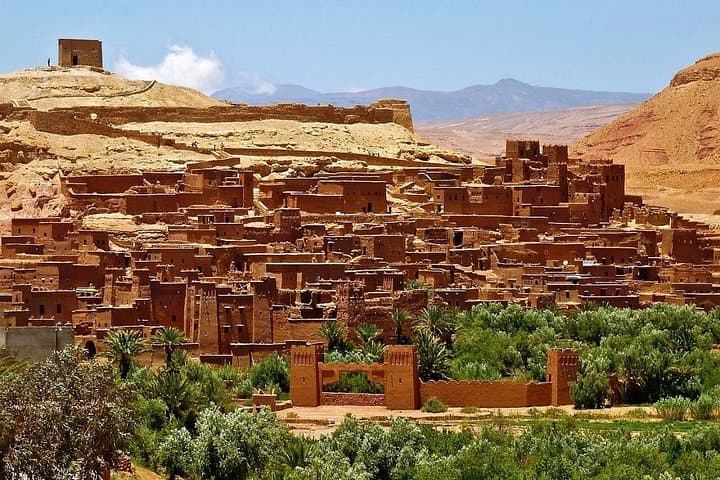
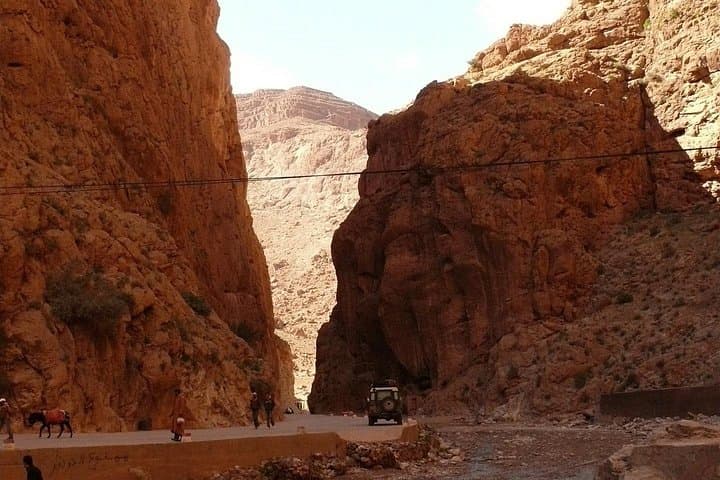
Day one climbs the High Atlas via Tizi n’Tichka, where Berber villages clasp terraced slopes and Ait Ben Haddou’s earthen kasbahs stand like compact citadels. The Dades and Todra gorges that follow are carved by millennia of water through limestone and sandstone, producing narrow canyon walls and shaded stream corridors ideal for short walks and photo stops.
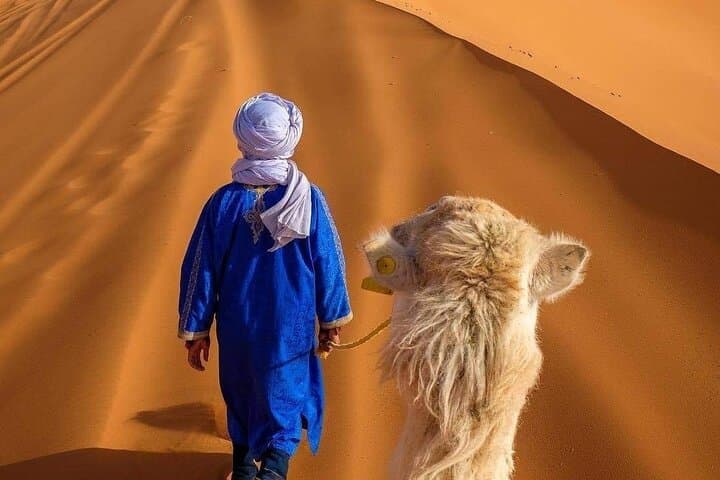
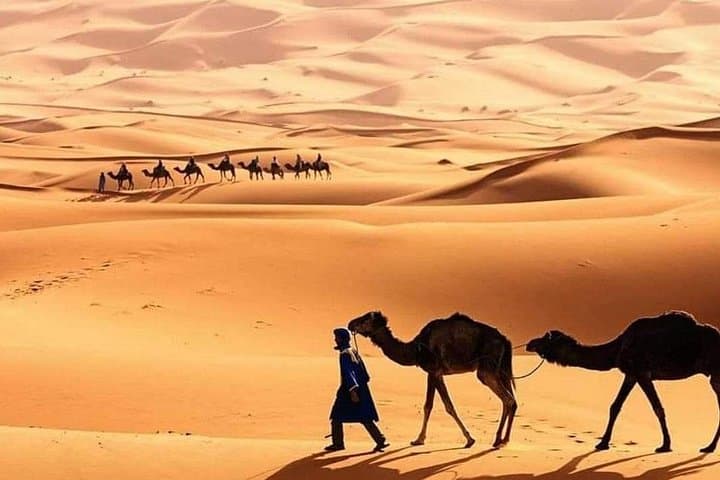
By day two the landscape opens to the Saharan fringe; Erfoud’s fossil workshops and the palm groves of Tinjdad give way to Erg Chebbi’s wave-like dunes that can reach about 150 m. A late-afternoon camel ride deposits you on a dune ridge for sunset; nights are in a Berber bivouac under a wide, star-heavy sky.
Cultural notes: many kasbahs began as caravan strongholds and later as family seats; Ouarzazate developed into Morocco’s film hub, visible in studio tours. Geology and human history overlap here—water shapes routes, and communities prosper along scarce streams.
Practical guidance: expect long driving days (3–6 hours between stops), short canyon hikes and dune scrambling. Bring layered clothing for big temperature swings, sturdy walking shoes for rocky gorges and a headlamp for bivouac nights. Carry cash for rural markets, hydrate before dune treks, and plan for early sunrises and cool desert nights.
moderate.
4 days (multi-day overland).
Moderate fitness: able to manage several hours of travel per day, short hikes in gorges and walking on soft sand.
The tour is rated accessible for most fitness levels; expect long drives, short canyon walks and moderate dune walking by camel or on foot.
Accommodations include local hotels/riads and a desert bivouac in Berber tents; specifics vary by operator but are typically 3-star local properties and desert camps.
Most breakfasts and dinners are included, along with private transport and fuel; bring cash for lunches in small towns and optional purchases.
Infants are accommodated but the itinerary notes it’s not recommended for pregnant travelers or those with serious spine or heart problems due to long drives and dune terrain.
The route follows ancient caravan corridors where kasbahs served as fortified stops; Ouarzazate later became Morocco’s center for film production.
The Sahara’s dune systems are fragile—avoid driving on dunes, stick to established tracks, conserve water and support local guides and camps practicing low-impact tourism.
Marrakech Expedition operates guided outdoor trips and adventures with an emphasis on safety, stewardship, and memorable experiences.
Dust on the road, a Tizi n’Tichka pass that rises to 2,260 m, and the sudden silence of the Erg Chebbi dunes at sunset: this four-day private circuit pushes you from Marrakech’s ochre alleys into mountain passes, river-cut gorges and Sahara sand.
Dust on the road, a Tizi n’Tichka pass that rises to 2,260 m, and the sudden silence of the Erg Chebbi dunes at sunset: this four-day private circuit pushes you from Marrakech’s ochre alleys into mountain passes, river-cut gorges and Sahara sand.
Day one climbs the High Atlas via Tizi n’Tichka, where Berber villages clasp terraced slopes and Ait Ben Haddou’s earthen kasbahs stand like compact citadels. The Dades and Todra gorges that follow are carved by millennia of water through limestone and sandstone, producing narrow canyon walls and shaded stream corridors ideal for short walks and photo stops.
By day two the landscape opens to the Saharan fringe; Erfoud’s fossil workshops and the palm groves of Tinjdad give way to Erg Chebbi’s wave-like dunes that can reach about 150 m. A late-afternoon camel ride deposits you on a dune ridge for sunset; nights are in a Berber bivouac under a wide, star-heavy sky.
Cultural notes: many kasbahs began as caravan strongholds and later as family seats; Ouarzazate developed into Morocco’s film hub, visible in studio tours. Geology and human history overlap here—water shapes routes, and communities prosper along scarce streams.
Practical guidance: expect long driving days (3–6 hours between stops), short canyon hikes and dune scrambling. Bring layered clothing for big temperature swings, sturdy walking shoes for rocky gorges and a headlamp for bivouac nights. Carry cash for rural markets, hydrate before dune treks, and plan for early sunrises and cool desert nights.