THE ADVENTURE COLLECTIVE® · Independent discovery and booking for outdoor travel

Explore Angkor’s major circuits, the sacred riverbed and falls at Kulen, and remote Koh Ker and Beng Mealea over four days. This private itinerary mixes iconic sunrises with quieter, off‑the‑beaten‑path ruins and practical tips for comfort and timing.
Explore Angkor’s major circuits, the sacred riverbed and falls at Kulen, and remote Koh Ker and Beng Mealea over four days. This private itinerary mixes iconic sunrises with quieter, off‑the‑beaten‑path ruins and practical tips for comfort and timing.
Morning mist breaks over the moat as a small convoy leaves Siem Reap for the stone giants of Angkor — towers and causeways rising from a humid plain that once held an empire. Over four days this private tour moves from the polished bas‑reliefs of Angkor Wat to the riverbed carvings and waterfall of Kulen, and out along long country roads to Koh Ker and the vine-choked mystery of Beng Mealea.
Verified experiences and guided adventures in the surrounding area.
Operated by Cambodia Transport Service · Siem Reap, Siem Reap Province
Morning mist breaks over the moat as a small convoy leaves Siem Reap for the stone giants of Angkor — towers and causeways rising from a humid plain that once held an empire. Over four days this private tour moves from the polished bas‑reliefs of Angkor Wat to the riverbed carvings and waterfall of Kulen, and out along long country roads to Koh Ker and the vine-choked mystery of Beng Mealea.
Angkor’s temples span centuries of Khmer history: 9th‑ to 13th‑century capitals, Hindu mandalas converted to Buddhist monasteries, and later additions layered atop older foundations. Geologically, the region is low, limestone and sandstone quarried from nearby ridges, with Kulen’s higher ground offering the island’s only real elevation and a river that carved shallow bas‑reliefs called the 1,000 Lingas.
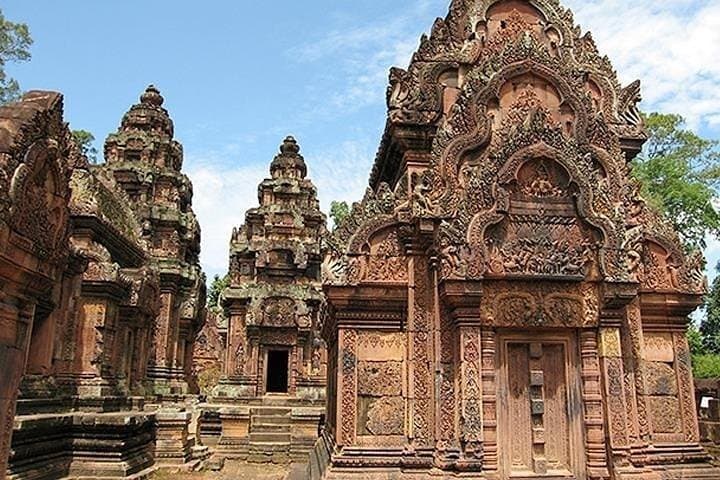
Culturally, temples remain active sites—monks, local rituals, and village markets thread between stones. Guides translate iconography: apsaras, lingas, and the telltale faces of Jayavarman VII.
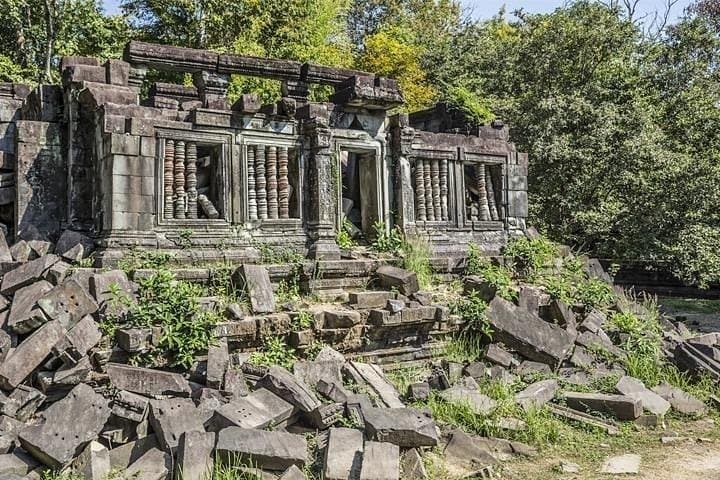
Practical guidance: allow early starts for Angkor sunrise and plan sunscreen, insect repellent, and light layers for morning cool. Temple paths are uneven; expect short climbs, shaded walks, and dusty drives. Bring cash for small restaurants and temple entrance passes; book a licensed guide to skip navigation and read the carvings aloud. At Kulen, swimming is possible but check seasonal currents. For remote Koh Ker and Beng Mealea expect quieter ruins, rougher roads, and generous countryside views — the payoff is time to explore collapsed galleries and listen to the forest reclaim stone.
moderate.
4 days.
Suitable for travelers with basic fitness—comfortable walking on uneven ground and short climbs; long days in vehicle.
Yes—Angkor Archaeological Park requires a pass (1, 3, or 7 day) purchased at the ticket center; your guide can stop to buy it on day one.
Yes—Kulen and Koh Ker are 60–150 km from central Angkor; expect several hours of driving on day trips to remote groups.
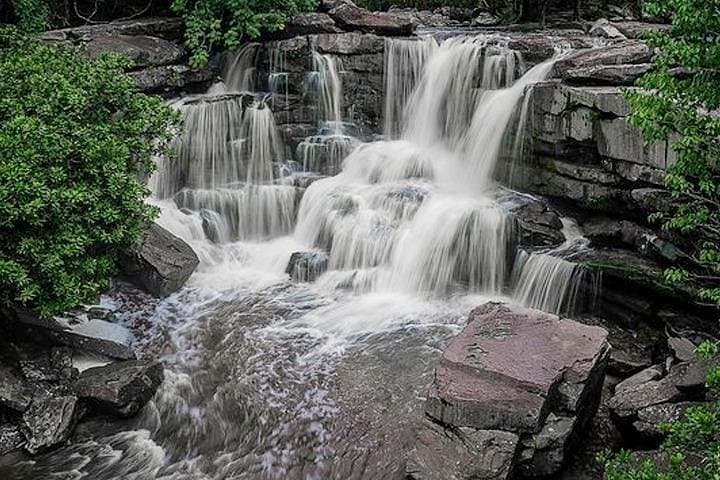
Yes in the dry season many visitors swim at designated areas, but check local conditions and avoid strong currents during monsoon months.
Generally yes—private vehicle, short walks, and flexible pacing make it accessible, but discuss mobility needs when booking.
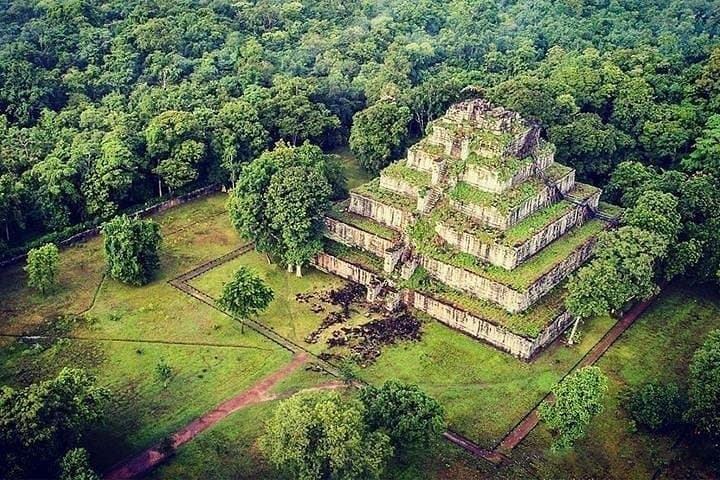
The Angkor complex reflects a centuries‑long Khmer civilization; Koh Ker briefly served as capital in the 10th century and shows distinct pyramid forms.
Visitor revenue funds park conservation; avoid touching bas‑reliefs, stay on paths to limit erosion, and hire licensed local guides to support community stewardship.
Cambodia Transport Service operates guided outdoor trips and adventures with an emphasis on safety, stewardship, and memorable experiences.
Morning mist breaks over the moat as a small convoy leaves Siem Reap for the stone giants of Angkor — towers and causeways rising from a humid plain that once held an empire. Over four days this private tour moves from the polished bas‑reliefs of Angkor Wat to the riverbed carvings and waterfall of Kulen, and out along long country roads to Koh Ker and the vine-choked mystery of Beng Mealea.
Morning mist breaks over the moat as a small convoy leaves Siem Reap for the stone giants of Angkor — towers and causeways rising from a humid plain that once held an empire. Over four days this private tour moves from the polished bas‑reliefs of Angkor Wat to the riverbed carvings and waterfall of Kulen, and out along long country roads to Koh Ker and the vine-choked mystery of Beng Mealea.
Angkor’s temples span centuries of Khmer history: 9th‑ to 13th‑century capitals, Hindu mandalas converted to Buddhist monasteries, and later additions layered atop older foundations. Geologically, the region is low, limestone and sandstone quarried from nearby ridges, with Kulen’s higher ground offering the island’s only real elevation and a river that carved shallow bas‑reliefs called the 1,000 Lingas.
Culturally, temples remain active sites—monks, local rituals, and village markets thread between stones. Guides translate iconography: apsaras, lingas, and the telltale faces of Jayavarman VII.
Practical guidance: allow early starts for Angkor sunrise and plan sunscreen, insect repellent, and light layers for morning cool. Temple paths are uneven; expect short climbs, shaded walks, and dusty drives. Bring cash for small restaurants and temple entrance passes; book a licensed guide to skip navigation and read the carvings aloud. At Kulen, swimming is possible but check seasonal currents. For remote Koh Ker and Beng Mealea expect quieter ruins, rougher roads, and generous countryside views — the payoff is time to explore collapsed galleries and listen to the forest reclaim stone.