THE ADVENTURE COLLECTIVE® · Independent discovery and booking for outdoor travel

A private, four-day exploration of Angkor’s highlights and lesser-known temples—from dawn at Angkor Wat to the jungle corridors of Beng Mealea. Expect guided history, long walks on uneven stone, and strategic sunrise and sunset stops.
A private, four-day exploration of Angkor’s highlights and lesser-known temples—from dawn at Angkor Wat to the jungle corridors of Beng Mealea. Expect guided history, long walks on uneven stone, and strategic sunrise and sunset stops.
Dawn arrives over Angkor with a hush—pale light spilling across sandstone causeways and the carved faces of Bayon watching as visitors file past.
Verified experiences and guided adventures in the surrounding area.
Operated by Hidden Angkor Tour · Siem Reap, Siem Reap Province
Dawn arrives over Angkor with a hush—pale light spilling across sandstone causeways and the carved faces of Bayon watching as visitors file past.
This private four-day tour moves at a deliberate pace: sunrise at Angkor Wat, the carved visages of Bayon, the root-wrapped galleries of Ta Prohm, the pink sandstone filigree of Banteay Srei, and the off-the-beaten-track mood of Koh Ker and Beng Mealea. The route threads city gates, terrace walls and jungle-collapsed sanctuaries, offering both the polished grandeur of imperial Khmer architecture and the raw curiosity of partially reclaimed sites.
Geology and history are inseparable here—the sandstone blocks quarried from distant outcrops were shaped into temple-mountains that mirror Hindu and later Buddhist cosmologies. Temples date from the 9th to 12th centuries, built under rulers like Suryavarman II and Jayavarman VII, and reflect shifts in religion, power and urban planning.
Cultural notes: dress conservatively for temple entry, carry local currency for the Angkor pass, and consider a guide to read bas-reliefs and local stories aloud. Expect uneven stone steps, shaded laterite courtyards, and sudden mosquito-prone patches near water.
Practical guidance: start early to beat heat and crowds, wear stable shoes for slippery laterite and exposed tree roots, and bring SPF and a refillable water bottle—the tour includes AC transport and bottled water but much walking is exposed. Passport and Angkor pass are mandatory; check pick-up logistics with your operator the day before. With planning, this private itinerary balances spectacle and solitude, turning well-known ruins into a paced archaeological briefing.
moderate.
4 days (approx. 8–10 hours per day).
Suitable for moderately fit travelers who can handle several hours of walking on uneven ground and climbing temple steps.
No. The Angkor Archaeological Park pass is not included; purchase at the park entrance or an official ticket office in Siem Reap (USD only).
This is a private tour with an English-speaking guide; other languages may be available on request and could incur a surcharge.
Most travelers can participate, but the tour is not recommended for pregnant travelers and small children should be supervised on uneven steps and in crowded spots.
Angkor’s temples were built between the 9th and 13th centuries by successive Khmer rulers; sites reflect shifts from Hindu to Buddhist patronage and large-scale land and water management.
Entrance fees fund park conservation and restoration; visitors should stick to marked paths, avoid touching carvings, and support community-run businesses to minimize impact.
Hidden Angkor Tour operates guided outdoor trips and adventures with an emphasis on safety, stewardship, and memorable experiences.
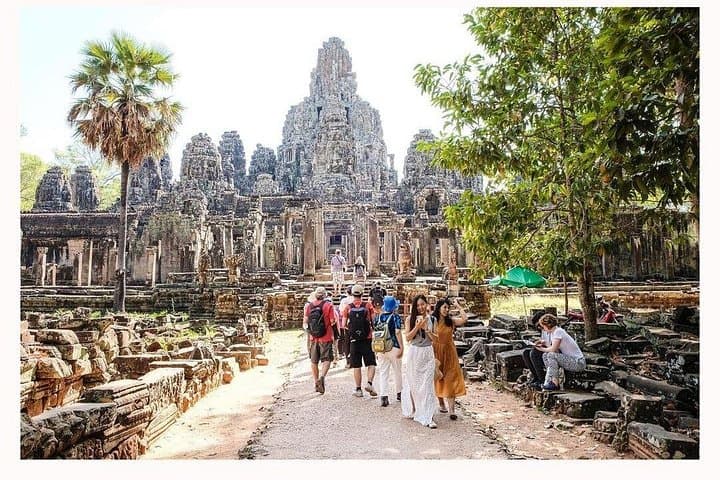

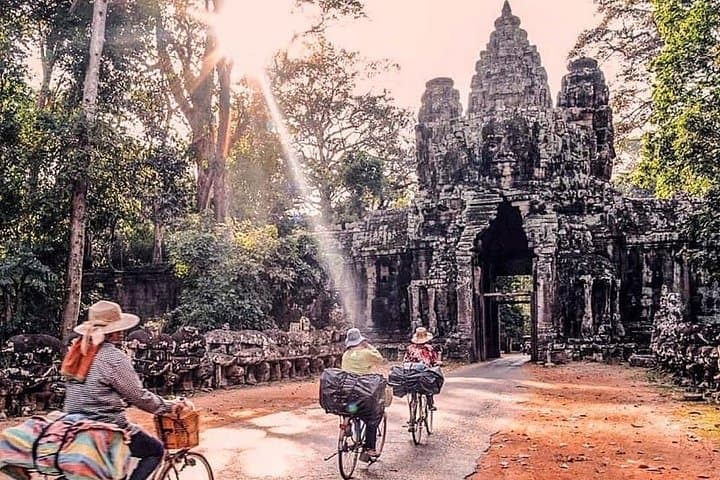
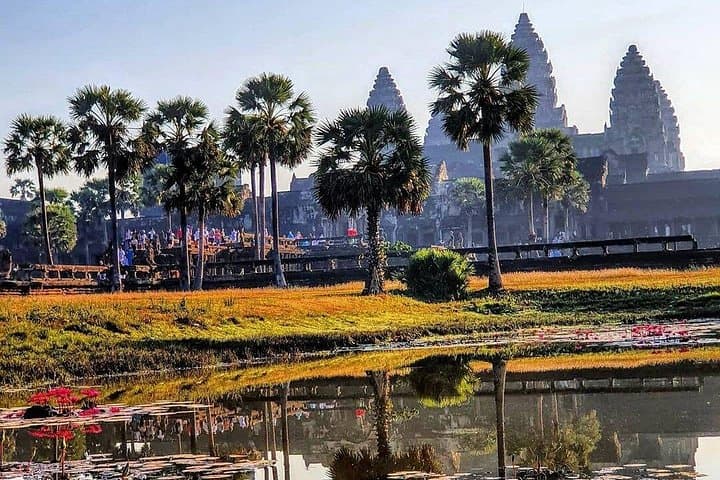
Dawn arrives over Angkor with a hush—pale light spilling across sandstone causeways and the carved faces of Bayon watching as visitors file past.
Dawn arrives over Angkor with a hush—pale light spilling across sandstone causeways and the carved faces of Bayon watching as visitors file past.
This private four-day tour moves at a deliberate pace: sunrise at Angkor Wat, the carved visages of Bayon, the root-wrapped galleries of Ta Prohm, the pink sandstone filigree of Banteay Srei, and the off-the-beaten-track mood of Koh Ker and Beng Mealea. The route threads city gates, terrace walls and jungle-collapsed sanctuaries, offering both the polished grandeur of imperial Khmer architecture and the raw curiosity of partially reclaimed sites.
Geology and history are inseparable here—the sandstone blocks quarried from distant outcrops were shaped into temple-mountains that mirror Hindu and later Buddhist cosmologies. Temples date from the 9th to 12th centuries, built under rulers like Suryavarman II and Jayavarman VII, and reflect shifts in religion, power and urban planning.
Cultural notes: dress conservatively for temple entry, carry local currency for the Angkor pass, and consider a guide to read bas-reliefs and local stories aloud. Expect uneven stone steps, shaded laterite courtyards, and sudden mosquito-prone patches near water.
Practical guidance: start early to beat heat and crowds, wear stable shoes for slippery laterite and exposed tree roots, and bring SPF and a refillable water bottle—the tour includes AC transport and bottled water but much walking is exposed. Passport and Angkor pass are mandatory; check pick-up logistics with your operator the day before. With planning, this private itinerary balances spectacle and solitude, turning well-known ruins into a paced archaeological briefing.