THE ADVENTURE COLLECTIVE® · Independent discovery and booking for outdoor travel

Four days across Ecuador’s Avenue of the Volcanoes, from Cotopaxi’s glaciers and Quilotoa’s crater rim to Baños’ waterfalls and the dizzying Devil’s Nose train. Expect high-altitude walks, cultural stops, and dramatic mountain engineering.
Four days across Ecuador’s Avenue of the Volcanoes, from Cotopaxi’s glaciers and Quilotoa’s crater rim to Baños’ waterfalls and the dizzying Devil’s Nose train. Expect high-altitude walks, cultural stops, and dramatic mountain engineering.
You step off the bus into thin air and the volcano seems to tilt the horizon — Cotopaxi’s cone looms, glaciers bright against an ever-changing sky. The highland wind moves like a judge, pushing you toward the lake shore at Limpiopungo, then driving you onward through patchwork moorlands toward the electric turquoise rim of Quilotoa.
Verified experiences and guided adventures in the surrounding area.
Operated by Latin Adventures Cía Ltda · Quito, Pichincha
You step off the bus into thin air and the volcano seems to tilt the horizon — Cotopaxi’s cone looms, glaciers bright against an ever-changing sky. The highland wind moves like a judge, pushing you toward the lake shore at Limpiopungo, then driving you onward through patchwork moorlands toward the electric turquoise rim of Quilotoa.
This four-day loop threads classic Andean highlights: Cotopaxi National Park’s volcanic geology and Pleistocene glaciers, the volcanic caldera of Quilotoa formed by a violent eruption, and the hydro-powered cascades around Baños. The Devil’s Nose Railway is an early-20th-century engineering answer to impossible slopes, a zigzag descent that carved the mountain’s face and made remote trade possible. Along the way you’ll pass indigenous communities whose markets and woven textiles preserve Quechua traditions.
Expect high-altitude walking on trails of volcanic ash and pumice, steep crater rim paths, short waterfall approach hikes, and a scenic train ride that hugs cliff faces. Weather swings fast — sun, sleet, and wind can all arrive in a day — and the landscape reacts: rivers swell, grasses bow, colors sharpen.
Practical guidance: acclimatize in Quito before departure, carry a warm, waterproof layer, and limit exertion on day one. Bring cash for small market purchases and keep your passport handy for train and park entry. Hydrate, move deliberately at altitude, and follow guide instructions in protected areas. This trip is compact but varied — designed to show the Andes’ power and the human routes built through it.
moderate.
4 days.
Moderate fitness recommended; be comfortable walking 2–4 hours at altitude and handling short steep sections.
Altitude is the primary concern—Cotopaxi summit areas reach 4,800 m; most activities occur between 2,800–4,500 m. Acclimatize in Quito, hydrate, eat lightly, and inform guides of symptoms.
Most walks are moderate day hikes: crater rim loops, short descents to waterfalls, and shoreline walks; no technical climbing gear is required.
The scenic train is accessible but involves narrow platforms and transfers; assess mobility and inform the operator of special needs when booking.
Guides typically speak English and Spanish; breakfasts, two lunches, and park/train fees are included per itinerary details.
The Nariz del Diablo railway was engineered in the early 20th century to connect Andean highlands to coastal markets, using switchbacks to descend steep terrain; Quilotoa is the remnant of a massive volcanic collapse.
Cotopaxi National Park and local communities focus on trail protection and responsible tourism; stay on marked paths, avoid feeding wildlife, and pack out waste to reduce impact.
Latin Adventures Cía Ltda operates guided outdoor trips and adventures with an emphasis on safety, stewardship, and memorable experiences.
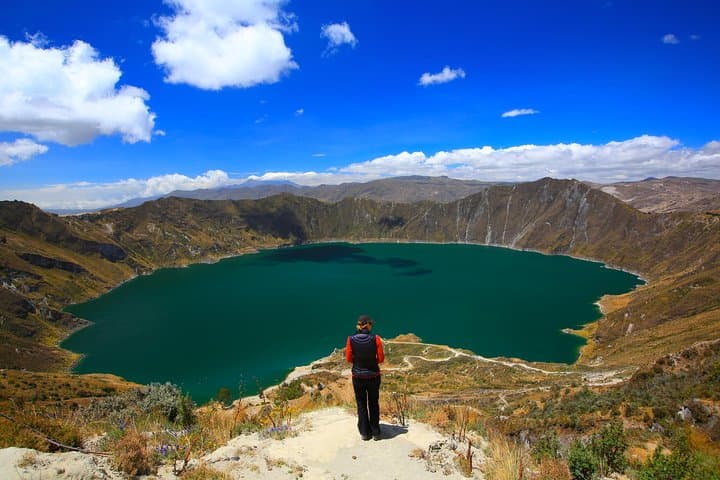
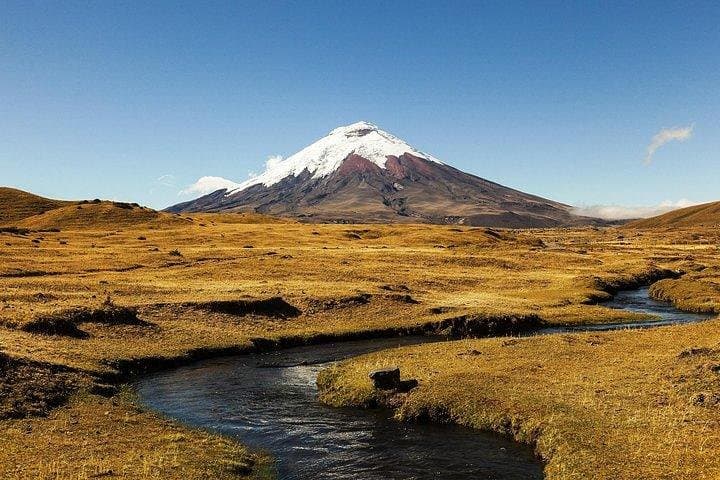
You step off the bus into thin air and the volcano seems to tilt the horizon — Cotopaxi’s cone looms, glaciers bright against an ever-changing sky. The highland wind moves like a judge, pushing you toward the lake shore at Limpiopungo, then driving you onward through patchwork moorlands toward the electric turquoise rim of Quilotoa.
You step off the bus into thin air and the volcano seems to tilt the horizon — Cotopaxi’s cone looms, glaciers bright against an ever-changing sky. The highland wind moves like a judge, pushing you toward the lake shore at Limpiopungo, then driving you onward through patchwork moorlands toward the electric turquoise rim of Quilotoa.
This four-day loop threads classic Andean highlights: Cotopaxi National Park’s volcanic geology and Pleistocene glaciers, the volcanic caldera of Quilotoa formed by a violent eruption, and the hydro-powered cascades around Baños. The Devil’s Nose Railway is an early-20th-century engineering answer to impossible slopes, a zigzag descent that carved the mountain’s face and made remote trade possible. Along the way you’ll pass indigenous communities whose markets and woven textiles preserve Quechua traditions.
Expect high-altitude walking on trails of volcanic ash and pumice, steep crater rim paths, short waterfall approach hikes, and a scenic train ride that hugs cliff faces. Weather swings fast — sun, sleet, and wind can all arrive in a day — and the landscape reacts: rivers swell, grasses bow, colors sharpen.
Practical guidance: acclimatize in Quito before departure, carry a warm, waterproof layer, and limit exertion on day one. Bring cash for small market purchases and keep your passport handy for train and park entry. Hydrate, move deliberately at altitude, and follow guide instructions in protected areas. This trip is compact but varied — designed to show the Andes’ power and the human routes built through it.