THE ADVENTURE COLLECTIVE® · Independent discovery and booking for outdoor travel

Take a compact 30-minute aerial tour of Miami’s coastal neighborhoods with complimentary drinks and onboard commentary. Perfect for first-time visitors who want a fast, clear orientation to the city’s layout and shoreline.
Take a compact 30-minute aerial tour of Miami’s coastal neighborhoods with complimentary drinks and onboard commentary. Perfect for first-time visitors who want a fast, clear orientation to the city’s layout and shoreline.
The small Cessna hums and then lifts: Miami shrinks into a grid of palms, canals and sun-bright rooftops as passengers press foreheads to the plexiglass. In thirty minutes the airplane threads the city’s coastal edge, gliding over Biscayne Bay where currents and boat wakes write temporary lines on the water and the shoreline dares you to keep looking.
Verified experiences and guided adventures in the surrounding area.
Operated by Sky Tours Miami · Miami, Florida
The small Cessna hums and then lifts: Miami shrinks into a grid of palms, canals and sun-bright rooftops as passengers press foreheads to the plexiglass. In thirty minutes the airplane threads the city’s coastal edge, gliding over Biscayne Bay where currents and boat wakes write temporary lines on the water and the shoreline dares you to keep looking.
This short flight passes Coral Gables’ tile roofs and the leafy residential curves of Pinecrest, crosses over Coconut Grove’s maritime canopy and arcs toward the downtown skyline. It’s a compact aerial primer on Miami’s layered history—Indigenous Calusa and Tequesta trade routes gave way to maritime commerce, then to rapid 20th-century urbanization driven by rail and aviation. Geology is subtle here: the flat limestone shelf lets water and development press close together, producing mangrove fringes, barrier islands and shallow bays that shape the city’s feel from above.
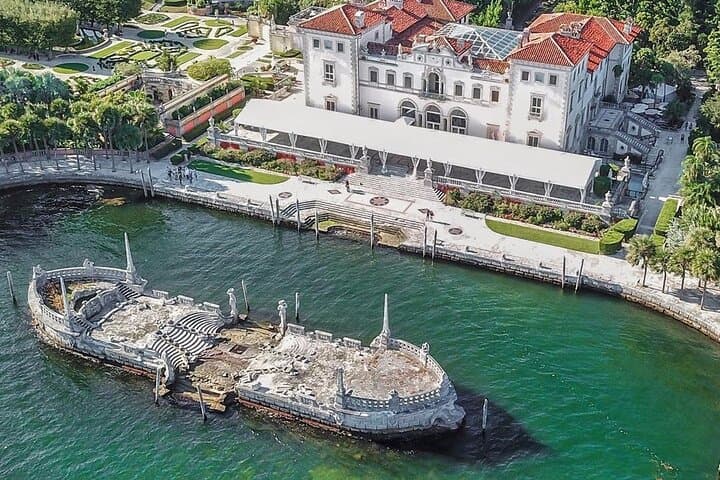
Culturally, the tour offers views into neighborhoods shaped by Cuban, Bahamian and Caribbean migration; the city’s mosaic is readable in street patterns and waterfront uses. Locals will point out small parks, marinas and the green roofs of botanical sites visible from the air.
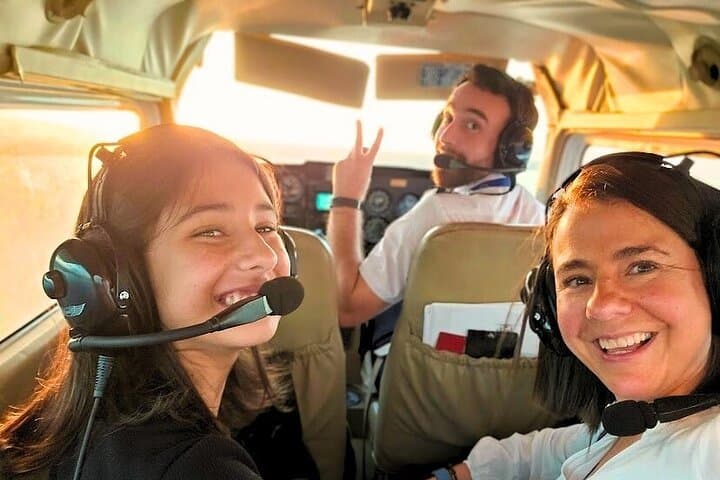
Practical notes: passengers must arrive early, carry ID and respect weight limits that ensure safety. Flights are weather-dependent; morning light is often best for clearer air and smoother thermals. Wear comfortable, flat shoes for boarding, bring sunglasses and a camera with a fast shutter. Headsets are provided; listen closely—pilots annotate the landscape, turning a short joyride into an efficient orientation to Miami’s coastal geography.
easy.
30 minutes.
Suitable for people of most fitness levels; must be able to board a small aircraft and sit for the flight.
The flight is a fixed 30-minute airborne tour with additional pre-flight check-in time at the airport.
Passengers must be at least 5 years old; maximum 250 lbs per passenger and a combined weight limit of 480 lbs for all occupants.
Tours are weather-dependent; the operator will cancel and offer a full refund if conditions are unsafe, typically with at least 24 hours' notice when possible.
Yes—water and soda are included on board; the operator also offers optional small extras like a birthday balloon if requested in advance.
The Miami area developed quickly in the early 20th century with rail and aviation links; Miami Executive Airport began as a local field that grew alongside the region’s tourism industry.
Biscayne Bay’s shallow reefs and mangroves are ecologically sensitive—stay at altitudes and routes set by the pilot to minimize disturbance and follow no-fly guidance over protected areas when requested.
Sky Tours Miami operates guided outdoor trips and adventures with an emphasis on safety, stewardship, and memorable experiences.
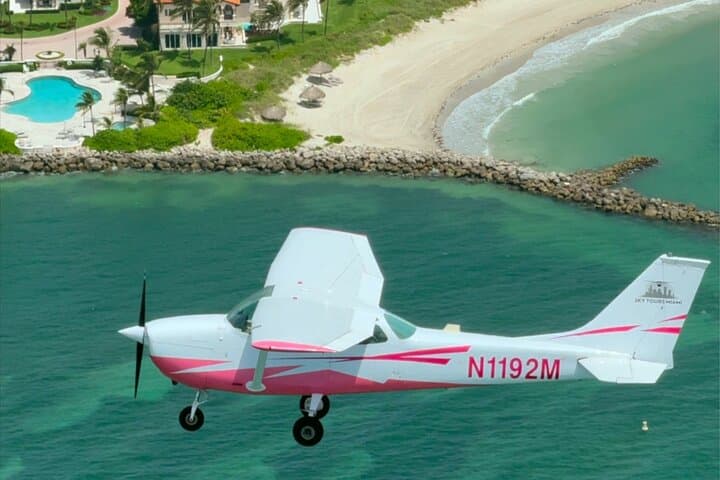
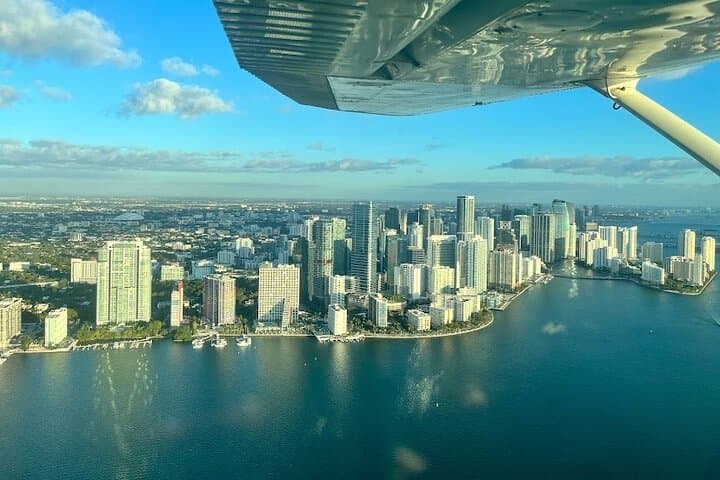
The small Cessna hums and then lifts: Miami shrinks into a grid of palms, canals and sun-bright rooftops as passengers press foreheads to the plexiglass. In thirty minutes the airplane threads the city’s coastal edge, gliding over Biscayne Bay where currents and boat wakes write temporary lines on the water and the shoreline dares you to keep looking.
The small Cessna hums and then lifts: Miami shrinks into a grid of palms, canals and sun-bright rooftops as passengers press foreheads to the plexiglass. In thirty minutes the airplane threads the city’s coastal edge, gliding over Biscayne Bay where currents and boat wakes write temporary lines on the water and the shoreline dares you to keep looking.
This short flight passes Coral Gables’ tile roofs and the leafy residential curves of Pinecrest, crosses over Coconut Grove’s maritime canopy and arcs toward the downtown skyline. It’s a compact aerial primer on Miami’s layered history—Indigenous Calusa and Tequesta trade routes gave way to maritime commerce, then to rapid 20th-century urbanization driven by rail and aviation. Geology is subtle here: the flat limestone shelf lets water and development press close together, producing mangrove fringes, barrier islands and shallow bays that shape the city’s feel from above.
Culturally, the tour offers views into neighborhoods shaped by Cuban, Bahamian and Caribbean migration; the city’s mosaic is readable in street patterns and waterfront uses. Locals will point out small parks, marinas and the green roofs of botanical sites visible from the air.
Practical notes: passengers must arrive early, carry ID and respect weight limits that ensure safety. Flights are weather-dependent; morning light is often best for clearer air and smoother thermals. Wear comfortable, flat shoes for boarding, bring sunglasses and a camera with a fast shutter. Headsets are provided; listen closely—pilots annotate the landscape, turning a short joyride into an efficient orientation to Miami’s coastal geography.