THE ADVENTURE COLLECTIVE® · Independent discovery and booking for outdoor travel

Sail the Nile from Luxor to Aswan on a three-night cruise that pairs scenic river travel with guided visits to Egypt’s most iconic temples. Expect expert Egyptologist commentary, comfortable full-board accommodation, and easy walks at archaeological sites.
Sail the Nile from Luxor to Aswan on a three-night cruise that pairs scenic river travel with guided visits to Egypt’s most iconic temples. Expect expert Egyptologist commentary, comfortable full-board accommodation, and easy walks at archaeological sites.
The sun lifts off the Nile in a wash of ochre as the feluccas and cruise tenders drift past palm-fringed riverbanks. On a three-night sail from Luxor to Aswan you move at the river’s pace—windows framing irrigated fields, villages slipping by, and temples that lean toward the water as if to listen.
Verified experiences and guided adventures in the surrounding area.
The sun lifts off the Nile in a wash of ochre as the feluccas and cruise tenders drift past palm-fringed riverbanks. On a three-night sail from Luxor to Aswan you move at the river’s pace—windows framing irrigated fields, villages slipping by, and temples that lean toward the water as if to listen.
This corridor of the Nile is layered history: Pharaonic mortuary temples at Luxor and Karnak, Greco-Roman touches at Kom Ombo, and the compact, sandstone Edfu Temple guarding its avenue of sphinxes. Geologically, the Nile sculpted a narrow alluvial ribbon across arid limestone plateaus; the stretch between Luxor and Aswan contains exposed Nubian sandstone and fertile floodplain soils that supported ancient civilization for millennia.
Culturally, expect local rhythms—early-morning market calls, cup-brewing conversations, and Nubian communities near Aswan with distinct crafts and colorful houses. Guides—usually Egyptologists—add context to carvings, cartouches, and funerary architecture.
Practicalities: embarkation typically happens in Luxor and includes full-board lodging aboard a 5-star cruise vessel with daily guided excursions. Temple visits involve uneven stone steps and short walks of 1–3 km; bring layered clothing for hot days and cool nights, sun protection, and comfortable shoes. Hydrate and use bottled water; consider timing tours early or late to avoid midday heat. Cash for tips and small purchases, photocopies of travel documents, and a flexible attitude toward local schedules smooth the trip. The cruise balances relaxed river travel with concentrated cultural exploration—an accessible way to read Egypt’s Nile chapters without constant packing and transit.
easy.
3 nights (approx. 72 hours).
Low to moderate—able to walk 1–3 km over uneven temple grounds and climb steps; not suitable for those requiring extensive mobility assistance without prior arrangements.
Most packages include full-board accommodation on a 5-star cruise ship, guided temple tours, and shore transfers—confirm specifics like drinks, entrance fees, and gratuities before booking.
Most travelers require an entry visa for Egypt; check your nationality-specific requirements and obtain a visa prior to travel or on arrival where available.
Many temple grounds have uneven stonework and steps; some vessels and sites can accommodate reduced mobility with advance notice, but full wheelchair access is limited.
Swimming in the Nile near populated cruise routes is not recommended due to pollution and boat traffic; stick to designated swimming areas or hotel pools.
The Luxor–Aswan corridor follows Egypt’s most continuous archaeological sequence—Pharaonic temples, Ptolemaic additions, and Roman-era structures reflecting millennia of occupation.
Tourism pressure and river traffic affect fragile monuments and river ecology; respect signage, avoid touching reliefs, and minimize single-use plastics to reduce impact.
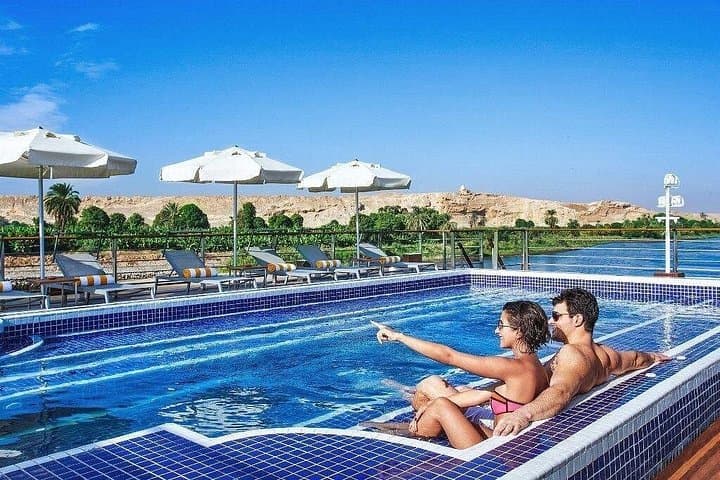
The sun lifts off the Nile in a wash of ochre as the feluccas and cruise tenders drift past palm-fringed riverbanks. On a three-night sail from Luxor to Aswan you move at the river’s pace—windows framing irrigated fields, villages slipping by, and temples that lean toward the water as if to listen.
The sun lifts off the Nile in a wash of ochre as the feluccas and cruise tenders drift past palm-fringed riverbanks. On a three-night sail from Luxor to Aswan you move at the river’s pace—windows framing irrigated fields, villages slipping by, and temples that lean toward the water as if to listen.
This corridor of the Nile is layered history: Pharaonic mortuary temples at Luxor and Karnak, Greco-Roman touches at Kom Ombo, and the compact, sandstone Edfu Temple guarding its avenue of sphinxes. Geologically, the Nile sculpted a narrow alluvial ribbon across arid limestone plateaus; the stretch between Luxor and Aswan contains exposed Nubian sandstone and fertile floodplain soils that supported ancient civilization for millennia.
Culturally, expect local rhythms—early-morning market calls, cup-brewing conversations, and Nubian communities near Aswan with distinct crafts and colorful houses. Guides—usually Egyptologists—add context to carvings, cartouches, and funerary architecture.
Practicalities: embarkation typically happens in Luxor and includes full-board lodging aboard a 5-star cruise vessel with daily guided excursions. Temple visits involve uneven stone steps and short walks of 1–3 km; bring layered clothing for hot days and cool nights, sun protection, and comfortable shoes. Hydrate and use bottled water; consider timing tours early or late to avoid midday heat. Cash for tips and small purchases, photocopies of travel documents, and a flexible attitude toward local schedules smooth the trip. The cruise balances relaxed river travel with concentrated cultural exploration—an accessible way to read Egypt’s Nile chapters without constant packing and transit.