THE ADVENTURE COLLECTIVE® · Independent discovery and booking for outdoor travel

Ride to the top of Maunga Terevaka on Easter Island in three hours, where a 360° ocean horizon awaits. This private horseback tour blends geology, Rapanui culture and quiet singletrack for an intimate summit experience.
Ride to the top of Maunga Terevaka on Easter Island in three hours, where a 360° ocean horizon awaits. This private horseback tour blends geology, Rapanui culture and quiet singletrack for an intimate summit experience.
The ride begins on a low, wind-swept ridge where the ocean keeps time with the hoofbeats. Within minutes the island opens up: black lava fields give way to grasses baked by sun and salt, and the trail angles gently uphill toward Maunga Terevaka. By the time the guide pulls the reins for a final stretch, the world is a circular horizon of blue.
Verified experiences and guided adventures in the surrounding area.
Operated by Kava Kava Tours · Hanga Roa, Valparaíso Region
The ride begins on a low, wind-swept ridge where the ocean keeps time with the hoofbeats. Within minutes the island opens up: black lava fields give way to grasses baked by sun and salt, and the trail angles gently uphill toward Maunga Terevaka. By the time the guide pulls the reins for a final stretch, the world is a circular horizon of blue.
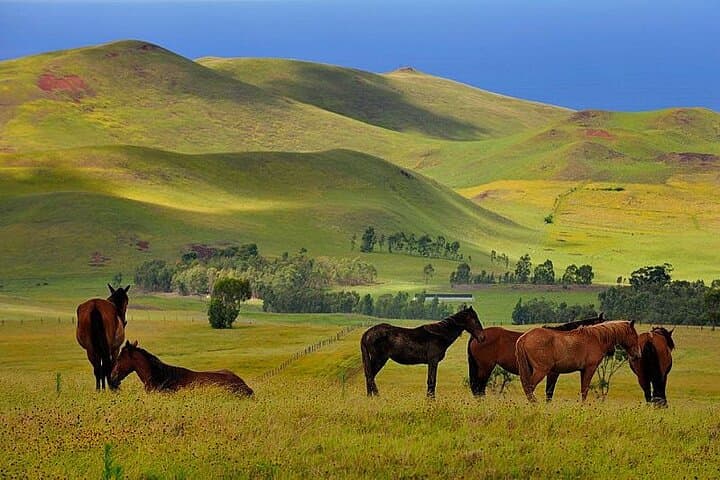
Terevaka is the island’s largest volcano, its slopes built from successive basaltic flows that shaped Rapa Nui’s quietly rugged interior. Guides on this private tour share Rapanui history — from Polynesian voyaging to the cultural significance of inland landscapes — and point out how geology and people combined to create the island’s unusual ecology. The route is not a crowded path; expect long stretches of solitude and clear sightlines to the ocean and scattered archaeological sites below.
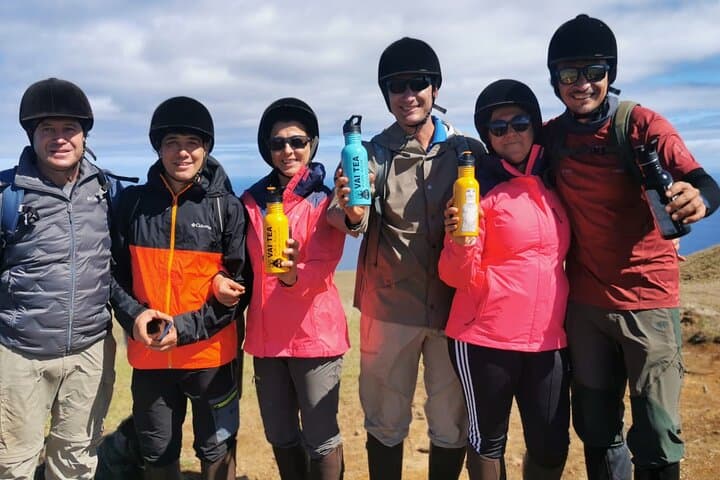
Practical details: the climb to the summit reaches roughly 500–510 m elevation, over mixed terrain—packed dirt, occasional loose volcanic rock and grassy sidings—taken at a steady pace over about three hours round trip. The operator supplies helmets, riding leggings and water; hotel pickup and drop-off from Hanga Roa simplify logistics. Riders should be comfortable on a horse for several hours, able to mount and dismount on uneven ground, and prepared for wind and strong sun.
Timing matters: morning rides are cooler and often calmer; afternoons deliver dramatic light but stronger winds. Bring layered clothing, sun protection and a small daypack; listen to your Rapanui guide — they’re the best source for reading the island’s subtle cues.
moderate.
3 hours.
Good general fitness—able to sit in a saddle for several hours, mount/dismount on uneven ground, and handle short uphill stretches.
No advanced experience required; the tour is suitable for riders of varying ability, though you should be comfortable sitting in a saddle and following basic riding directions.
The trail gains roughly 400–500 m in elevation with mostly gradual slopes; there are some uneven sections but no technical climbing.
Yes — the operator provides hotel pickup and drop-off in Hanga Roa for convenience.
Yes — bring a securely fastened camera or phone; consider a neck strap or small chest harness to prevent drops.
Maunga Terevaka’s slopes are the remains of basaltic eruptions that built much of Rapa Nui; inland paths were used historically for travel between settlements rather than ritual centers on the coast.
Easter Island’s fragile soils and limited freshwater mean visitors should stick to trails, avoid trampling vegetation and follow local guides to minimize impact.
Kava Kava Tours operates guided outdoor trips and adventures with an emphasis on safety, stewardship, and memorable experiences.
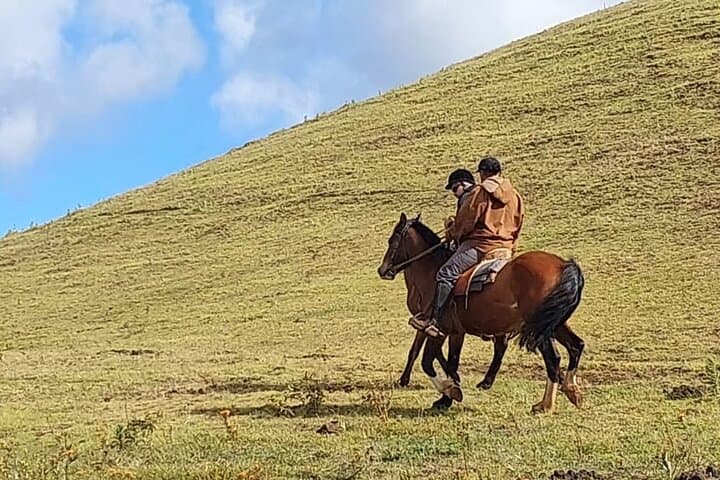
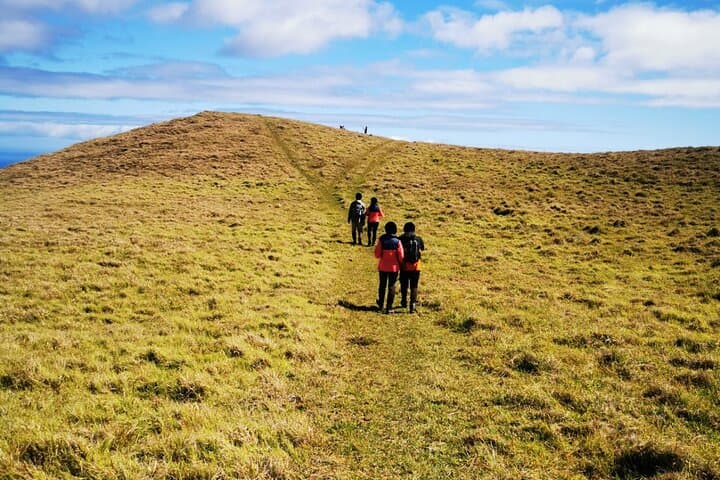
The ride begins on a low, wind-swept ridge where the ocean keeps time with the hoofbeats. Within minutes the island opens up: black lava fields give way to grasses baked by sun and salt, and the trail angles gently uphill toward Maunga Terevaka. By the time the guide pulls the reins for a final stretch, the world is a circular horizon of blue.
The ride begins on a low, wind-swept ridge where the ocean keeps time with the hoofbeats. Within minutes the island opens up: black lava fields give way to grasses baked by sun and salt, and the trail angles gently uphill toward Maunga Terevaka. By the time the guide pulls the reins for a final stretch, the world is a circular horizon of blue.
Terevaka is the island’s largest volcano, its slopes built from successive basaltic flows that shaped Rapa Nui’s quietly rugged interior. Guides on this private tour share Rapanui history — from Polynesian voyaging to the cultural significance of inland landscapes — and point out how geology and people combined to create the island’s unusual ecology. The route is not a crowded path; expect long stretches of solitude and clear sightlines to the ocean and scattered archaeological sites below.
Practical details: the climb to the summit reaches roughly 500–510 m elevation, over mixed terrain—packed dirt, occasional loose volcanic rock and grassy sidings—taken at a steady pace over about three hours round trip. The operator supplies helmets, riding leggings and water; hotel pickup and drop-off from Hanga Roa simplify logistics. Riders should be comfortable on a horse for several hours, able to mount and dismount on uneven ground, and prepared for wind and strong sun.
Timing matters: morning rides are cooler and often calmer; afternoons deliver dramatic light but stronger winds. Bring layered clothing, sun protection and a small daypack; listen to your Rapanui guide — they’re the best source for reading the island’s subtle cues.